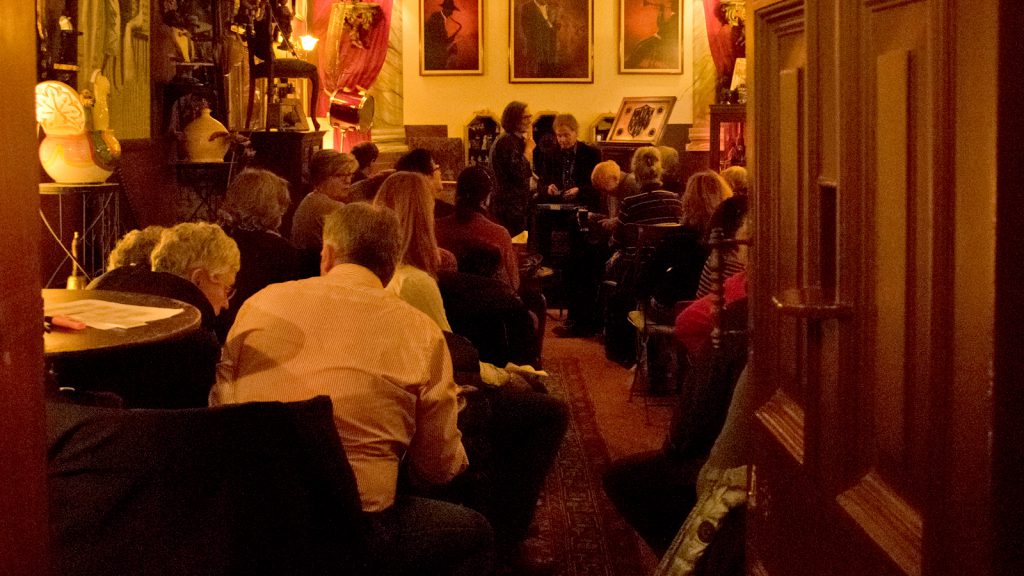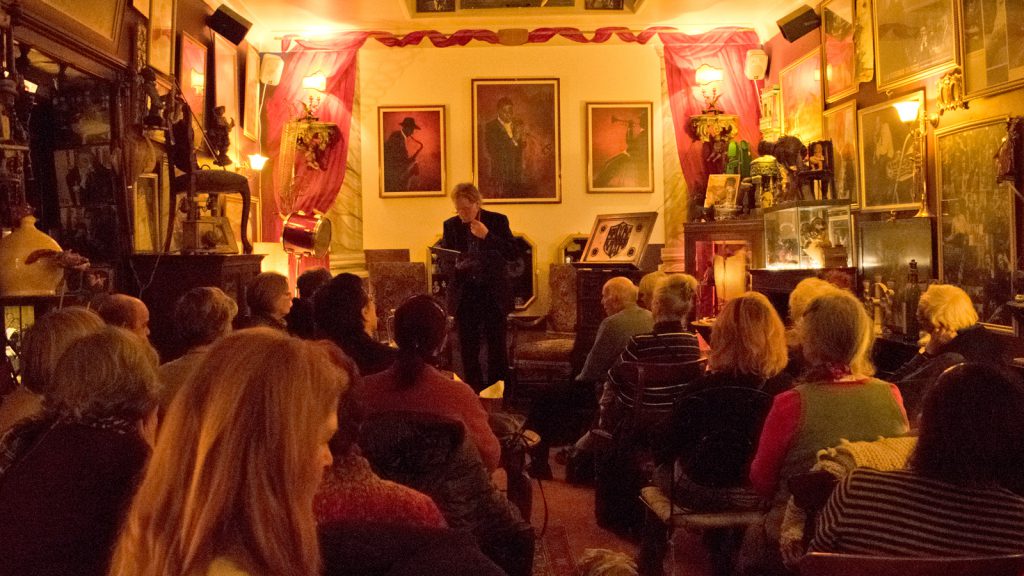
Tuesday, May 14 – an evening of poetry from eight poets present on the Mary Evans Picture Library ‘Poems and Pictures’ Blog.
https://www.maryevans.com/poetry.php?prv=menu
An evening to remember and honour Gill Stoker (1954-2024), who first devised the Blog in 2015 and continued to curate it until she was stopped by her illness last year. By the way, the Blog continues under the stewardship of Mark Braund. Do explore the website and find out how to submit poems, and also more about Gill ad the Library.
Gill and I collaborated on a number of poetry and poetry-related events, and continued to plan during her illness. This event was the result of this planning. It had to be on Zoom because of the location of several of the poets. Despite minor techie issues (minor, but giving me major panic!), the evening went smoothly.
The voices we were treated to were so diverse and the poems were moving, sombre, political but also funny and quirky – and always word-perfect.
The readers were Natan Barreto, David Bottomley, Wendy French, Sue Hubbard, Maggie MacKay, Marion McCready, Hugh McMillan and Jill Sharp.
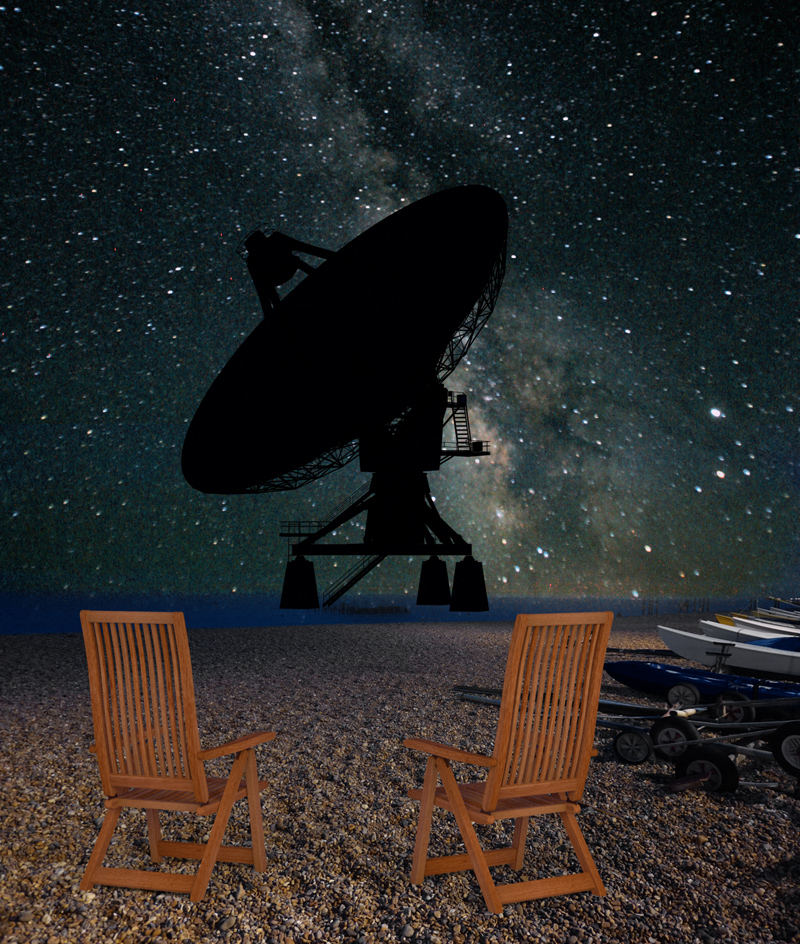
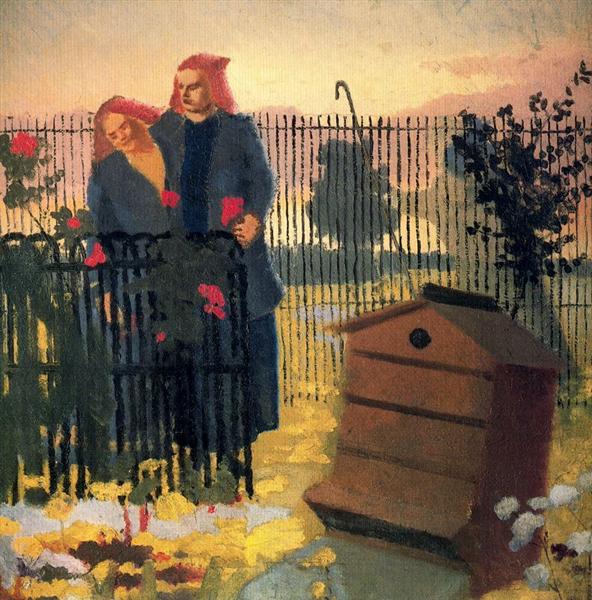
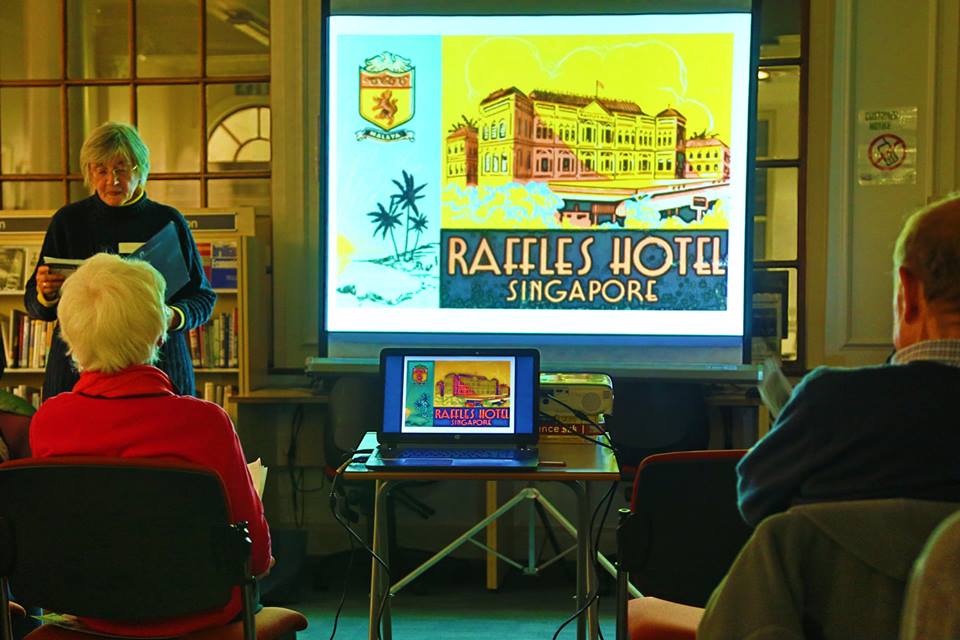
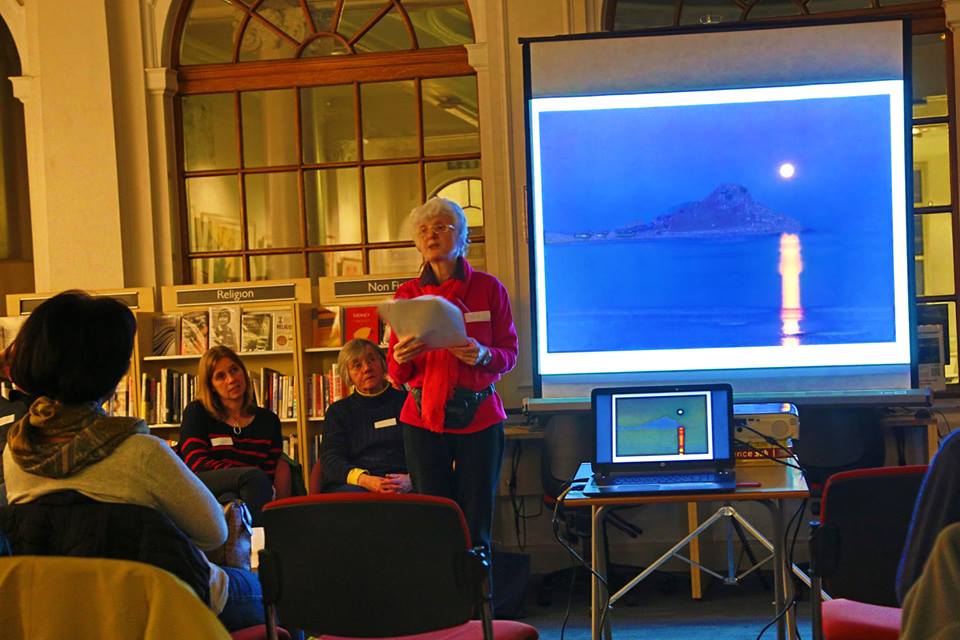
Each read one poem from the Blog, accompanied by the image that inspired them or best echoed their words, plus a few other poems from recent collections. They took us from war zones through historic expeditions, London Soho, ekphrastic poetry, imaginary conversations between Dylan Thomas and his wife, Moscow in the ’70s, the NHS, hedgerows and near-anthropomorphic flowers and birds to family memories, migration, buses and their passengers, Dirk Bogarde, to end with the ubiquitous round paper lantern (it will never look or feel pedestrian again, after Jill Sharp’s perfectly observed verses…).
The contrasting tones, styles and forms danced beautifully together, bouncing off each other and making us sit up in recognition as images, like the words in Natan Barreto’s poem about language, emerge as never predictable, but inevitable…
As a sort of brief ‘interval’ I shared a recorded message from Mark Braund, in which he spoke a bit about the Blog and Gill and read a poem by Gill’s late husband, the composer Richard Stoker. Gill was so proud of Richard’s achievements, it seemed fitting to end the ‘interval’ with Mark’s reading of Richard’s poem inspired by the death of Francis Poulenc. Richard was in Paris at the time, studying with Nadia Boulanger, and was shocked by Poulenc’s untimely death.
The event was recorded and I shall post the precise way to access it once some editing has been carried out if necessary. It is likely to be made available on the Mary Evans YouTube channel.
Here’s some information about the poets, their publications and their impressive achievements. I shall shortly add some more information about where to purchase their collections. In the meantime, if you’re interested, you can contact the publishers or myself.
Natan Barreto was born in Salvador, Brazil. He has lived in Rio, Paris, Rome, and, since 1992, in London, where he works as a primary school teacher. He is the author of seven collections of poetry in Portuguese. Fluent in many languages, he has also published a novel and a volume of translations from French of work by Madagascan writer Jean-Joseph Rabearivel.
David Bottomley is an award-winning poet, playwright and librettist with a passion for environmental and ecological conservation. His play Waterton’s Wild Menagerie was a finalist of the Nick Darke Award; Britain for Breakfast, finalist Enter Stage Write Award and Limboland, finalist at Herts and Essex Playwriting Festival. His plays have been performed at Edinburgh, Manchester, San Diego Fringe Festivals, Birmingham and London theatres. He works nationally and internationally with composers to set his writing to music. He was commissioned by the charity Rising Tides to write the environmental play King Neptune and the Mermaid. David recently obtained an MA in Opera Making and Writing at the Guildhall School of Music & Drama, for which he was commissioned to write the opera Lanternfish.
Wendy French has three collections of poetry published: Splintering the Dark (Rockingham Press, 2005), surely you know this (Tall Lighthouse, 2009), and Thinks Itself A Hawk (Hippocrates Press, 2016), the latter resulting from her time as Poet in Residence at the UCH Macmillan Cancer Centre, 2014-2015. She was joint editor with Dilys Wood of Fanfare (Second Light, 2015), a book of poems written by women poets, and also co-edited The Hippocrates Book of the Heart (Hippocrates Press, 2017) with Prof Michael Hulse and Prof Donald Singer. She won the Hippocrates Poetry and Medicine Prize (NHS section) in 2010 and was awarded second prize in 2011. Her collaboration with Jane Kirwan resulted in the book Born in the NHS (Hippocrates Press, 2013). She has judged or co-judged three major poetry competitions: the Torbay International Competition, the Torriano Competition and the Tongues and Grooves 10-year celebration competition, as well as the Hippocrates International Poetry Competition for poems relating to medicine or the body. For the past twenty years she has facilitated creative writing in healthcare settings, having finished her formal teaching career as head of the Maudsley and Bethlem Hospital School in 2003.
Sue Hubbard is an award-winning poet, novelist and freelance art critic, with an MA in Creative Writing from the University of East Anglia. She is twice winner of the London Writers Competition, with a third prize in the National Poetry Competition. Her publications include Everything Begins with the Skin (Enitharmon), Ghost Station, The Forgetting and Remembering of Air (Salt), and The Idea of Islands (Occasional Press). Swimming to Albania, her fourth collection, was published by Salmon Press in 2021, and Pushkin Press published her fourth novel Flatlands in 2023. Twenty of her poems were included in An Anthology: Carcanet 2000. Her poetry has been recorded for The Poetry Sound Archive, read on Poetry Please, The Verb and Front Row, and appeared in numerous magazines and anthologies, as well as in The Irish Times and The Observer. She has published a collection of short stories, Rothko’s Red (Salt), and two novels, Depth of Field (Dewi Lewis) and Girl in White (Cinnamon Press), for which she received a major Arts Council Award. Her third novel, Rainsongs, was published in 2018 to great critical acclaim from The Guardian, The Irish Times, The Irish Independent and The Jewish Chronicle, among many others. As an art critic she has written regularly for many leading newspapers and art magazines. Her selected art writings, Adventures in Art, are published by Other Criteria. As The Poetry Society’s only Public Art Poet, she was responsible for London’s largest public art poem, ‘Eurydice’, in the IMAX tunnel at Waterloo, commissioned as part of the South Bank regeneration.
A retired Scottish support teacher for young people with additional needs, Maggie MacKay took up her writing again and began a thrilling new life. After studies at Manchester Metropolitan University, her pamphlet The Heart of the Run (Picaroon Poetry 2018) with Kate Garrett was followed by her debut collection A West Coast Psalter (Kelsey Books 2021). In 2020 her poem ‘How to Distil a Guid Scotch Malt’ was awarded a place in the Poetry Archive’s WordView permanent collection and was a runner up in The Liverpool Prize. Steve Cawte at Impspired Press published her second collection The Babel of Human Travel in November 2022. She reviews poetry collections and pamphlets at The Friday Poem (https://thefridaypoem.com). Maggie loves a good malt and cool jazz as much as daydreaming on the sofa with Hattie, her marvellous rescue greyhound.
Marion McCready lives in Argyll. Her poems have been published widely including in Poetry (Chicago), Edinburgh Review, The Glasgow Herald and have appeared in multiple anthologies. Her pamphlet collection Vintage Sea was published by Calder Wood Press (2011). She is the winner of a Scottish Book Trust New Writers Award and the Melita Hume Poetry Prize and the author of two poetry collections from Eyewear Publishing: Tree Language (2014) and Madame Ecosse (2017). Her most recent collection, Look to the Crocus, was published by Shoestring Press in 2023.
Hugh McMillan is a well published, anthologised and broadcast poet, writer and performer who lives in South West Scotland. His last collection Haphazardly in the Starless Night was published by Luath Press in 2021 and Diverted to Split, his latest, is due out in summer 2024. In 2021 he was appointed editor of the Scottish Poetry Library’s anthology ‘Best Scottish Poems’ and was also chosen to be a Saltire Society judge for Best Scottish Poetry Collection of the Year. His cult classic ‘McMillan’s Galloway’ was reprinted in paperback form in May 2023, and ‘Whit If’, his Scottish History poems are to be reprinted in April 2024. His website is at https://www.hughmcmillanwriter.co.uk/
Jill Sharp has worked as a tutor with the Open University and has also taught excluded teenagers. Her poetry has been published in many magazines including Acumen, Envoi, The Frogmore Papers, The Interpreter’s House, Mslexia, Prole, Poetry Salzburg Review, Stand, and Under the Radar. Her work has also appeared in various anthologies, most recently Pale Fire (Frogmore Press) and Contemporary Gothic Verse (Emma Press), as well as online at And Other Poems, Ink, Sweat and Tears and London Grip. Her pamphlet Ye gods was published by Indigo Dreams (2015), and she was one of six poets in Vindication, an anthology from Arachne Press (2018). Her poem ‘Cemetery crow’ was placed joint-second in the 2020 Keats-Shelley Prize. Jill was a founder member of Swindon’s BlueGate Poets, and she has run regular writing workshops at the Richard Jefferies Museum at Coate.
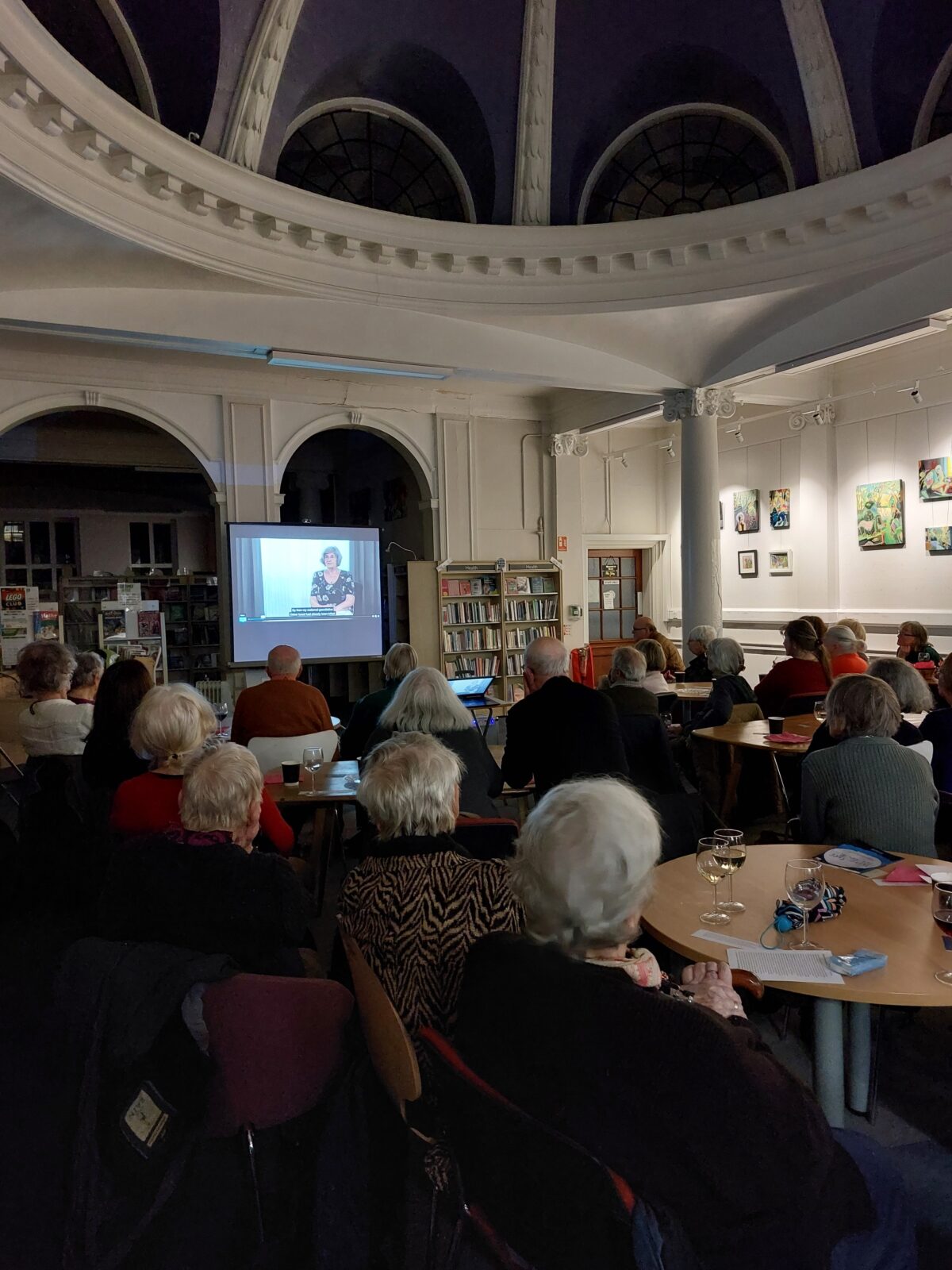
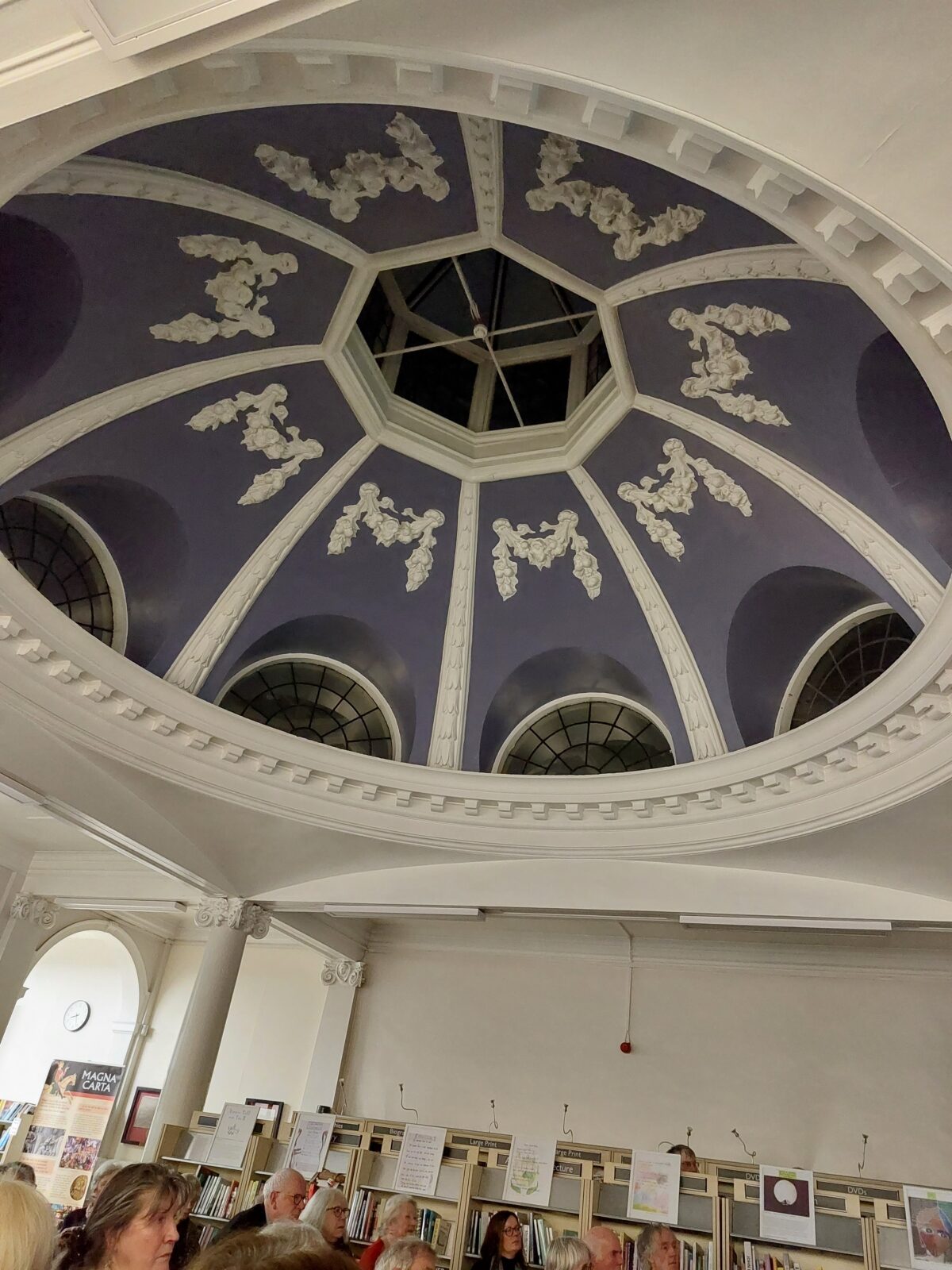
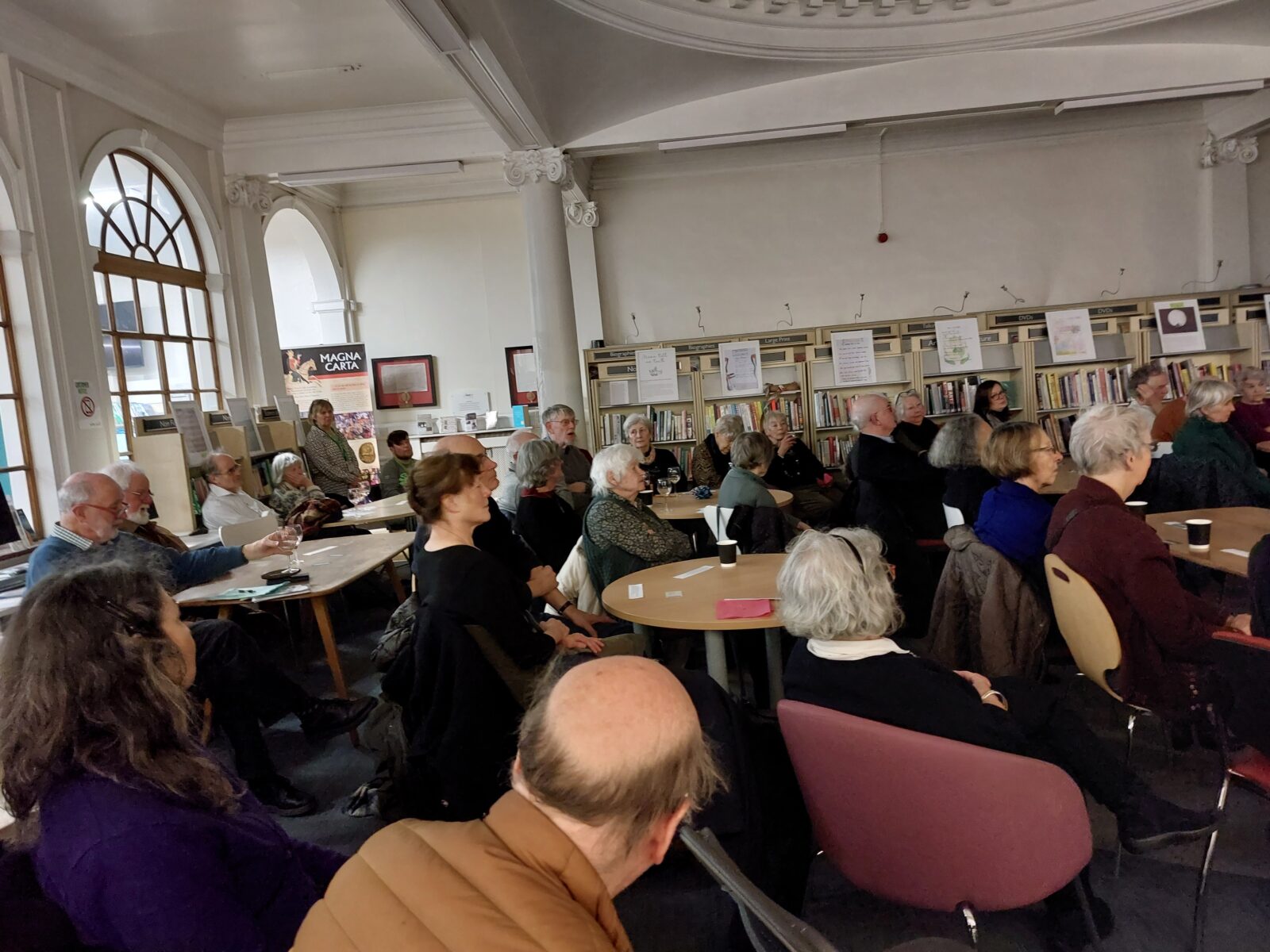
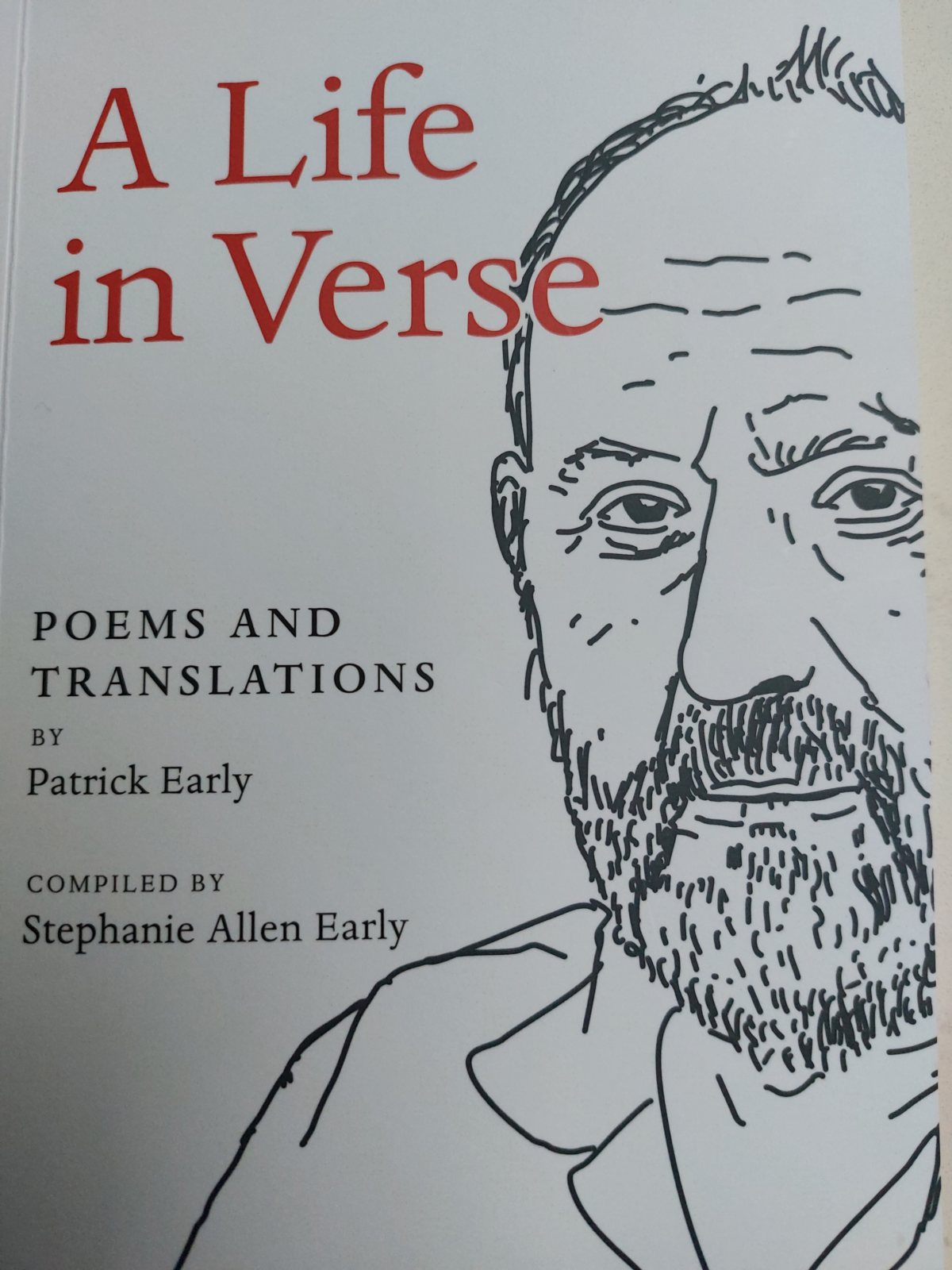
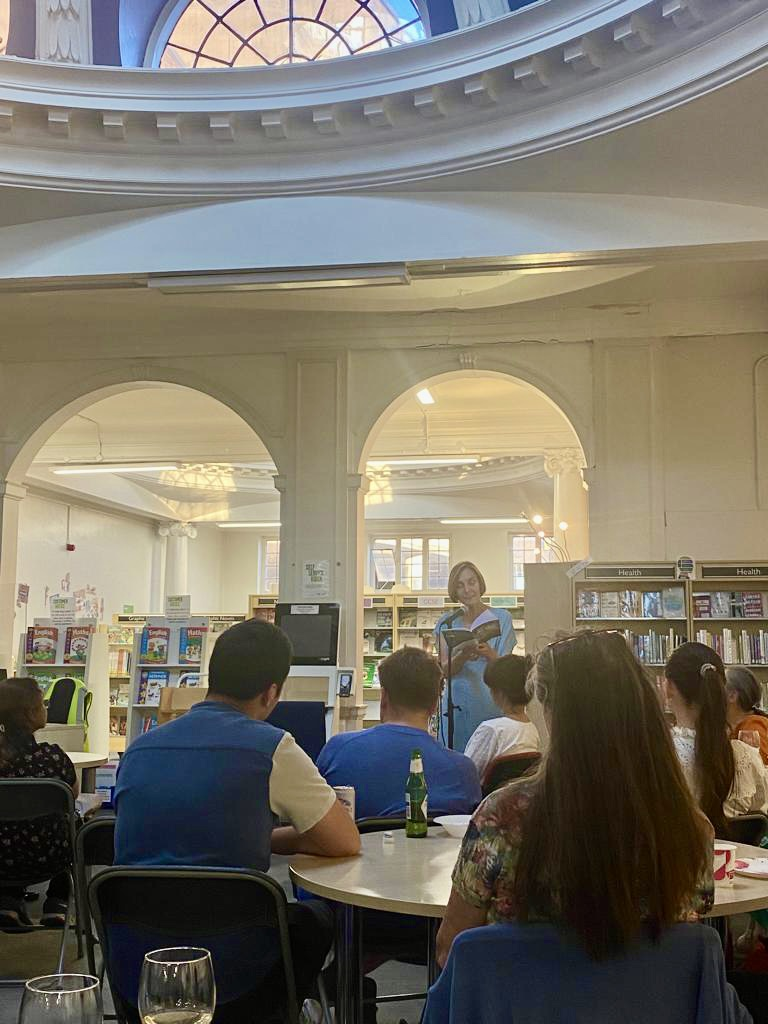
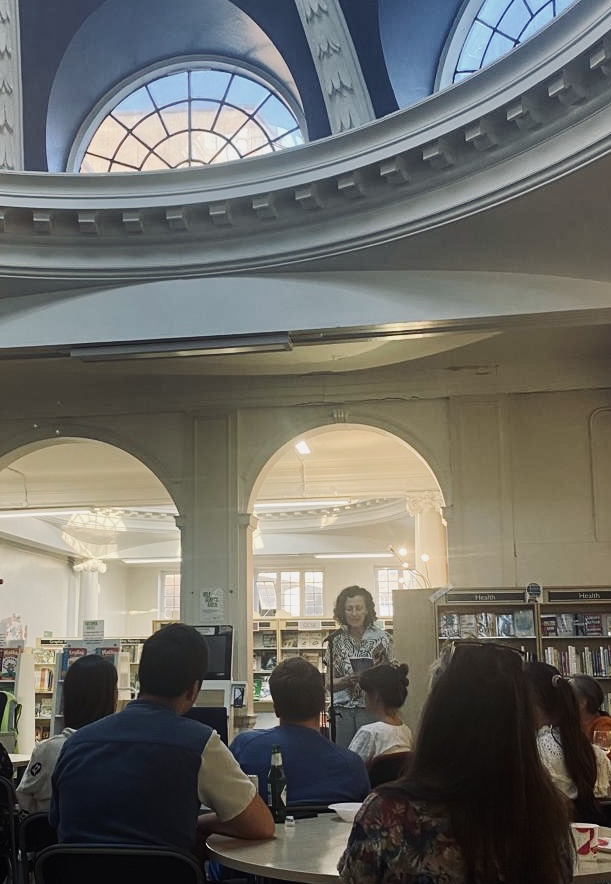
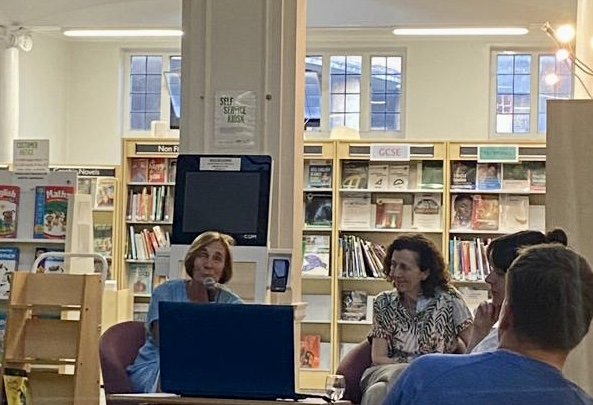
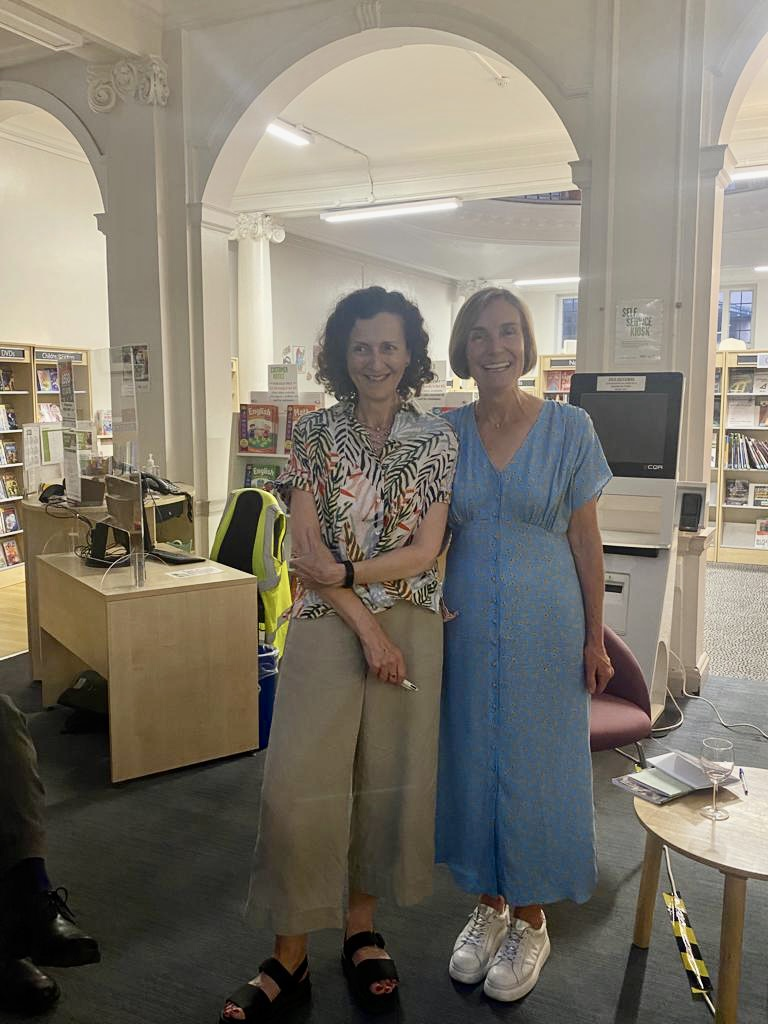
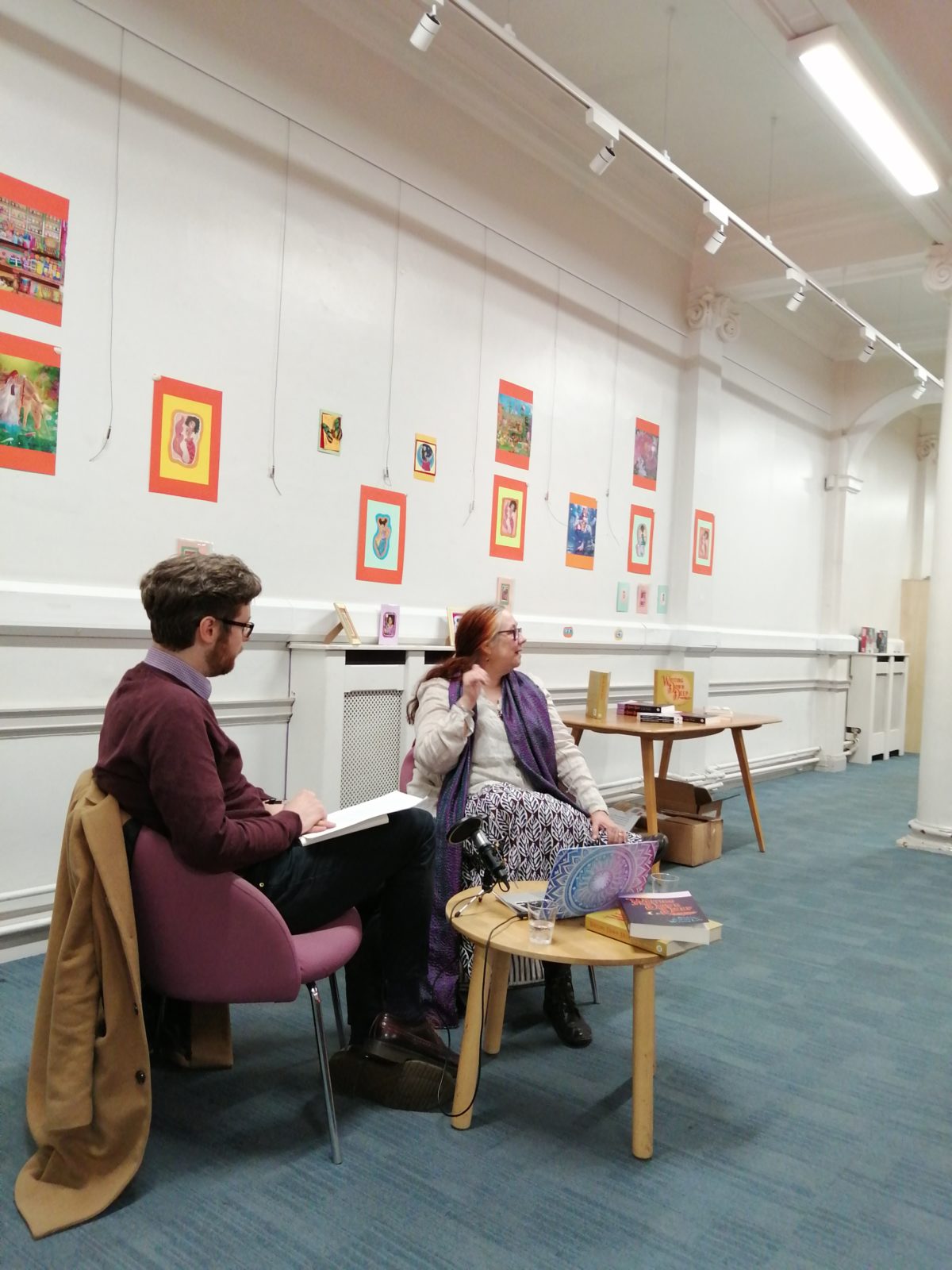
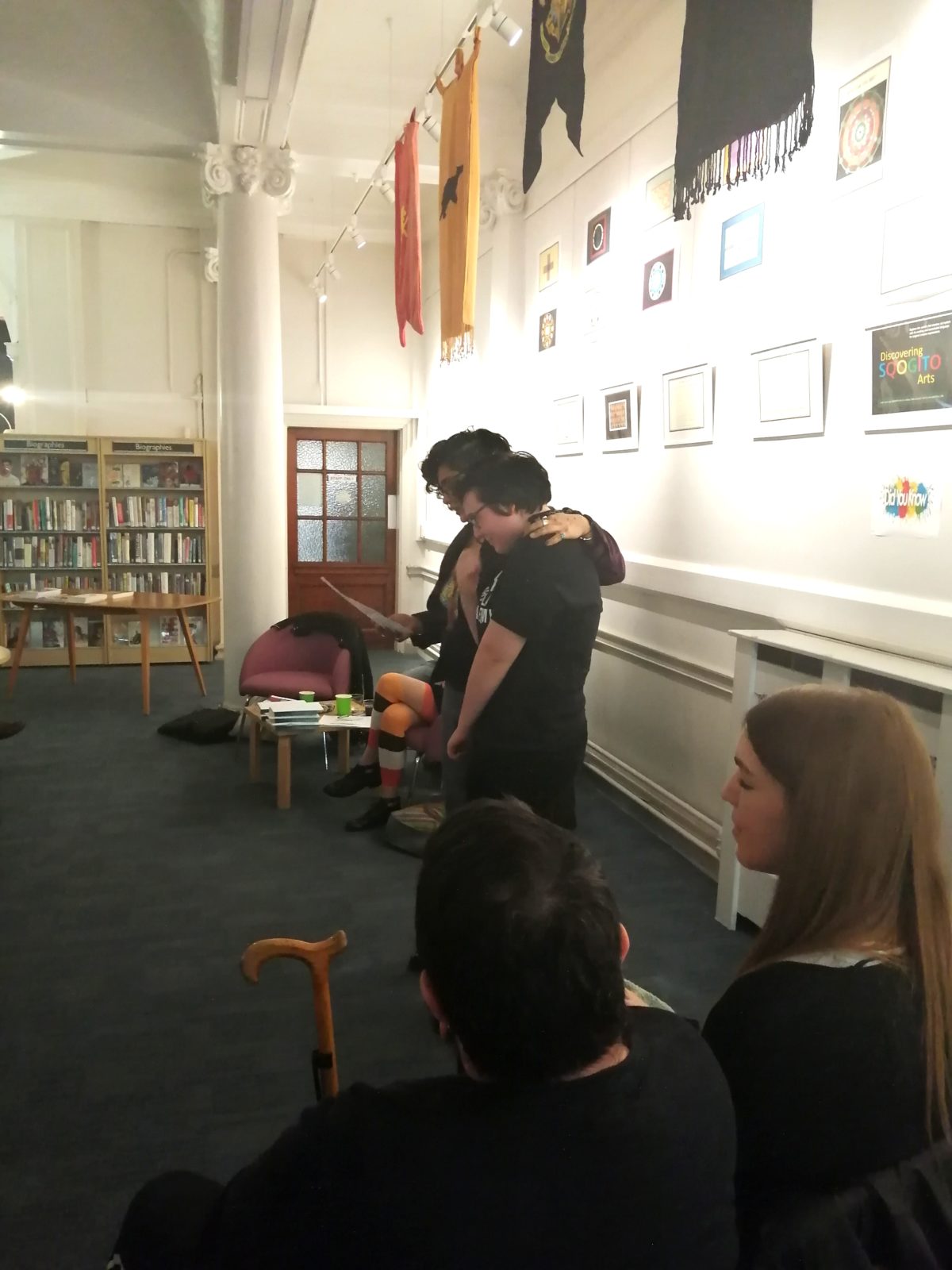
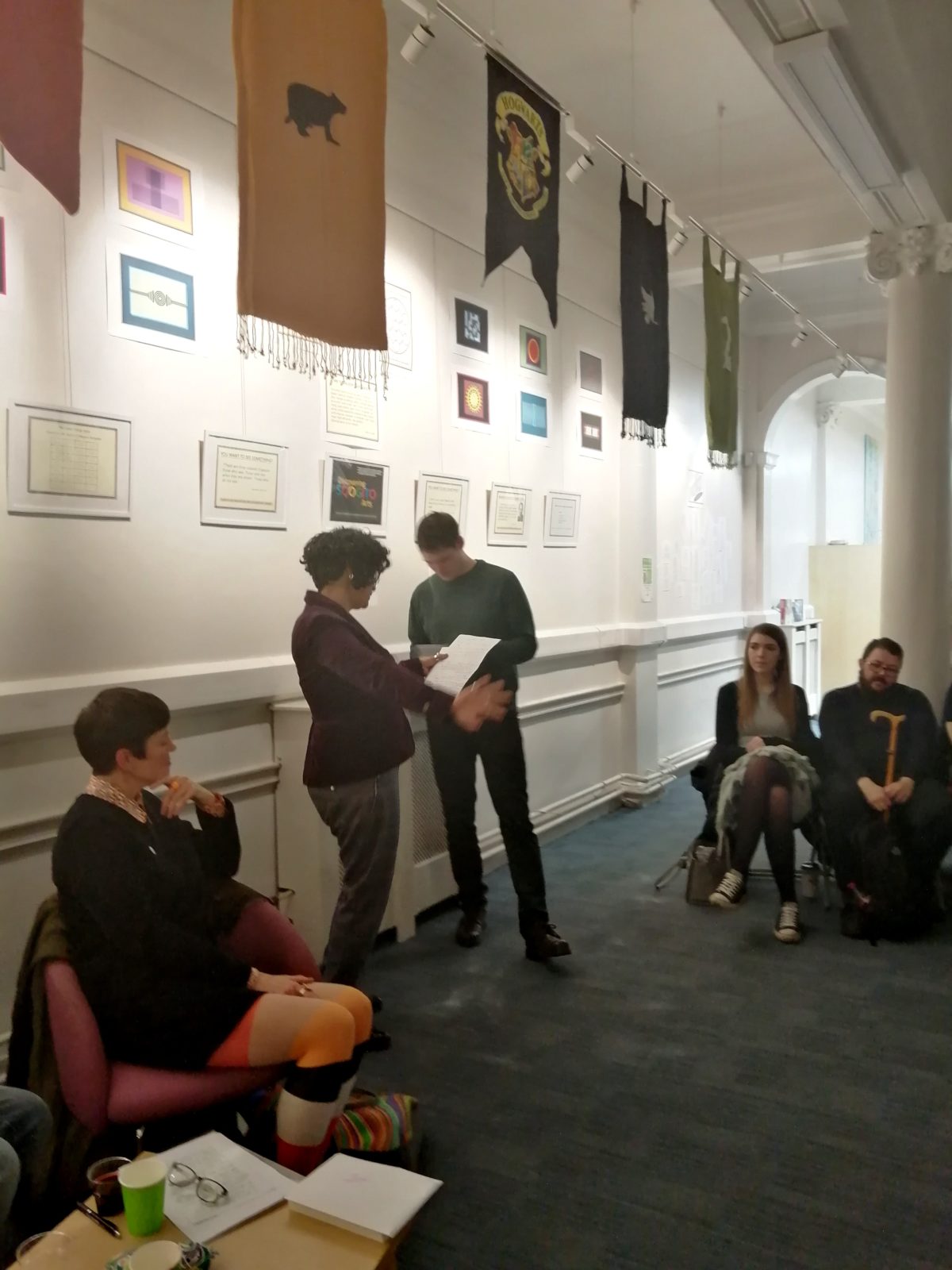
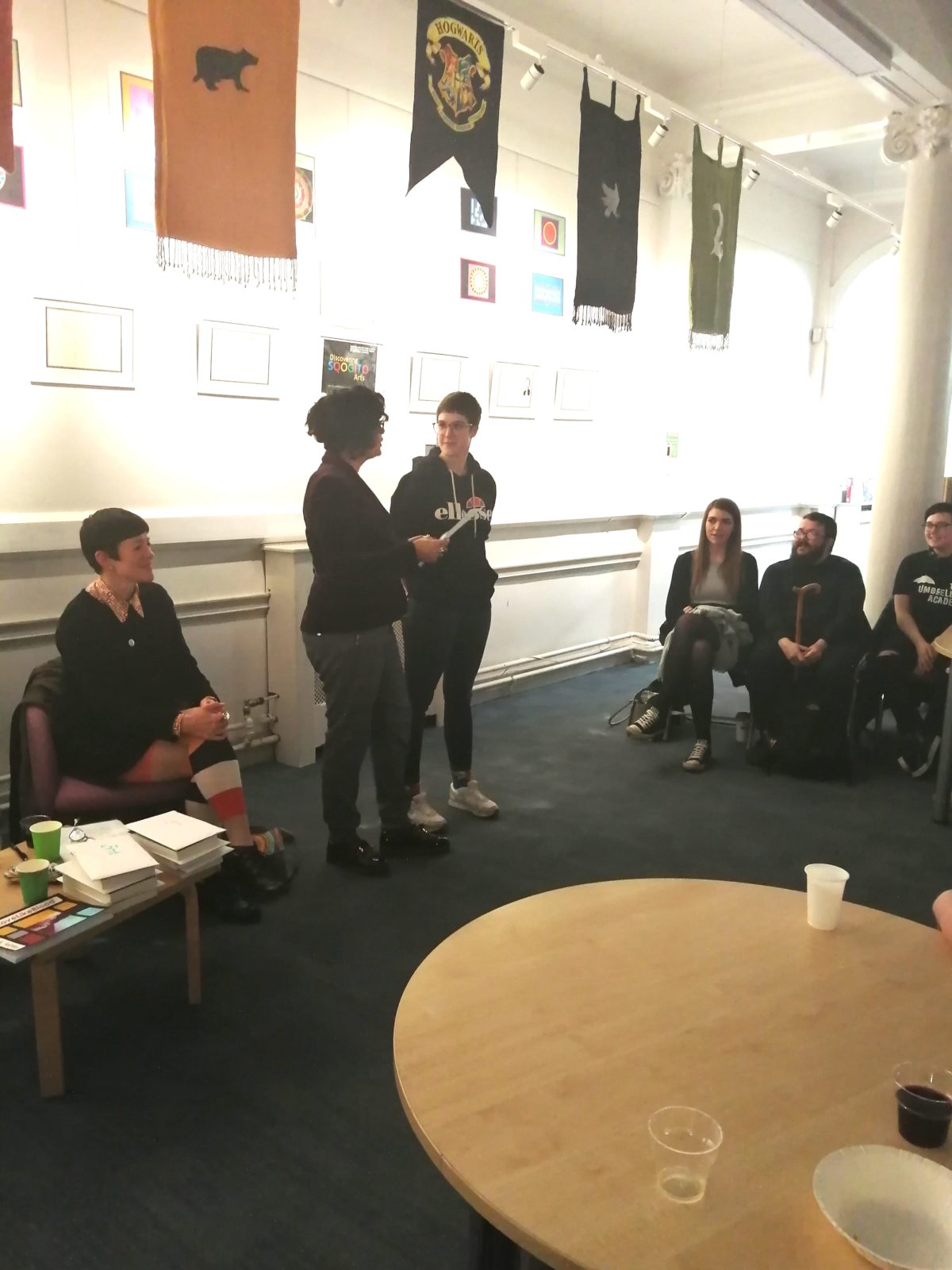
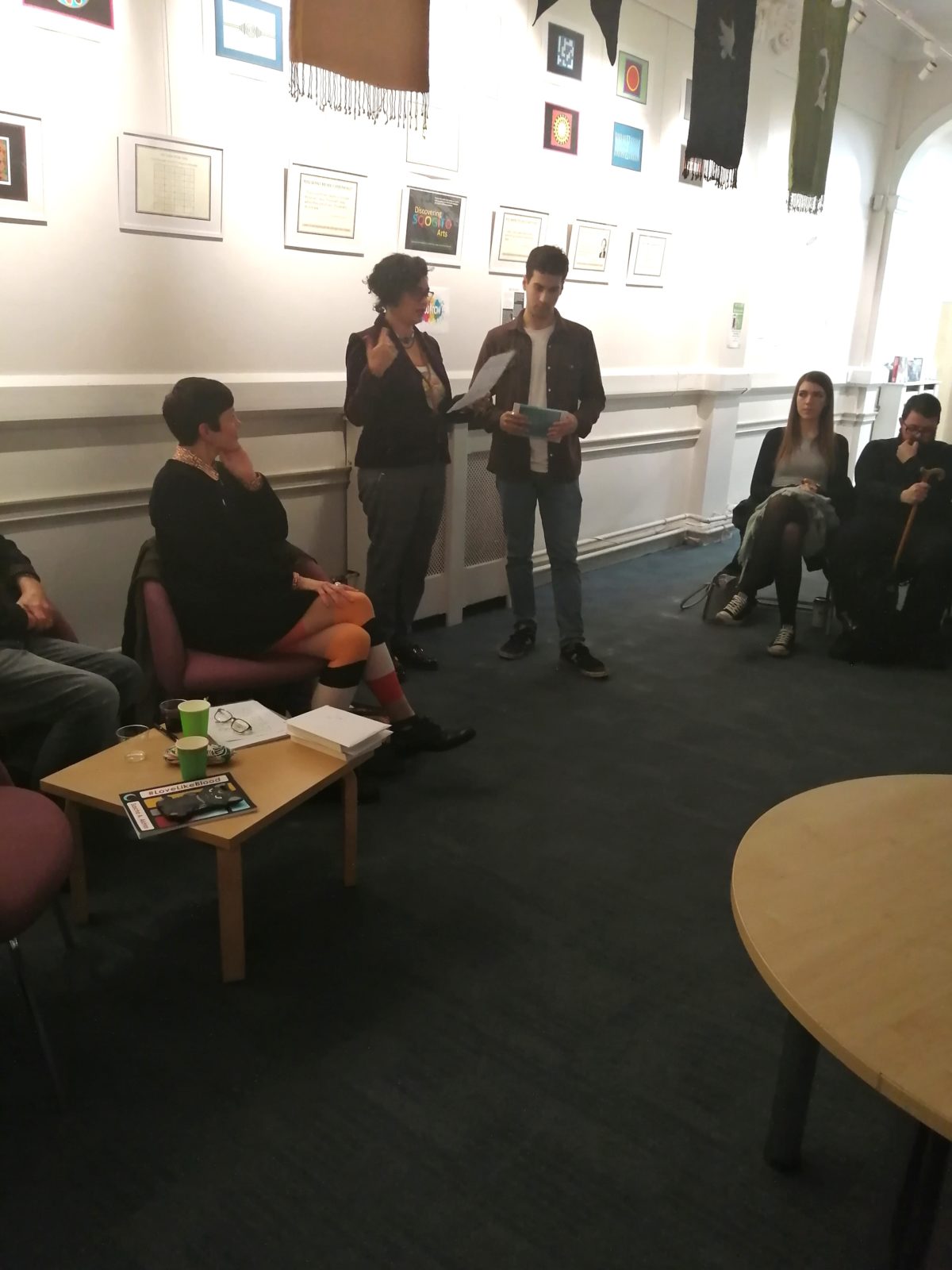
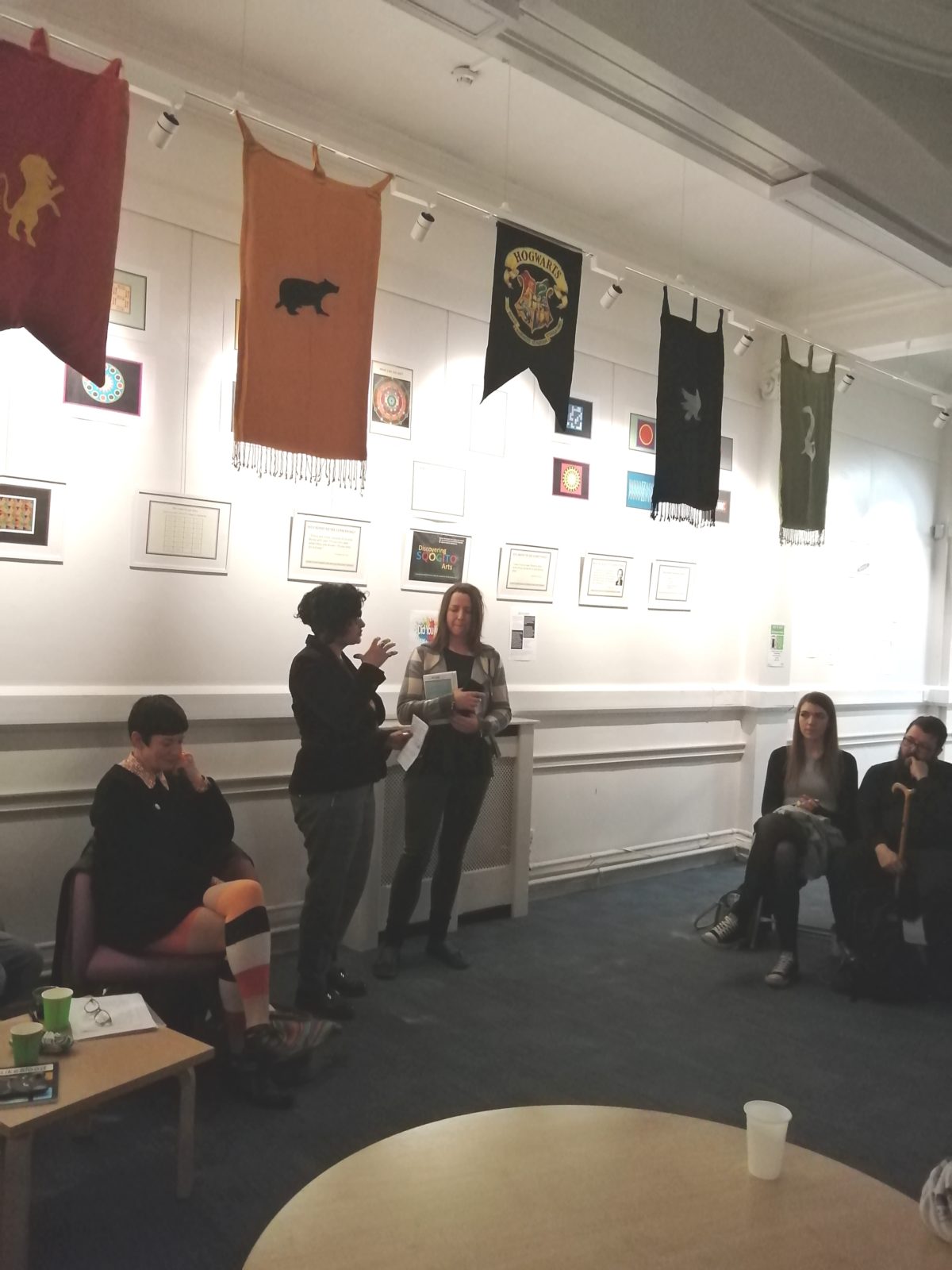
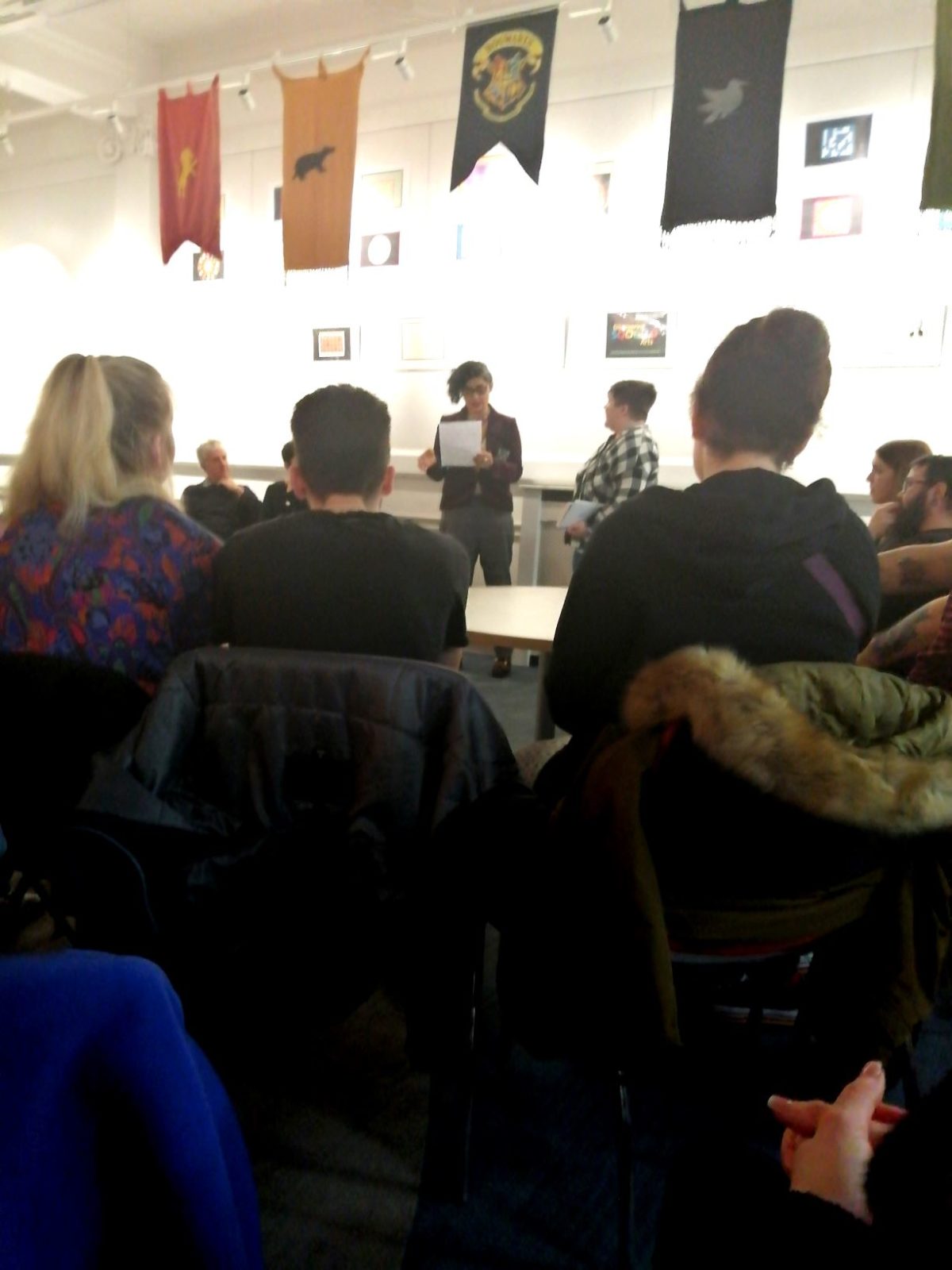
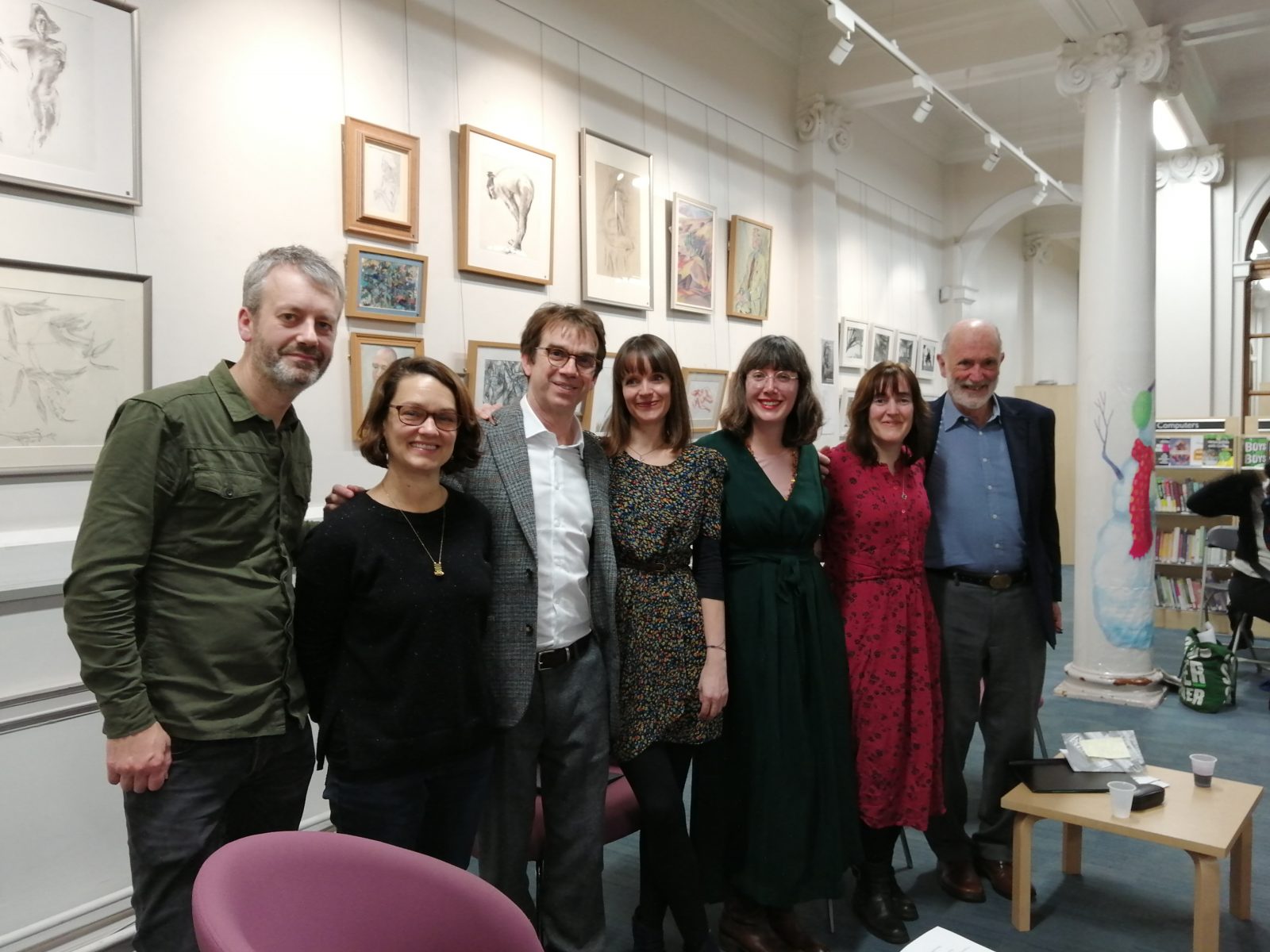
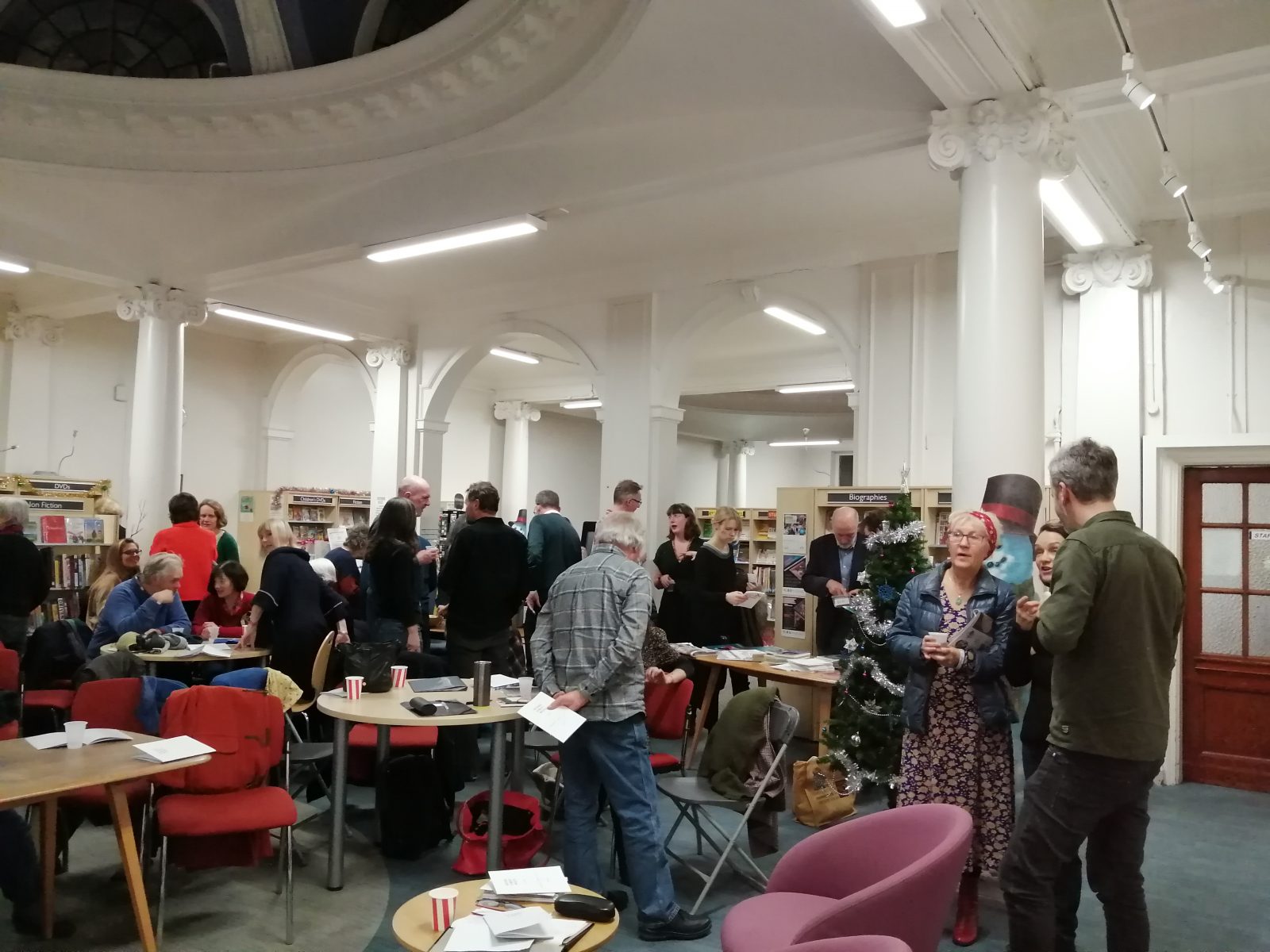
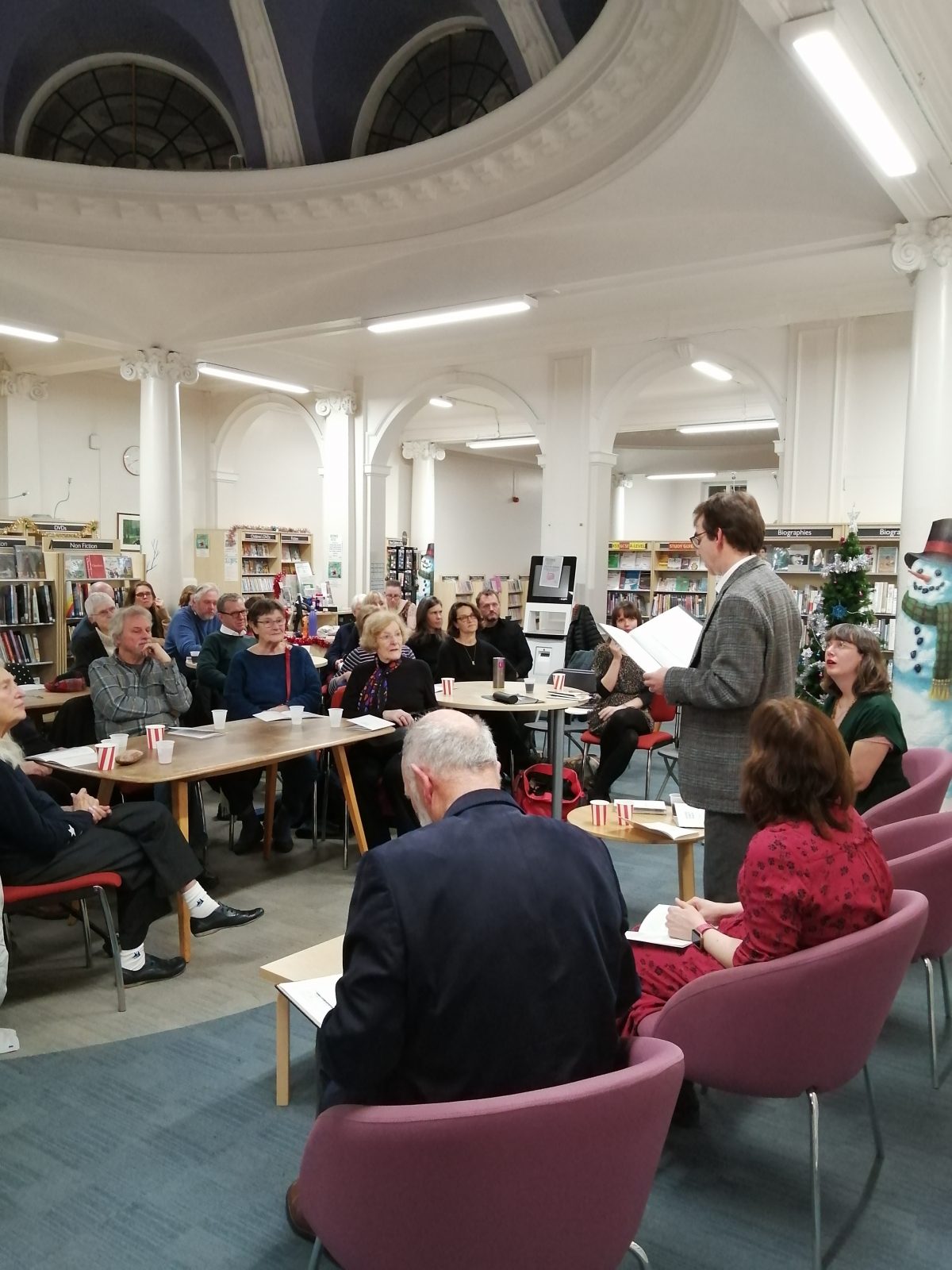
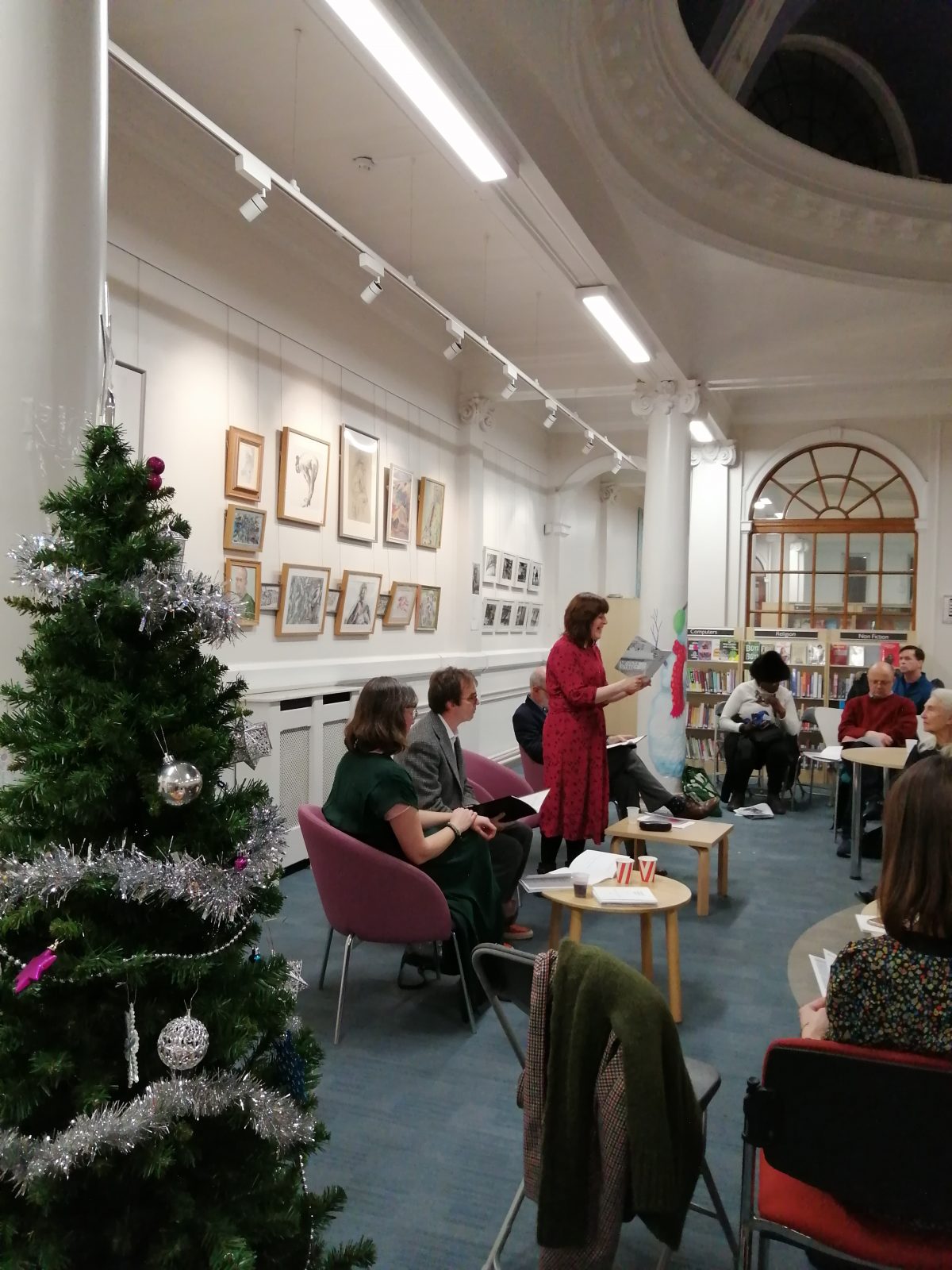
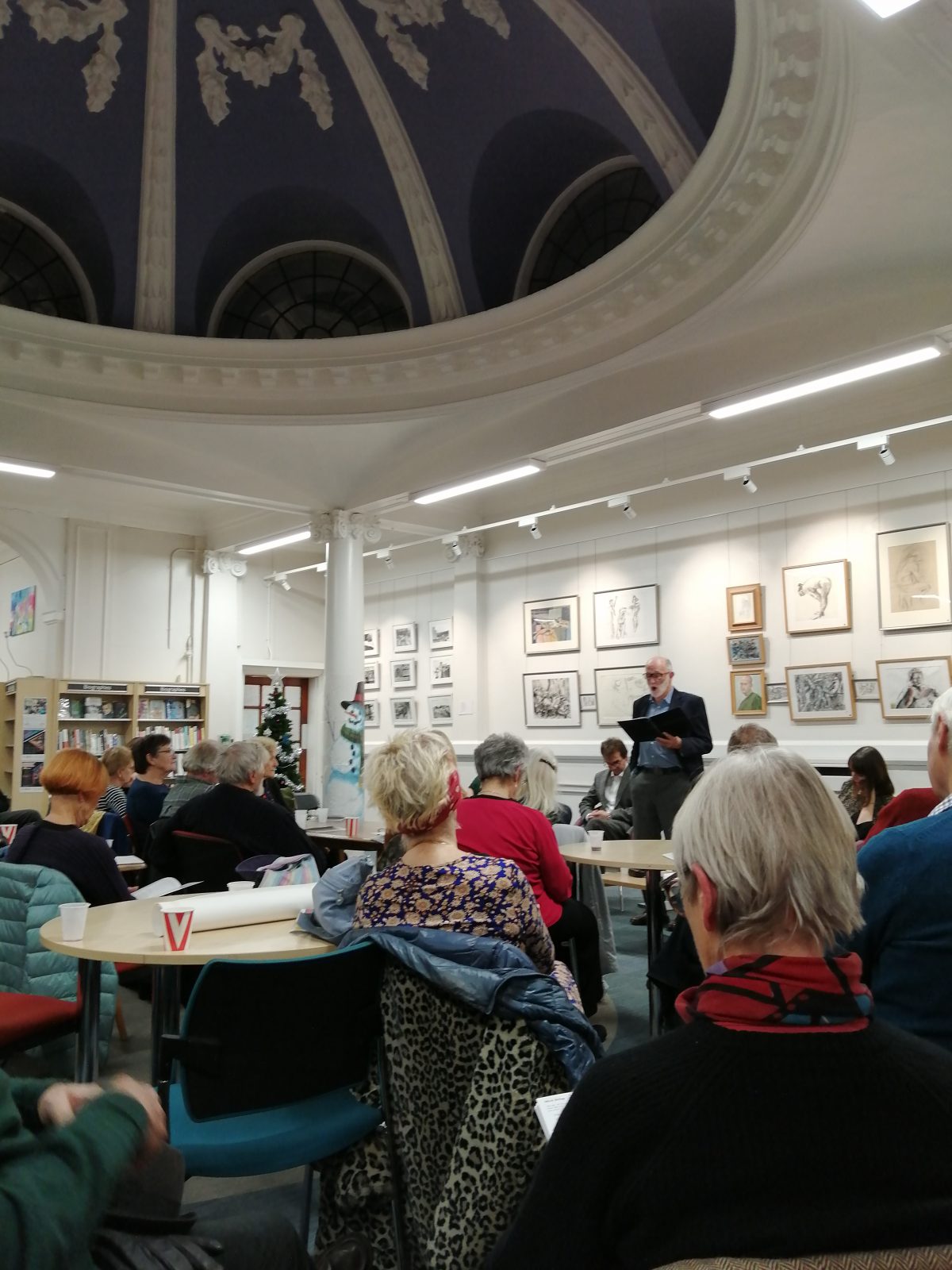
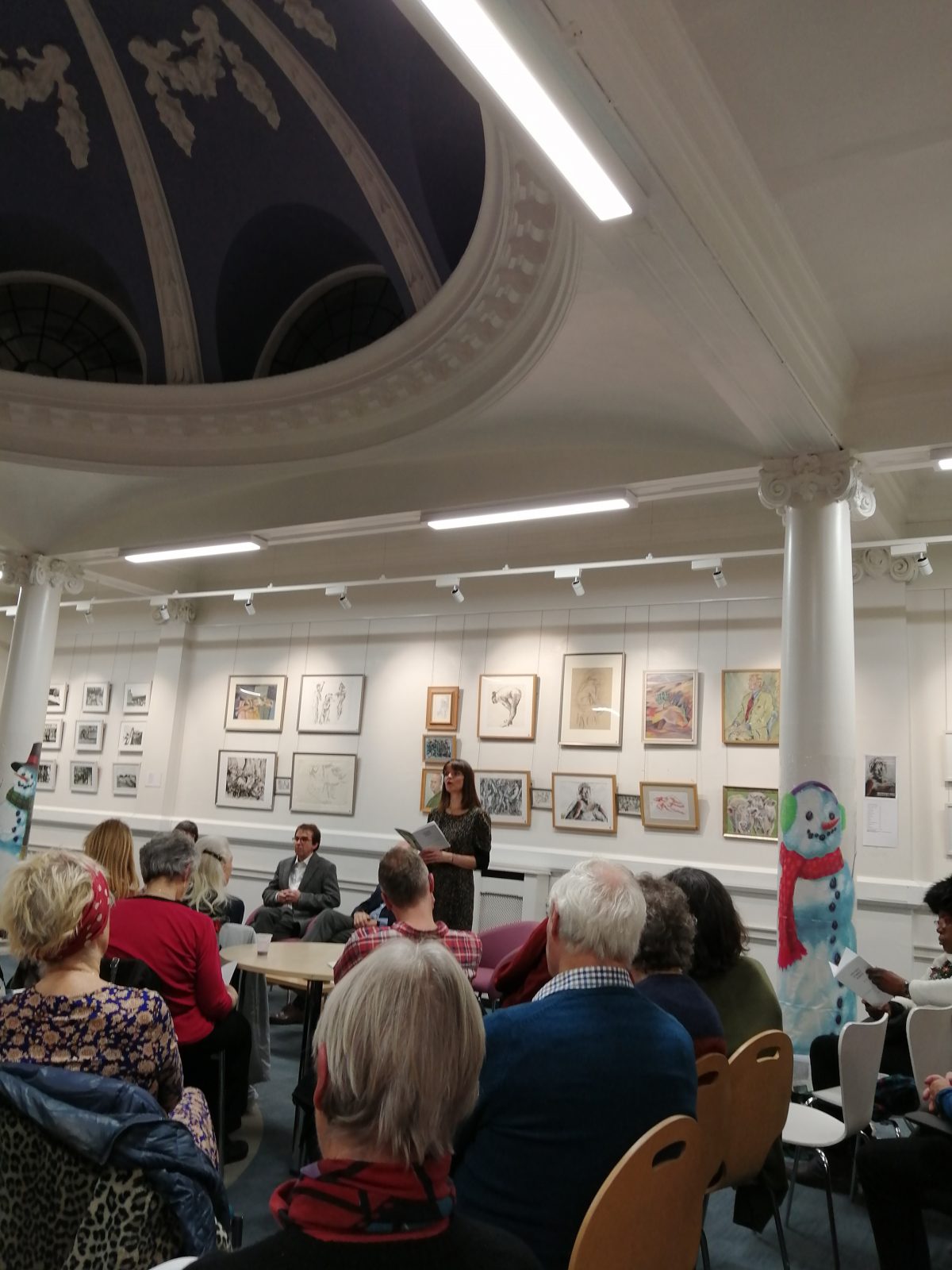
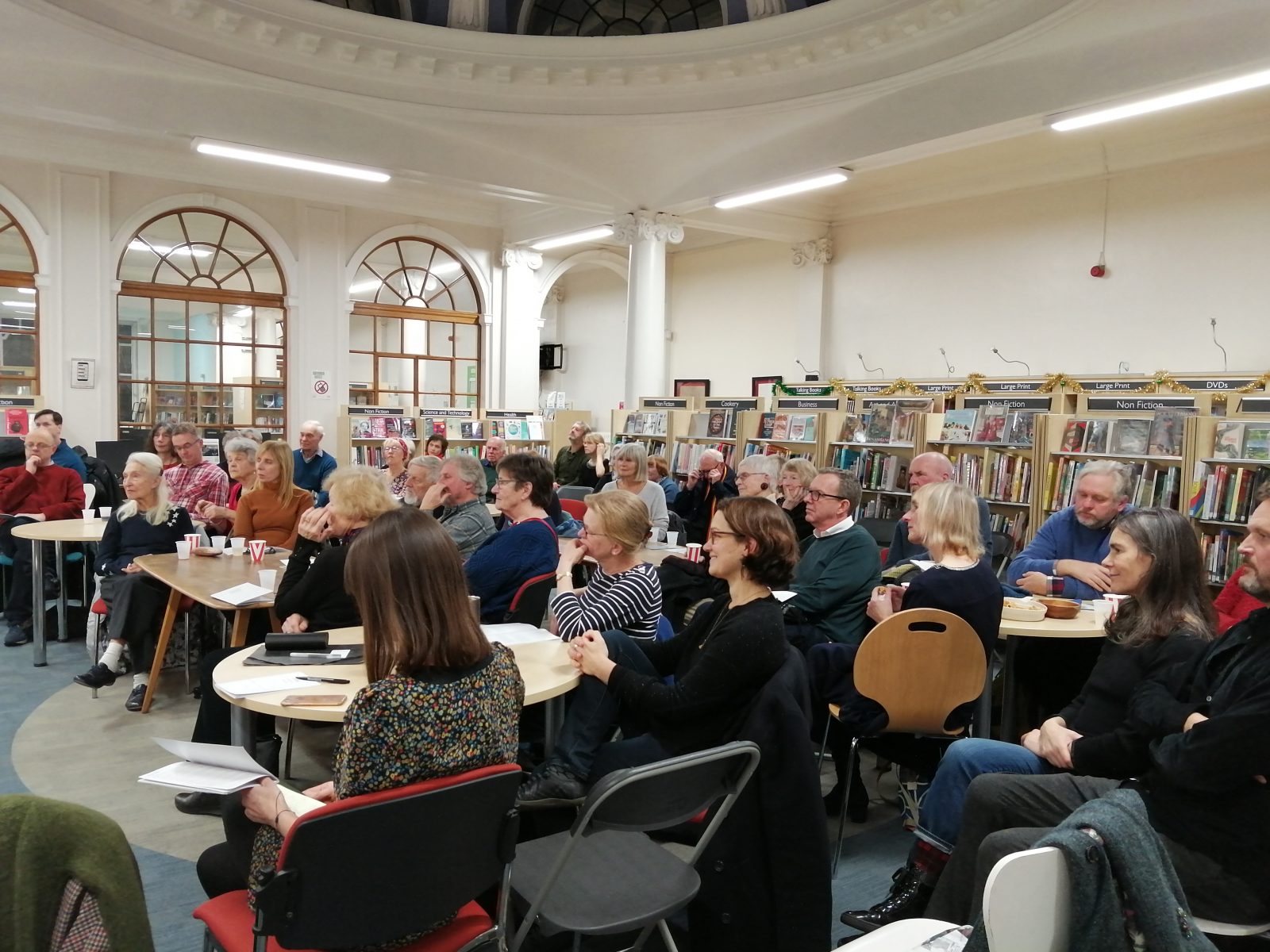
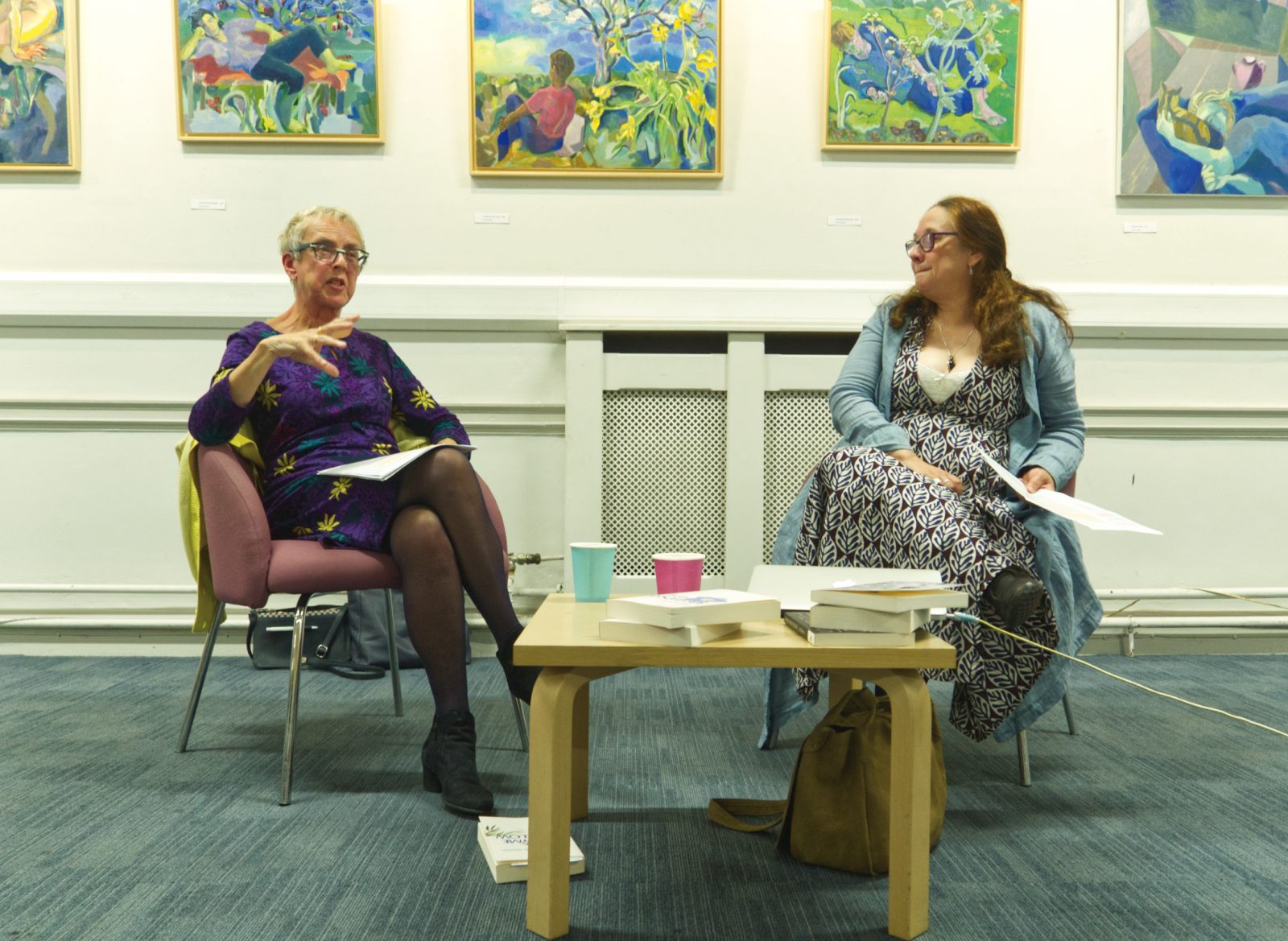
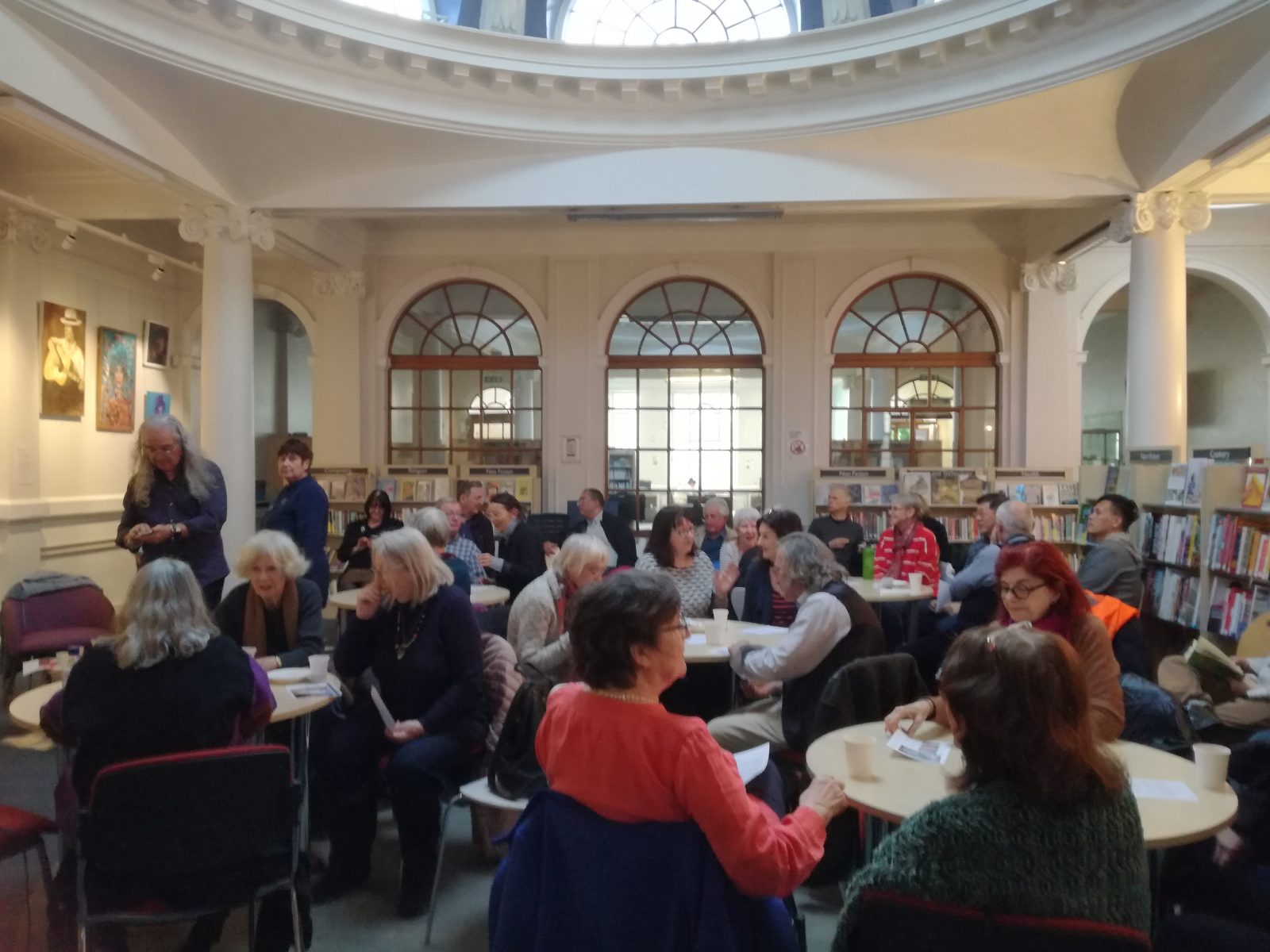
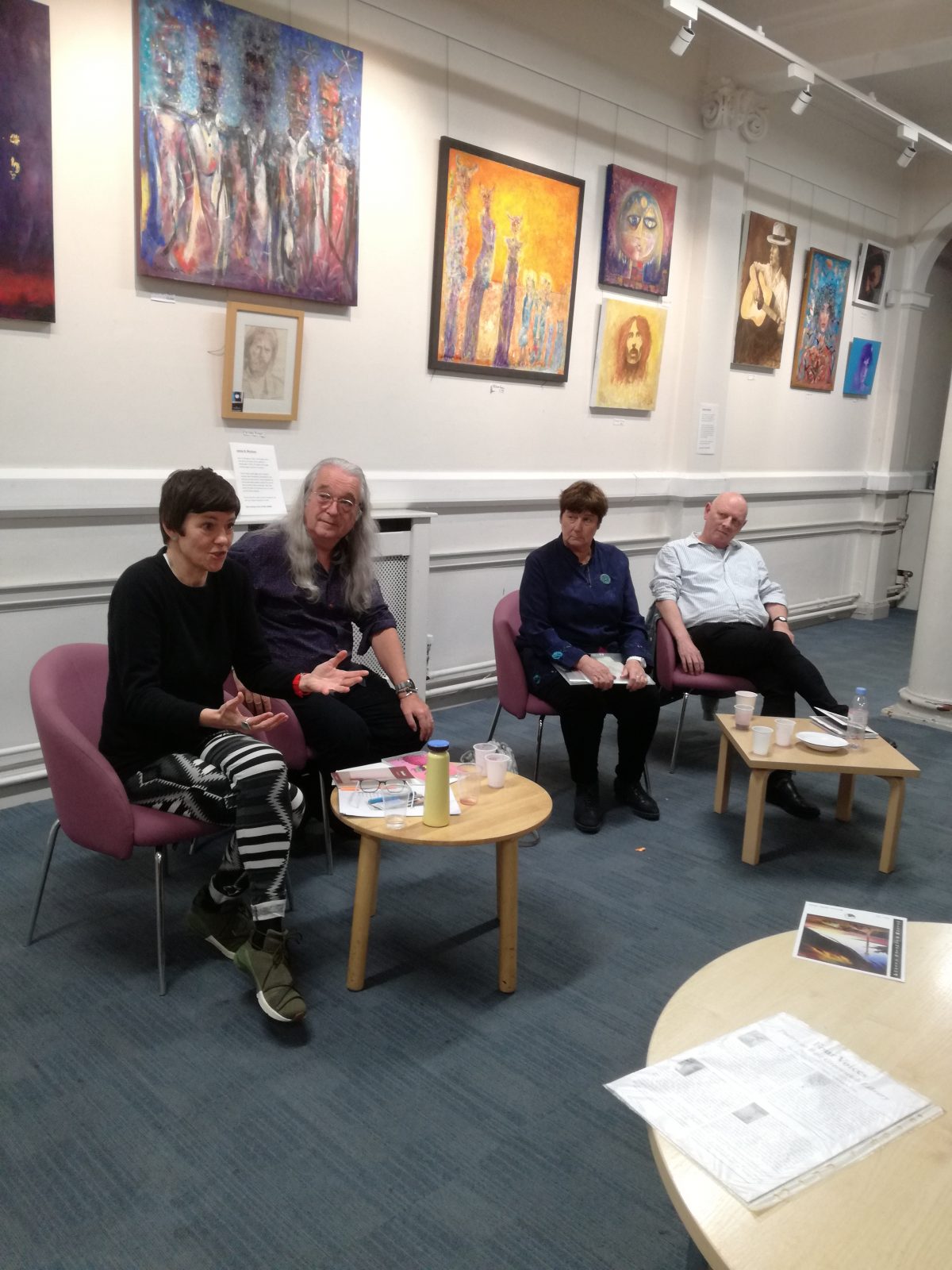
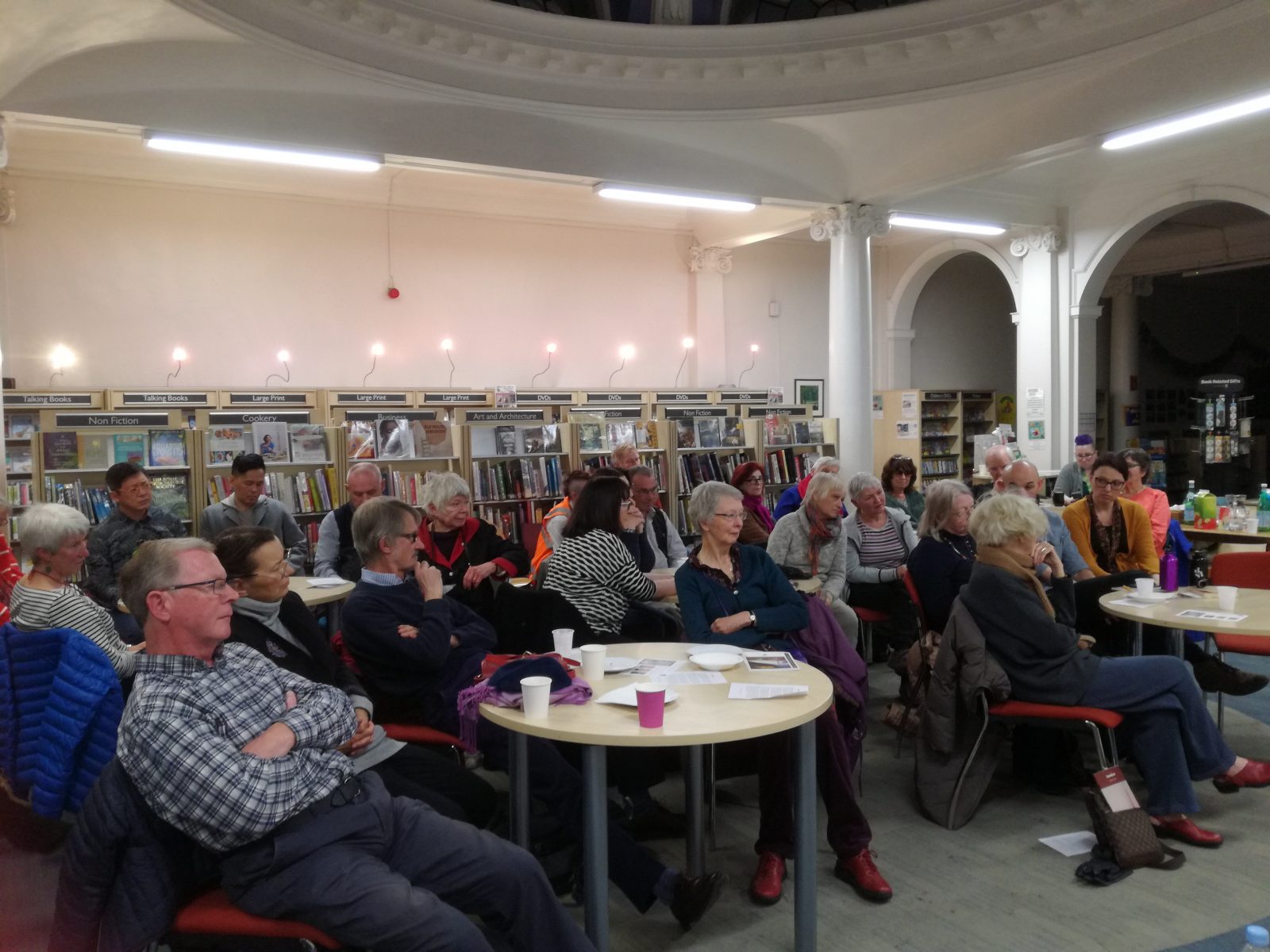
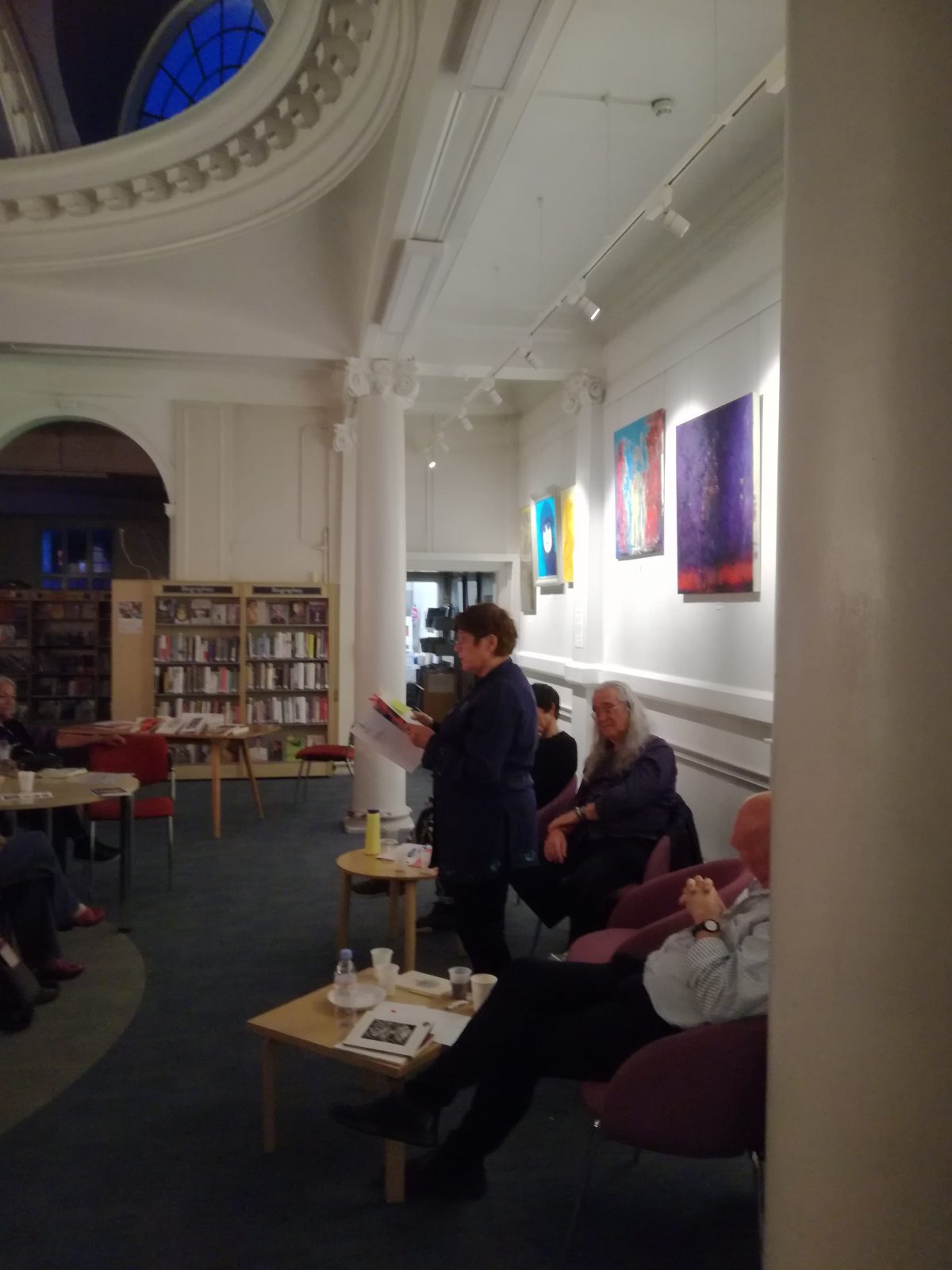
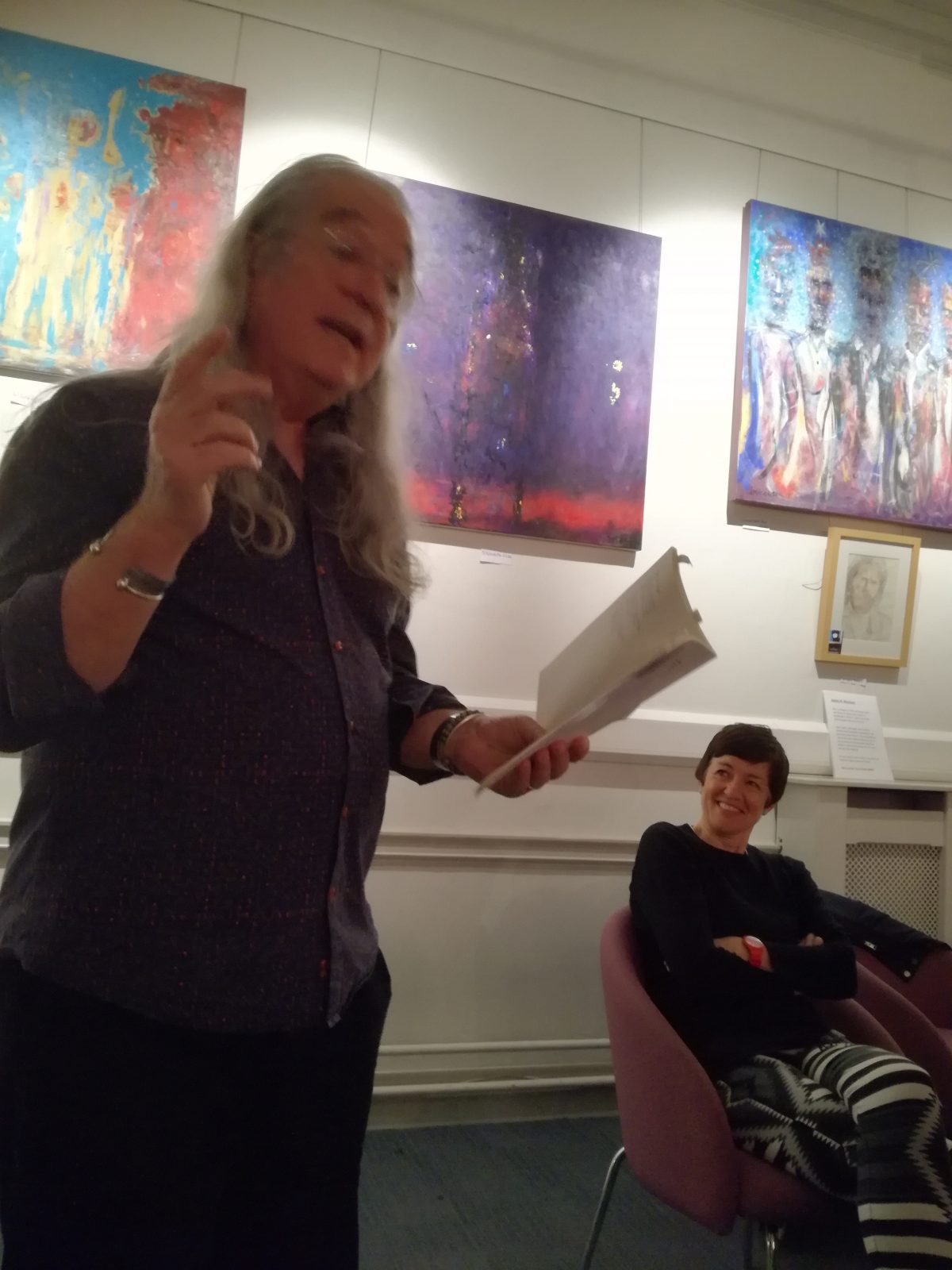
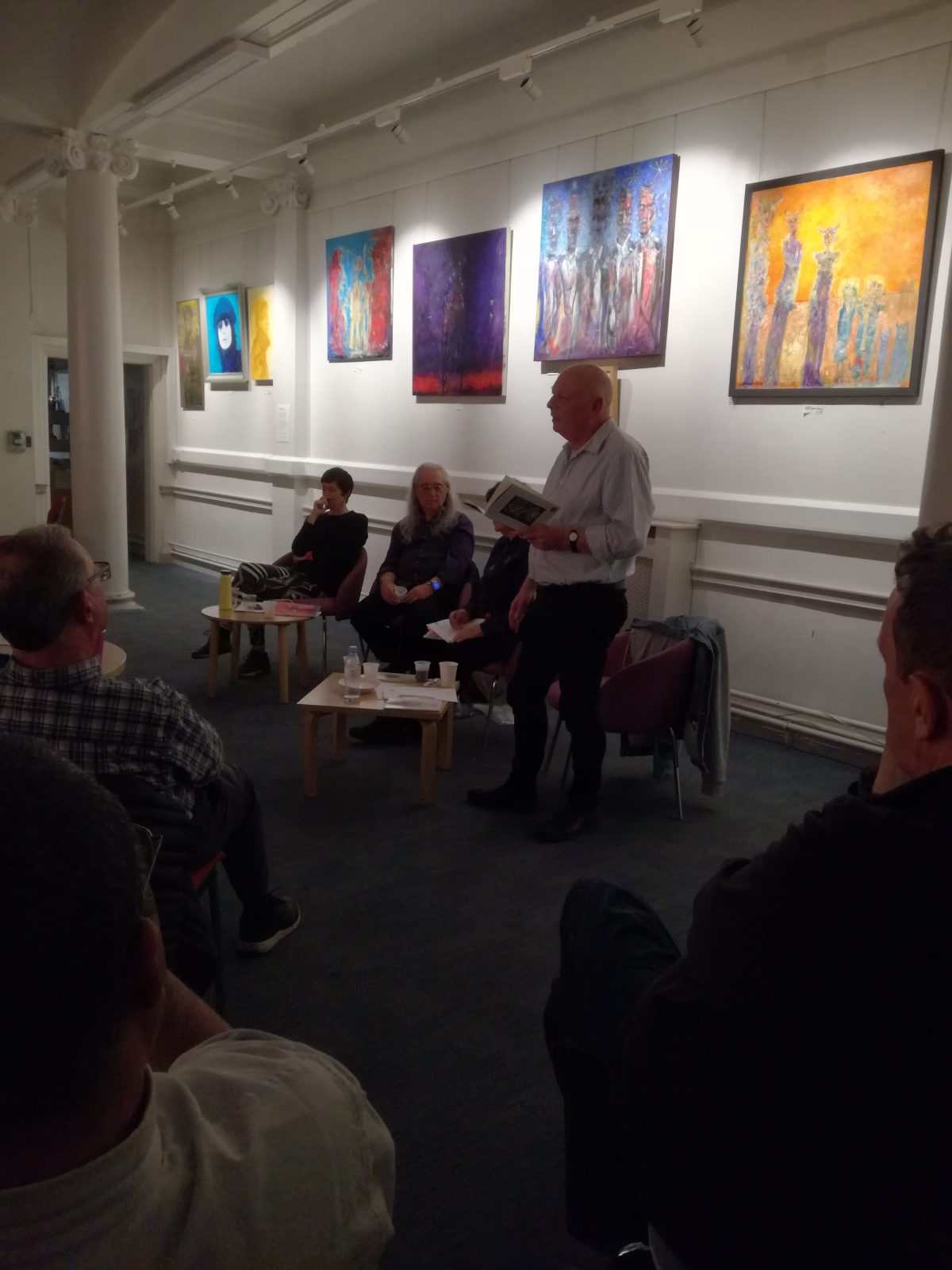
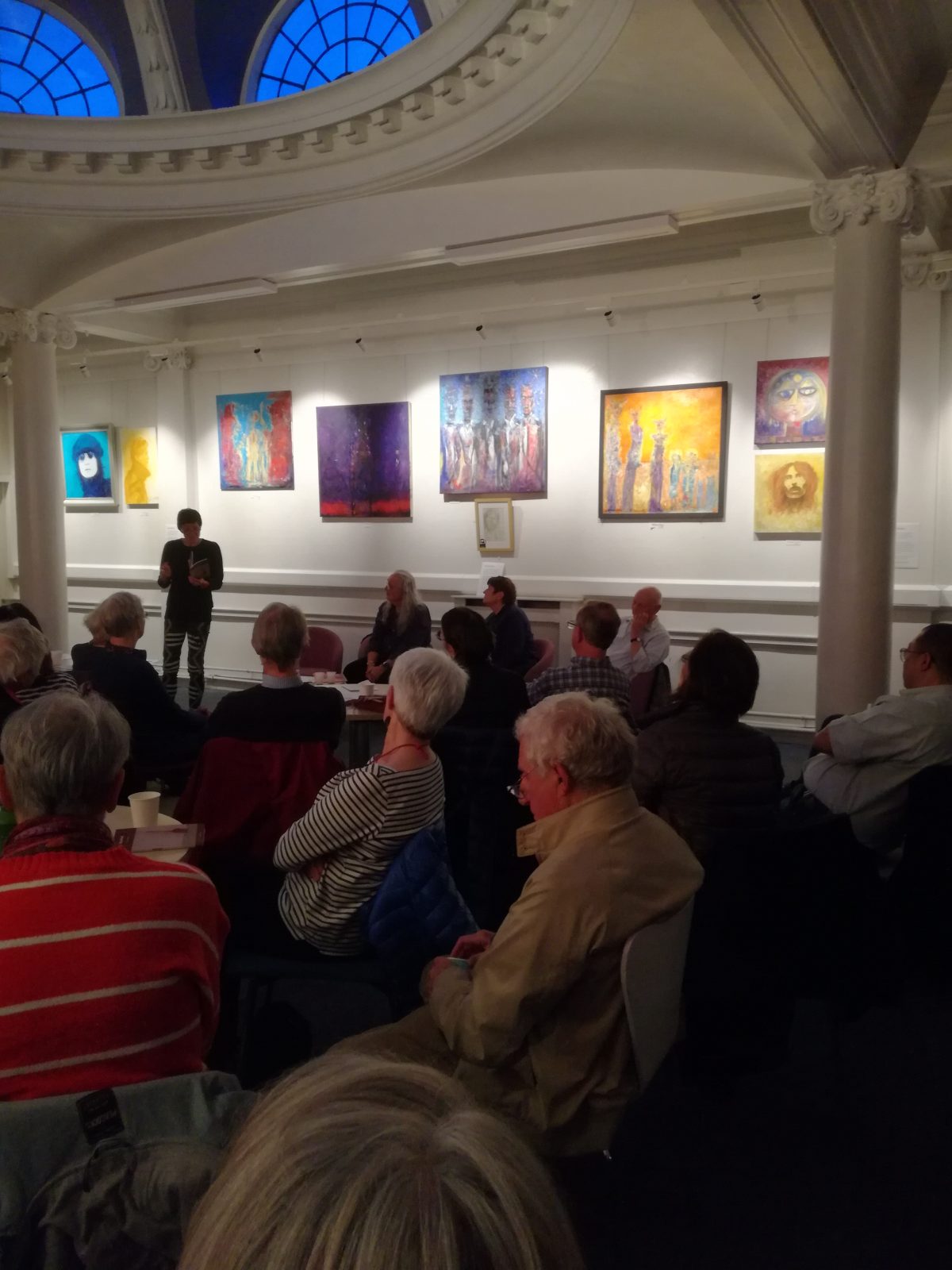
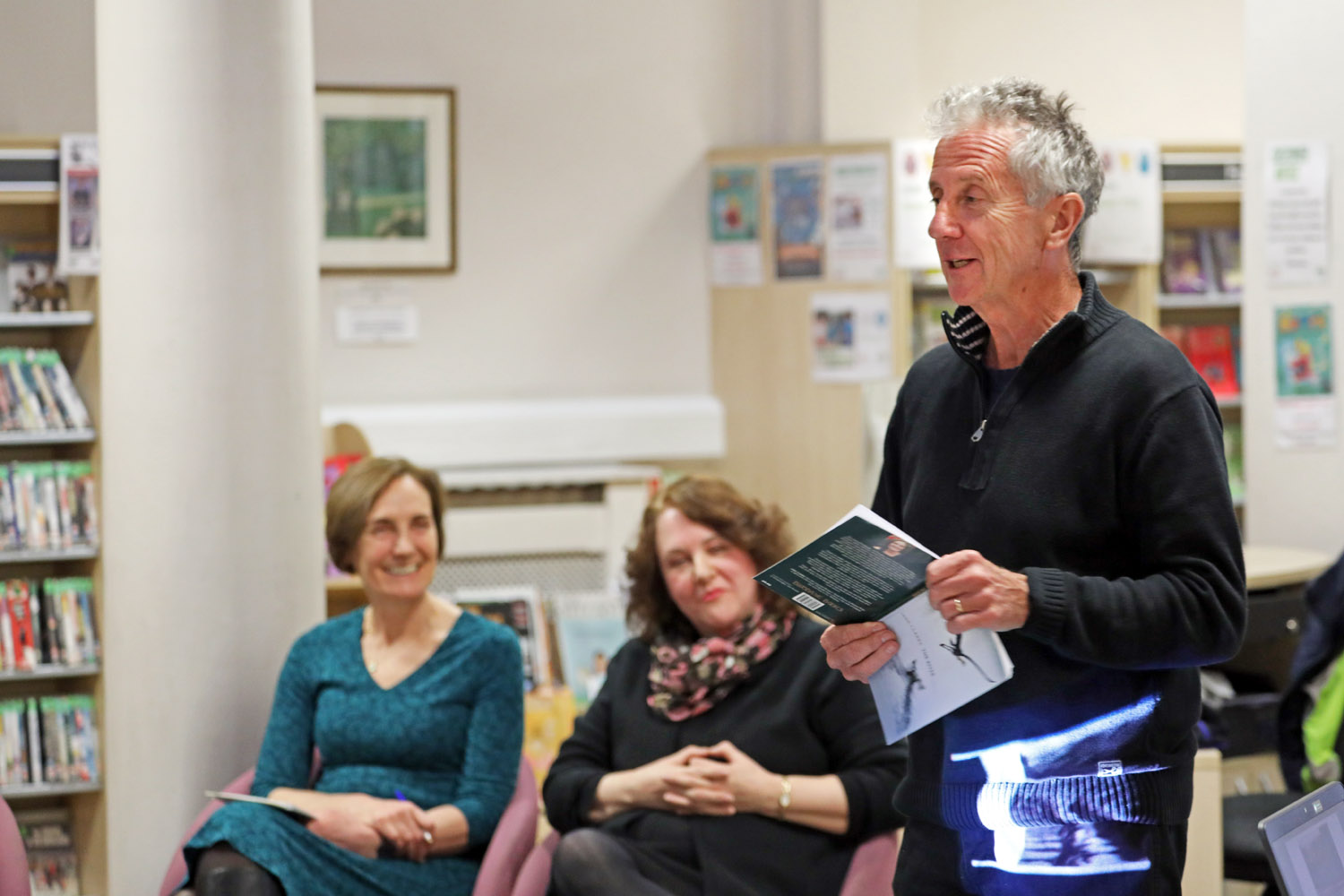
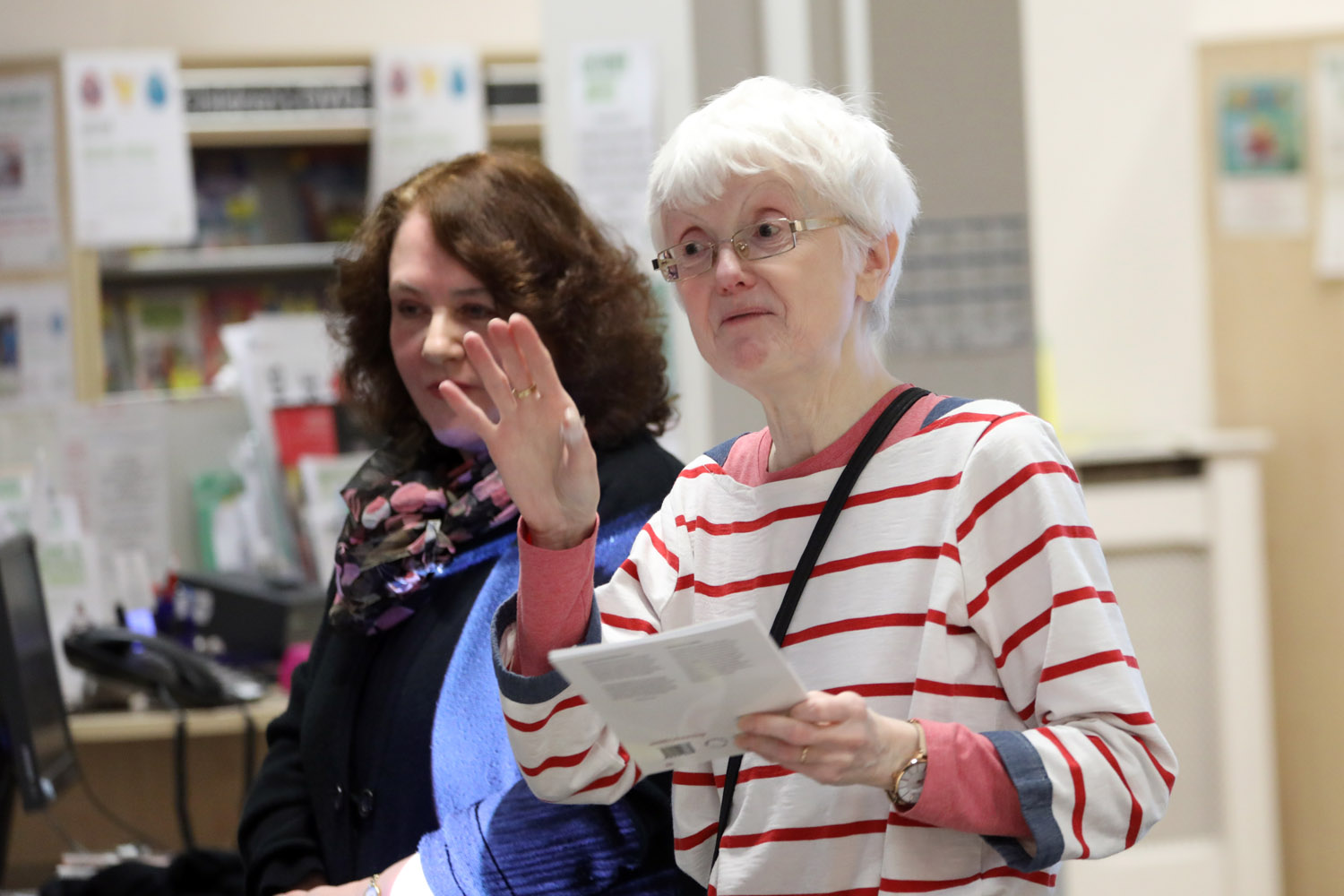
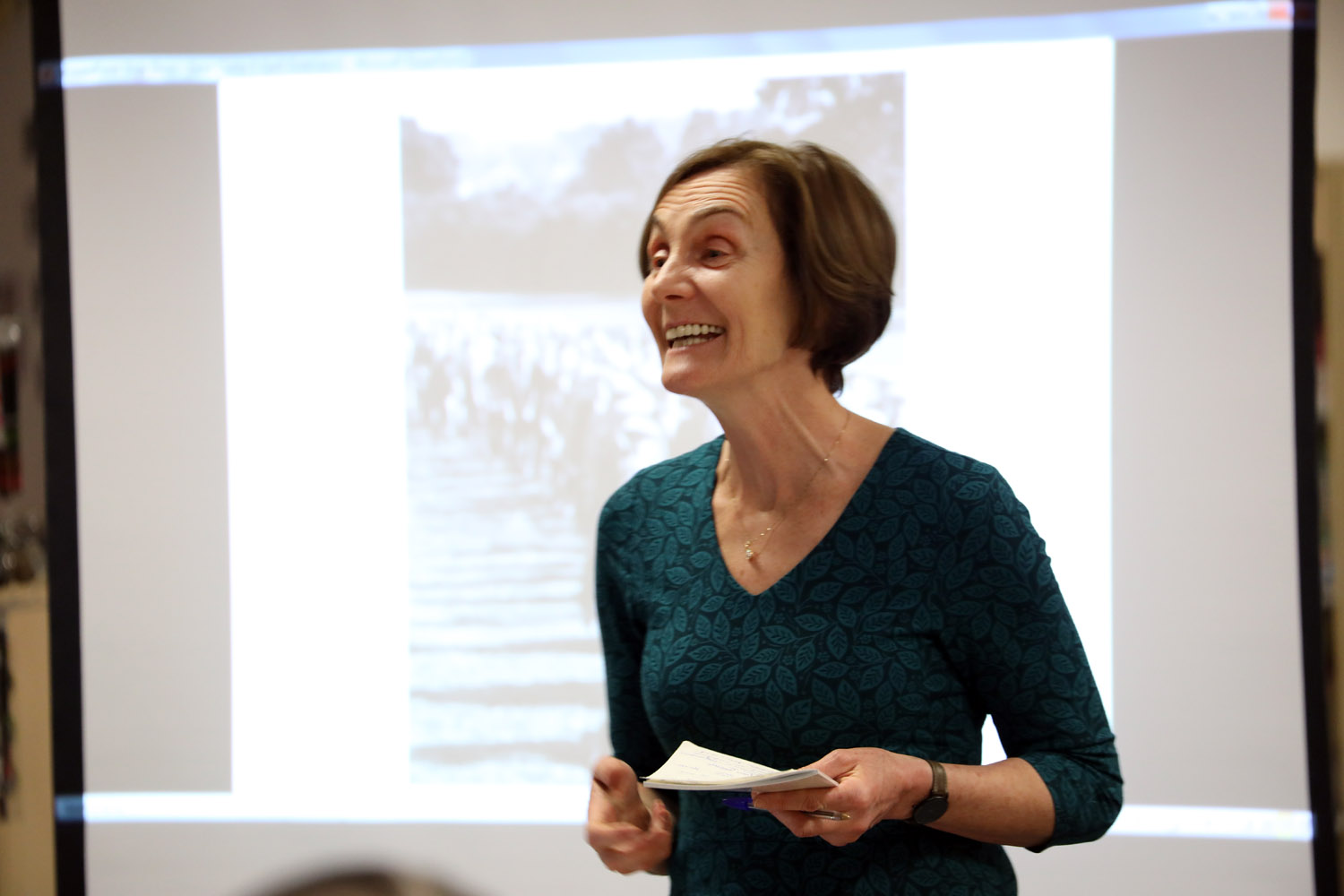
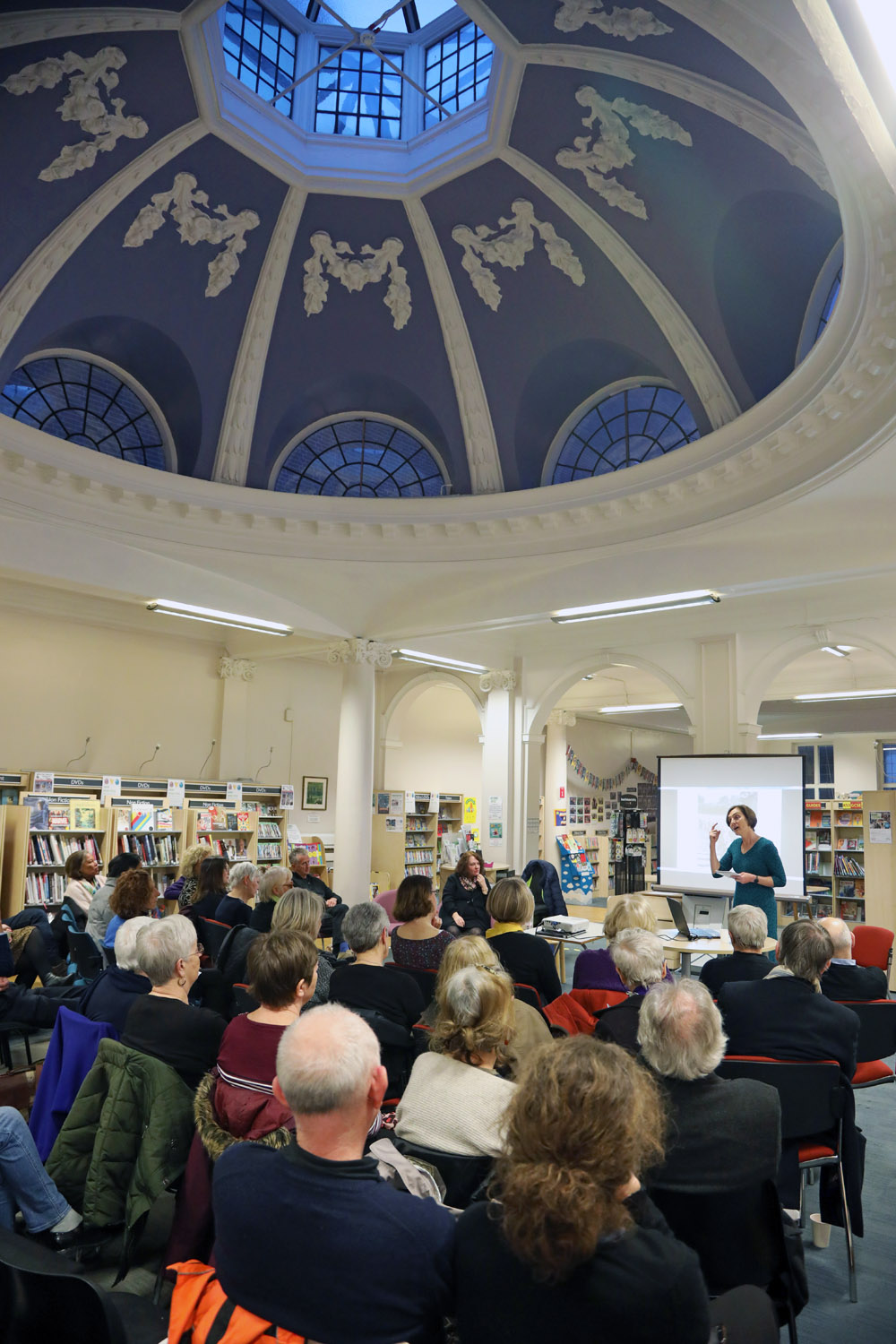

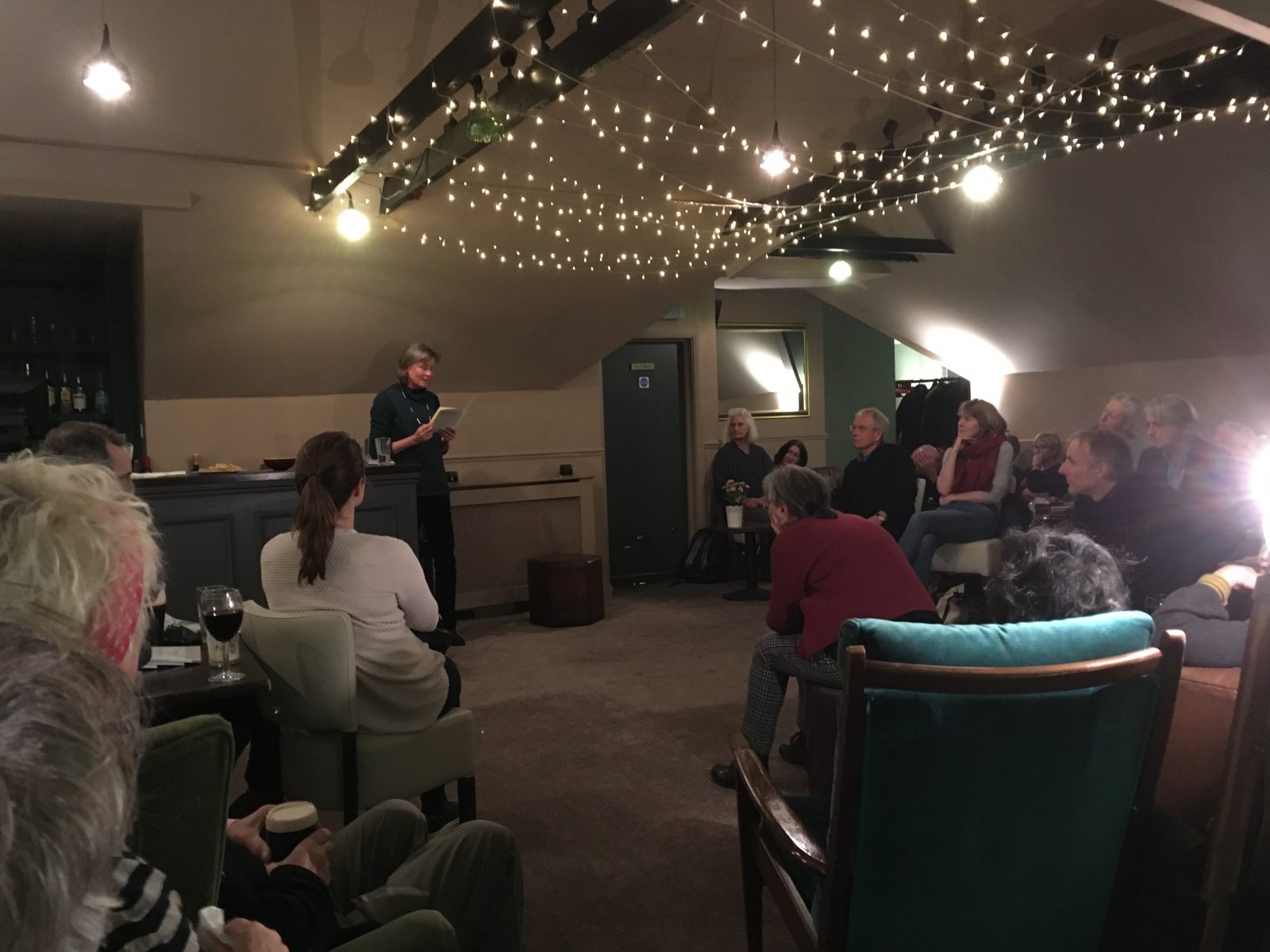
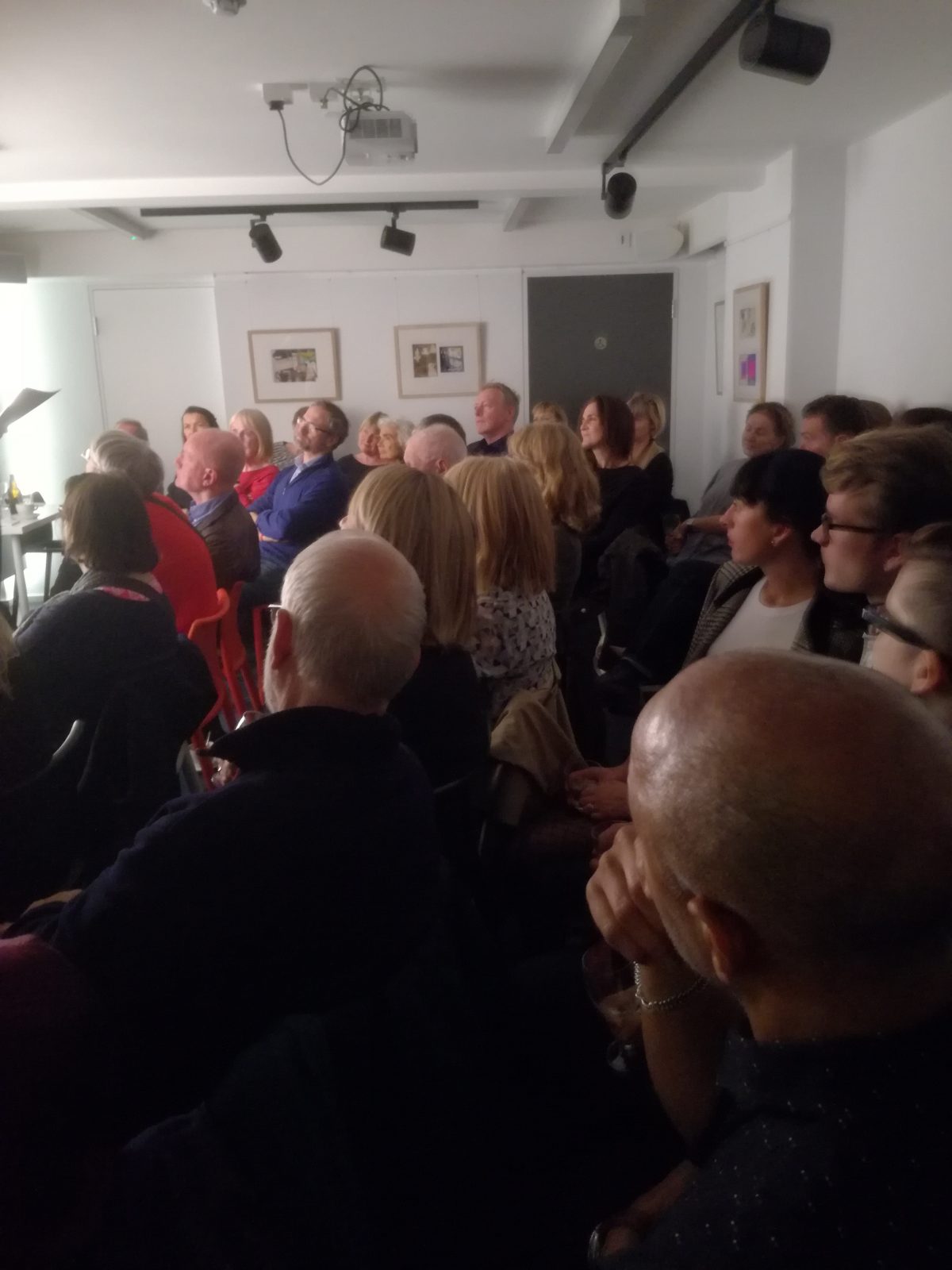
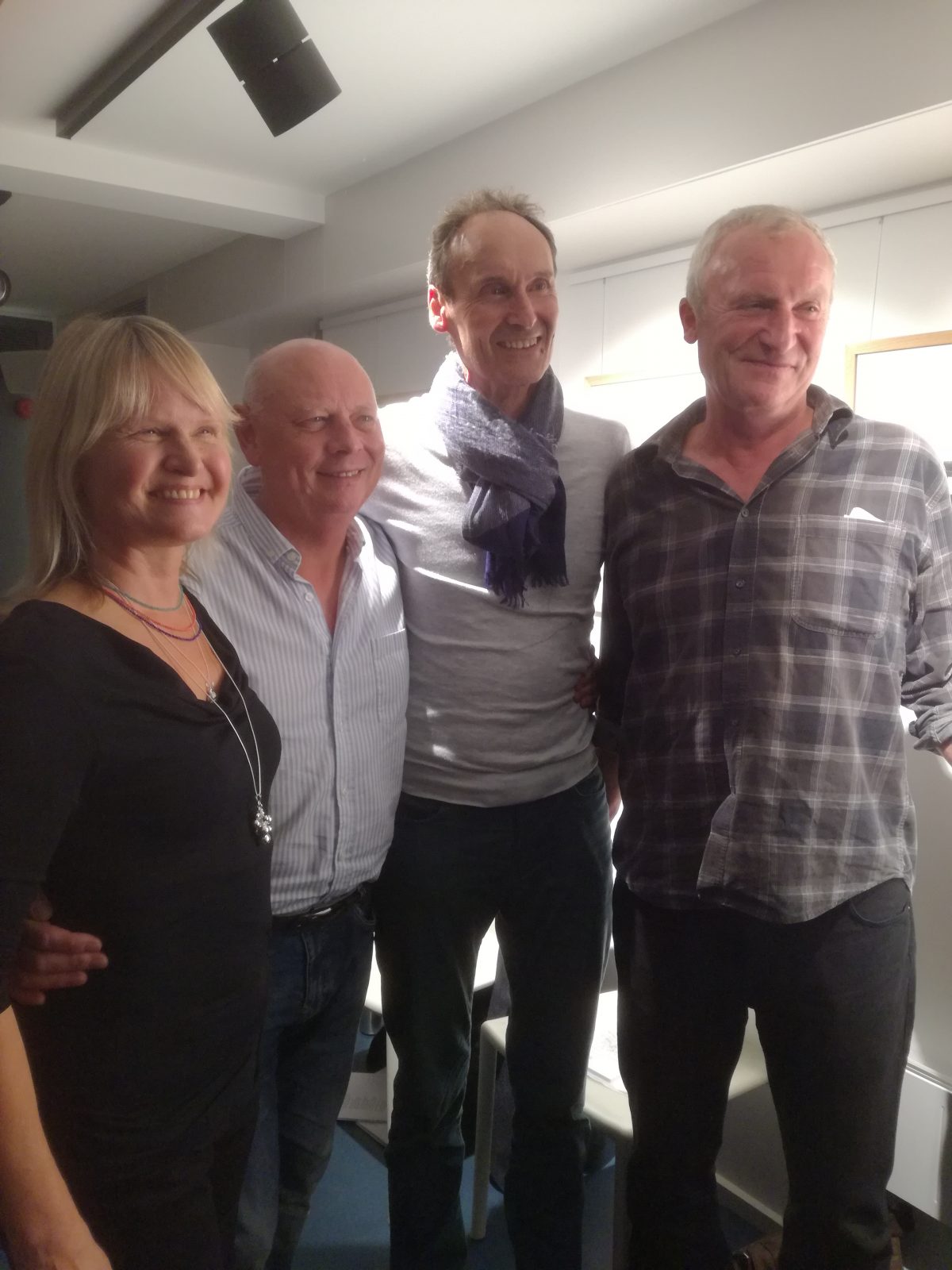
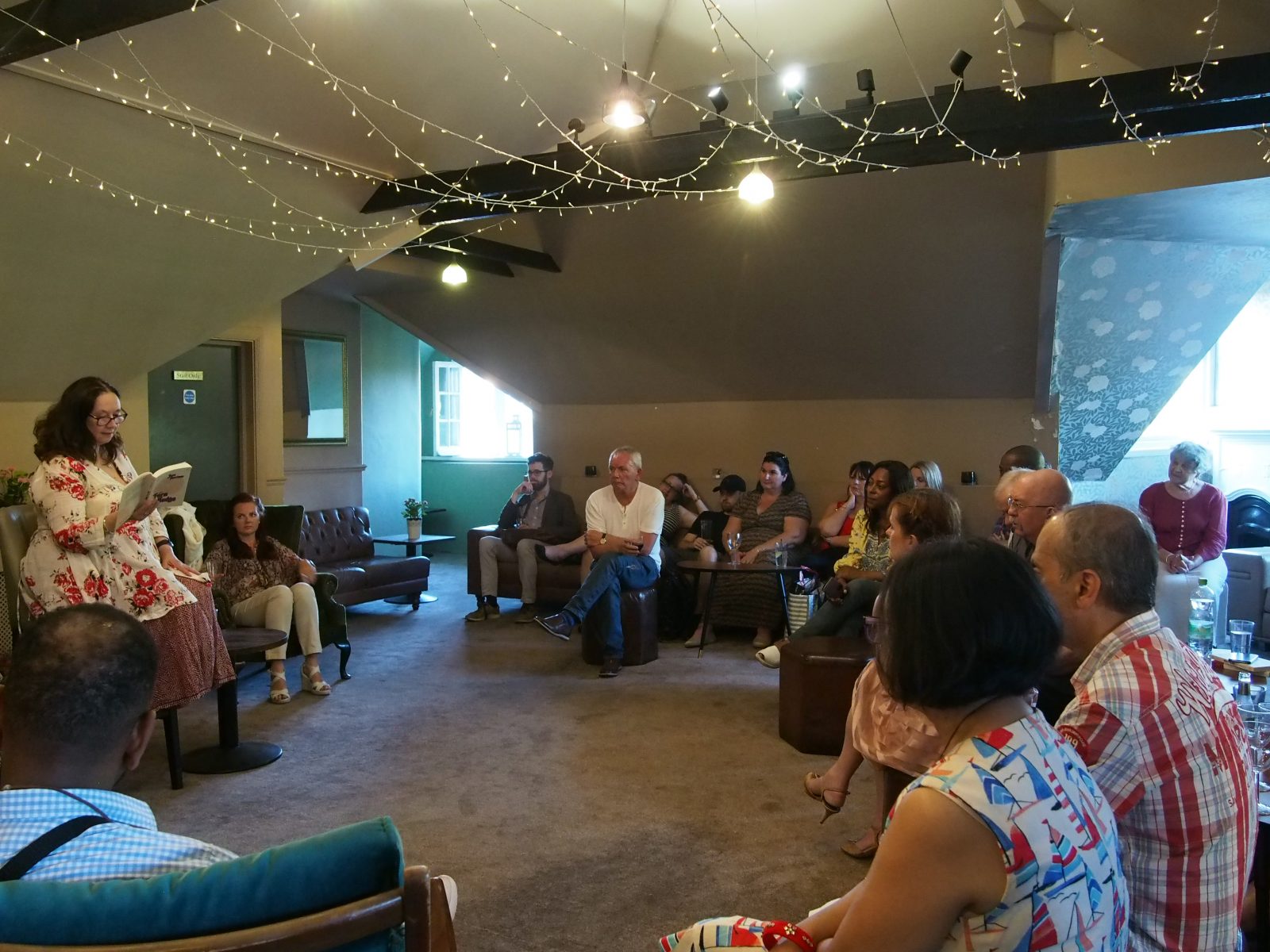
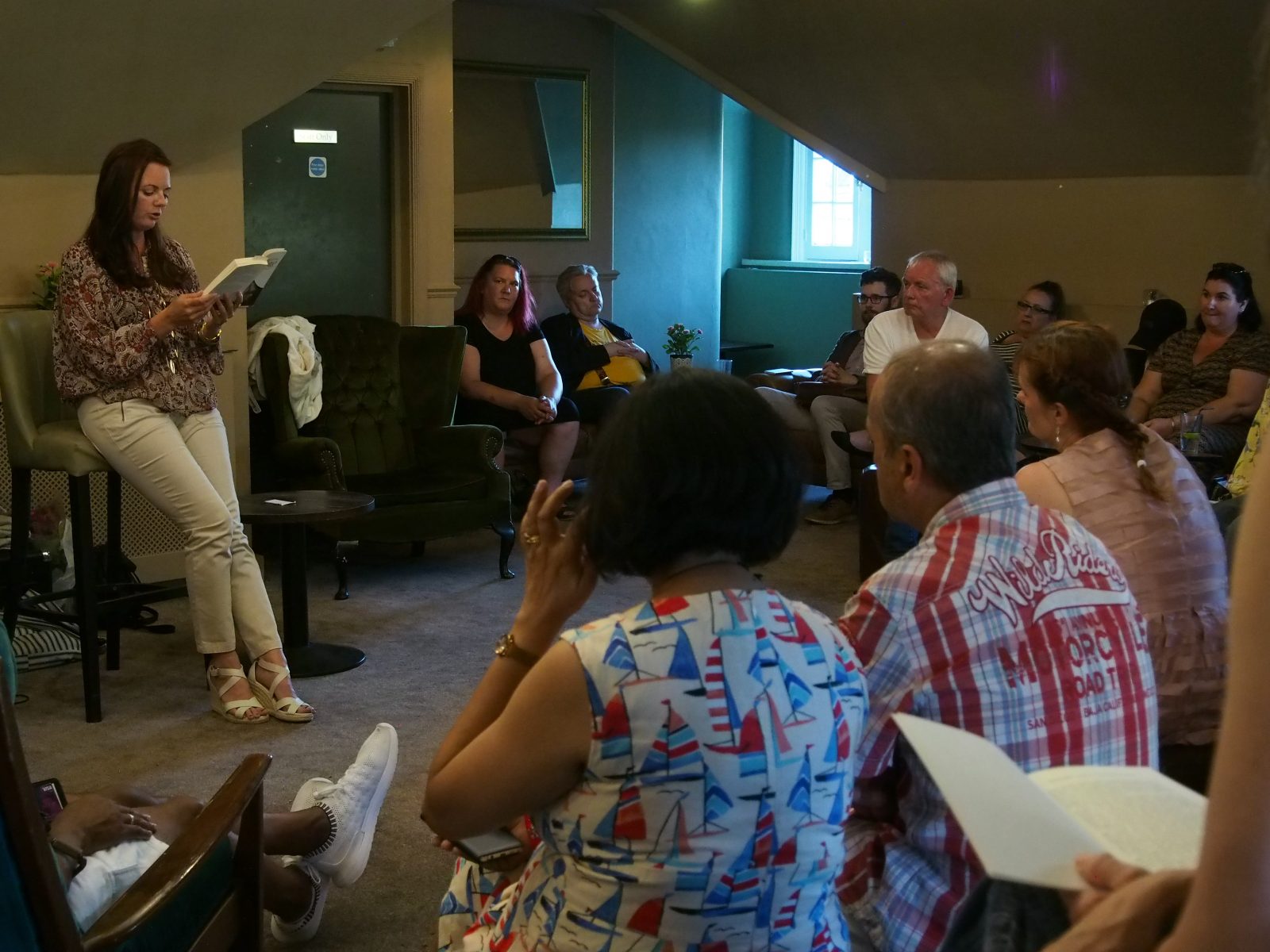
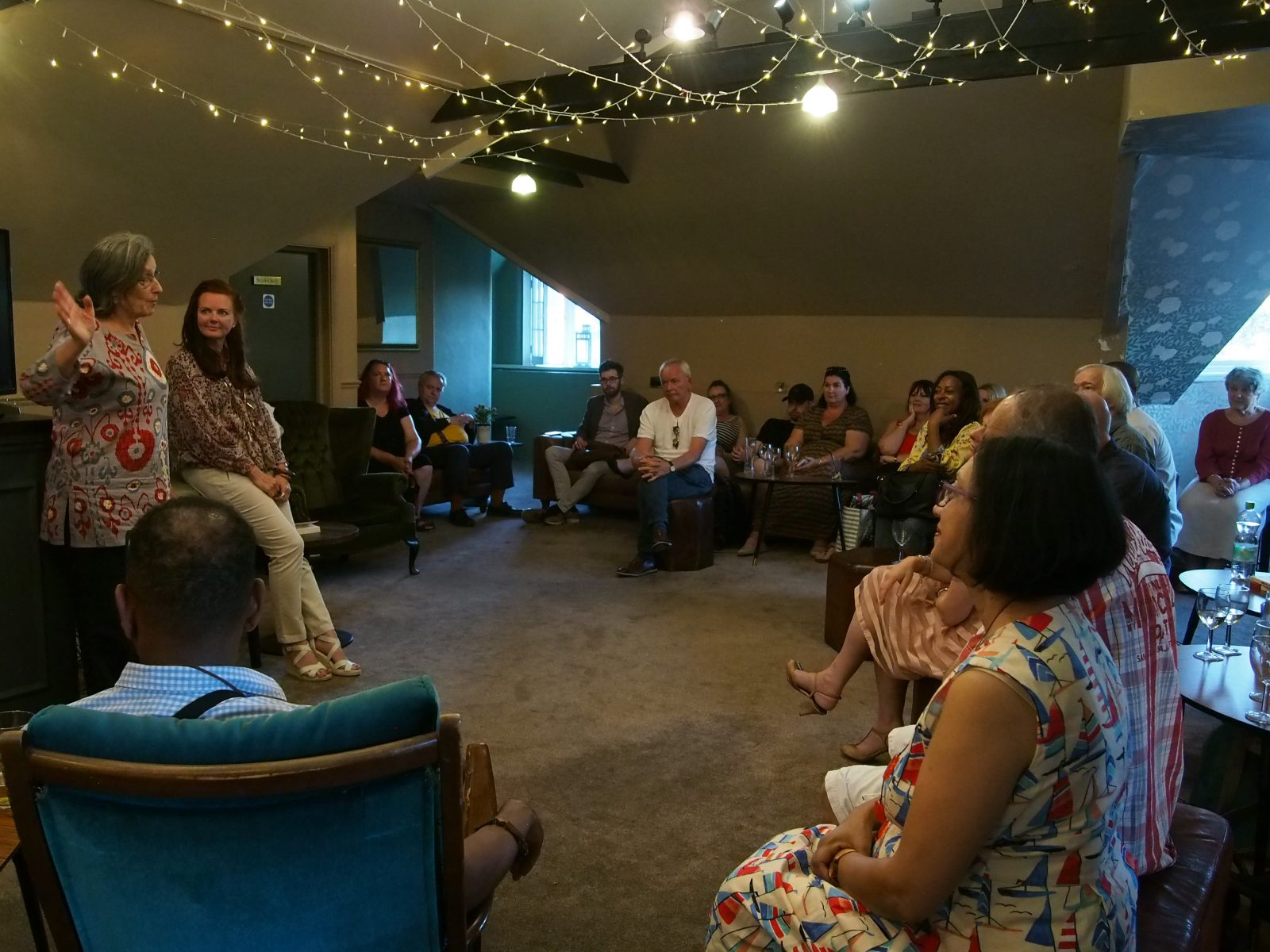
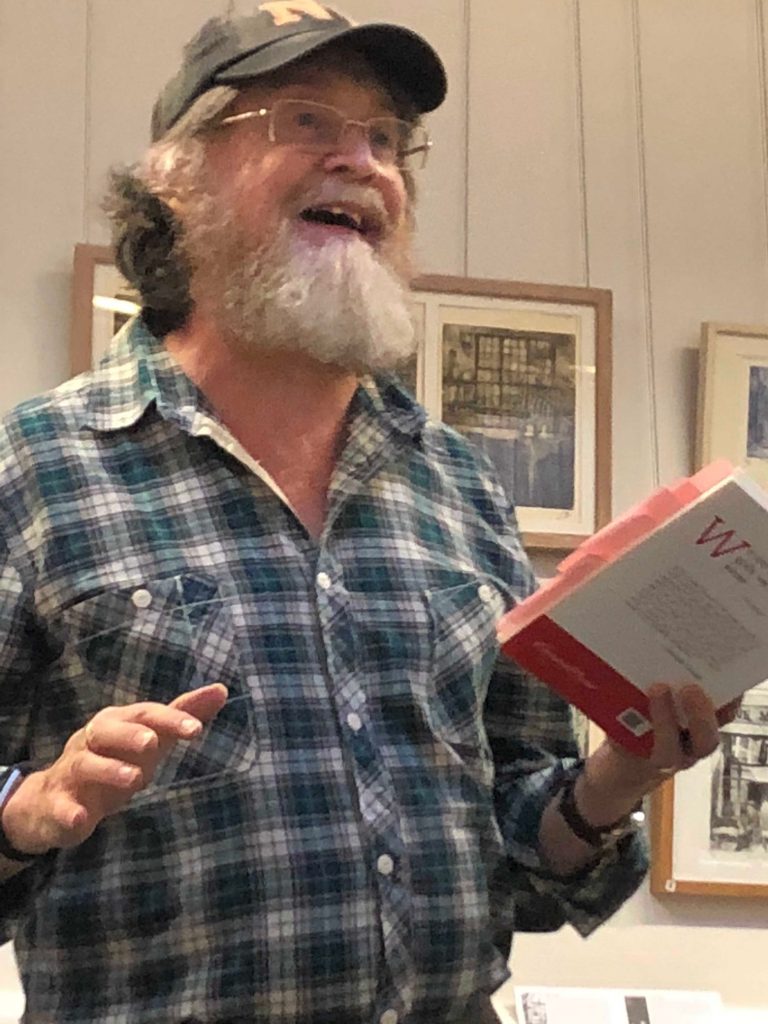
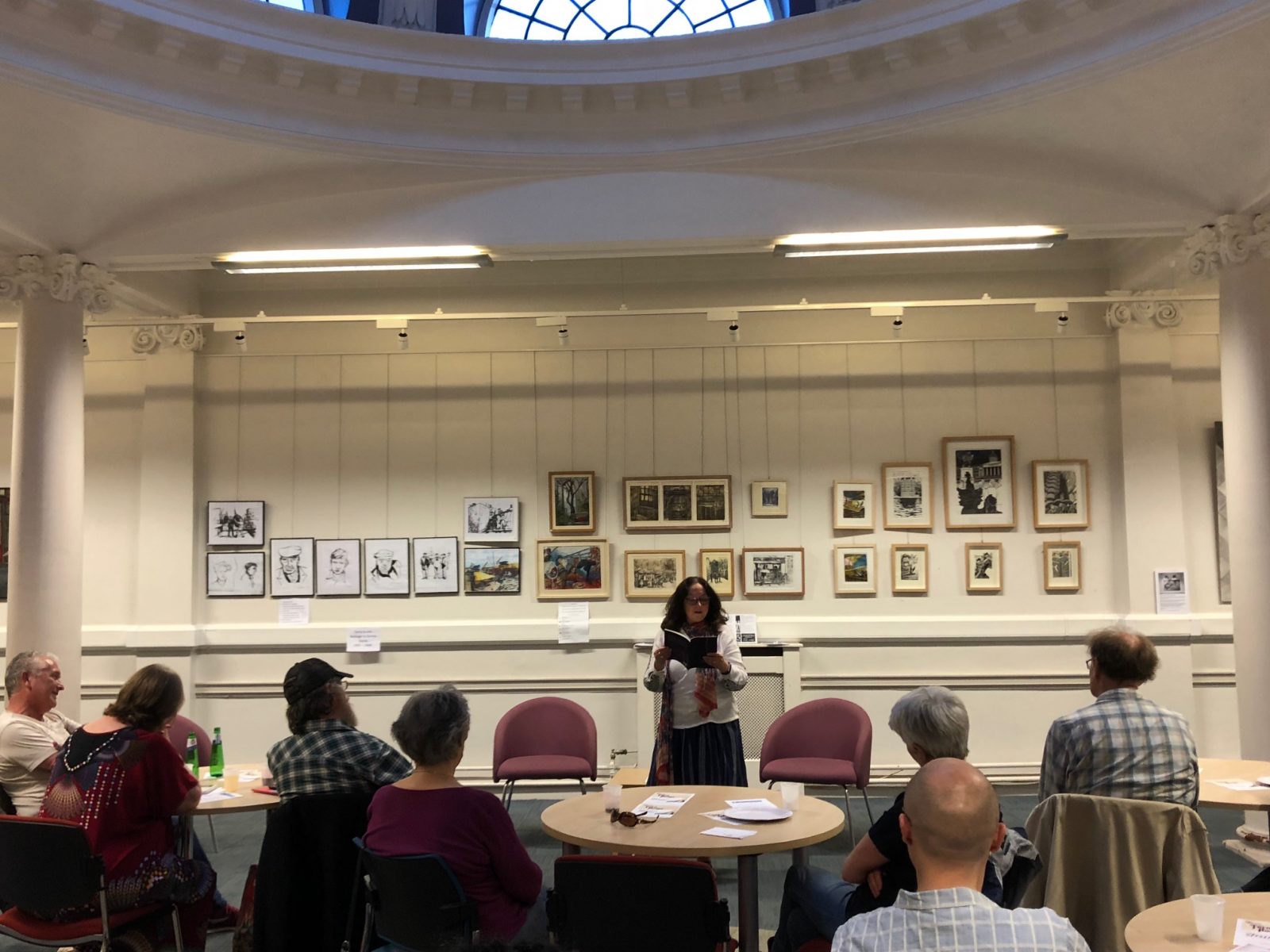
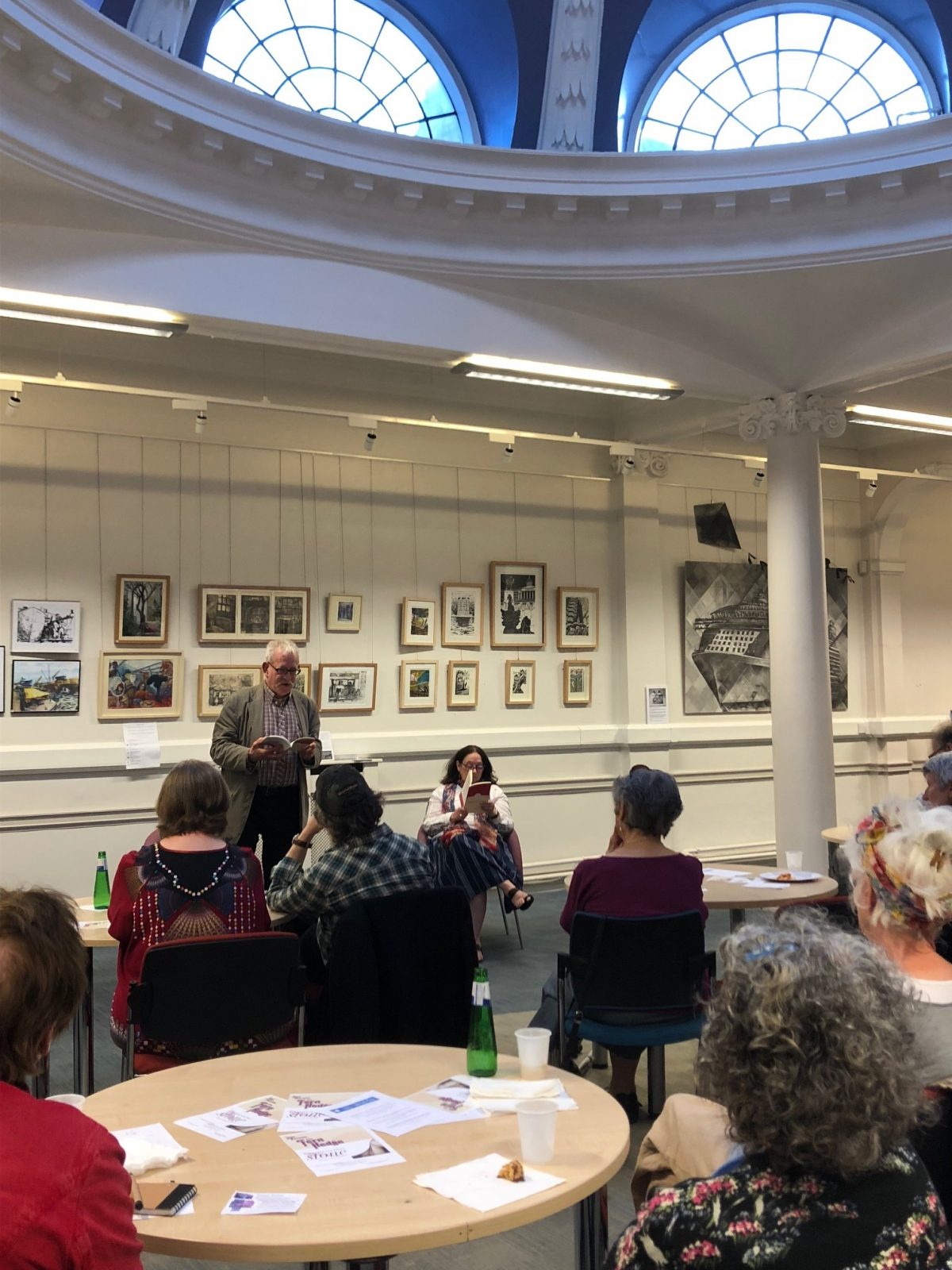
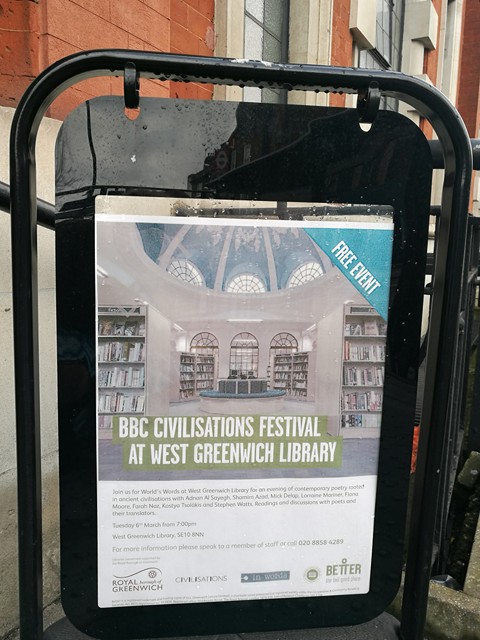
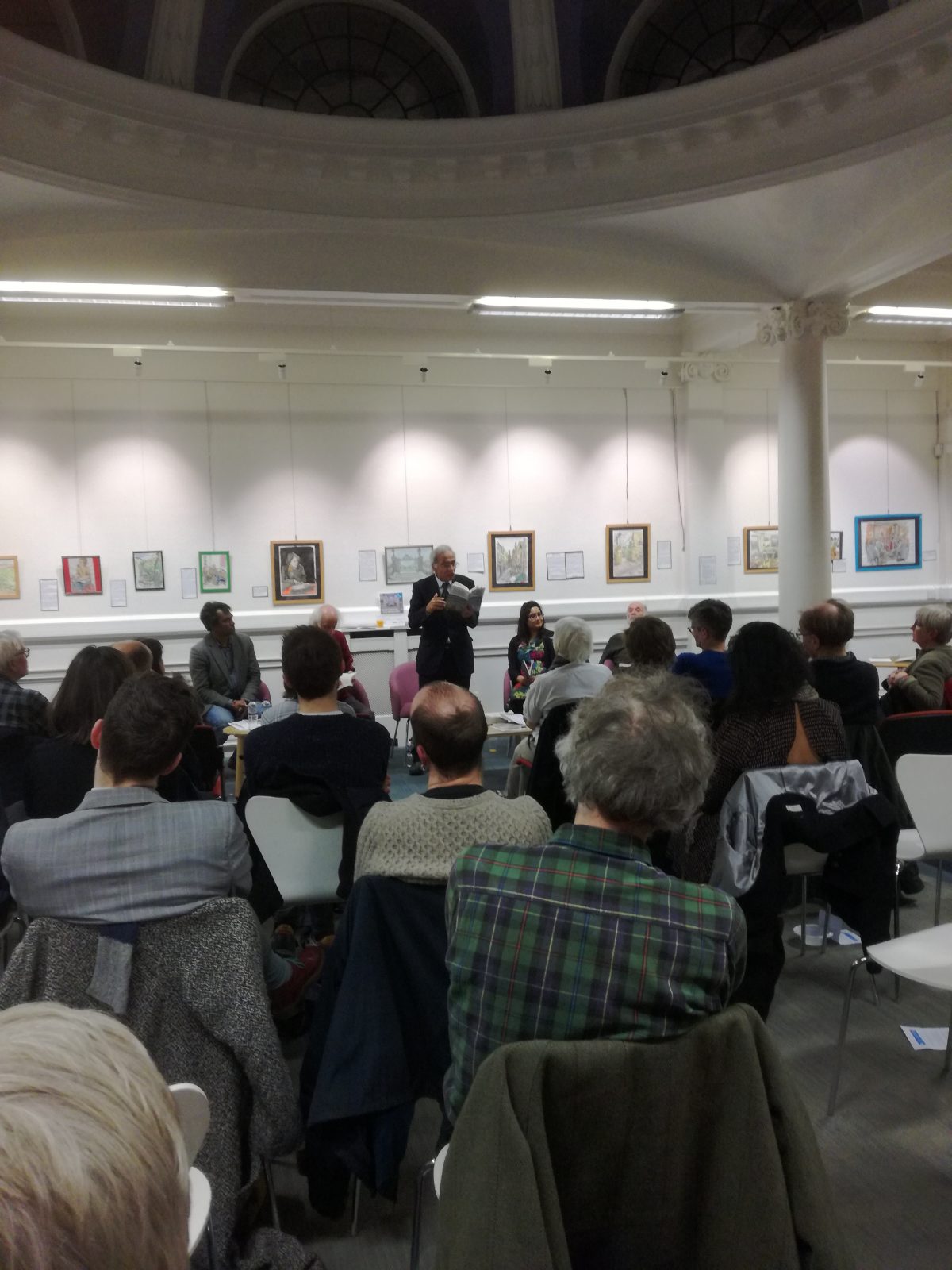
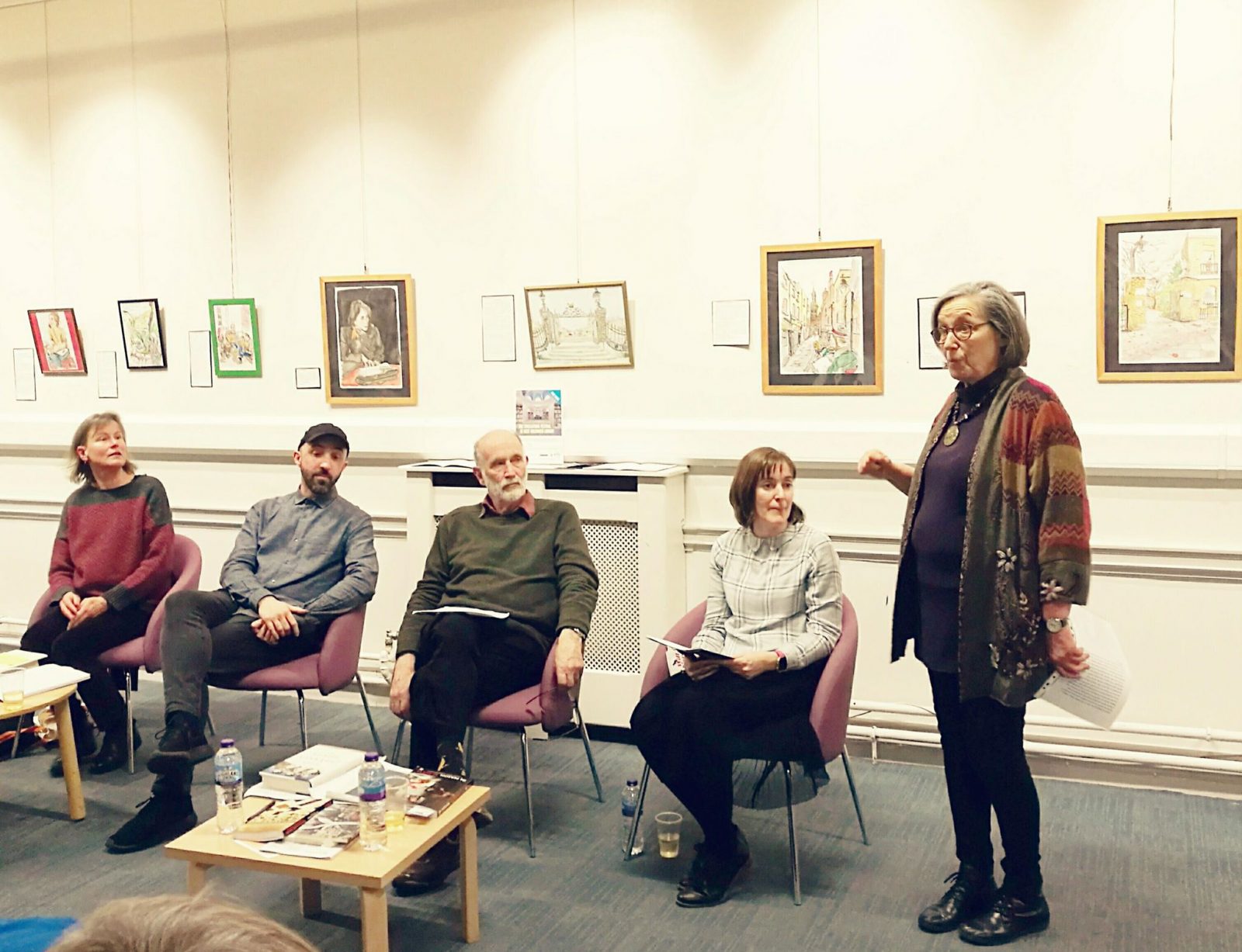
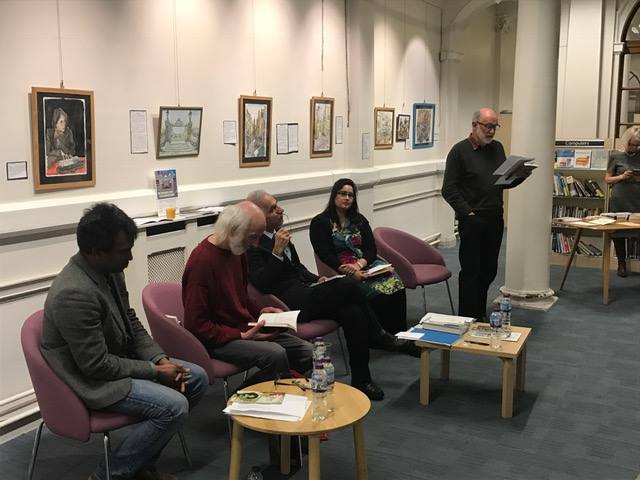
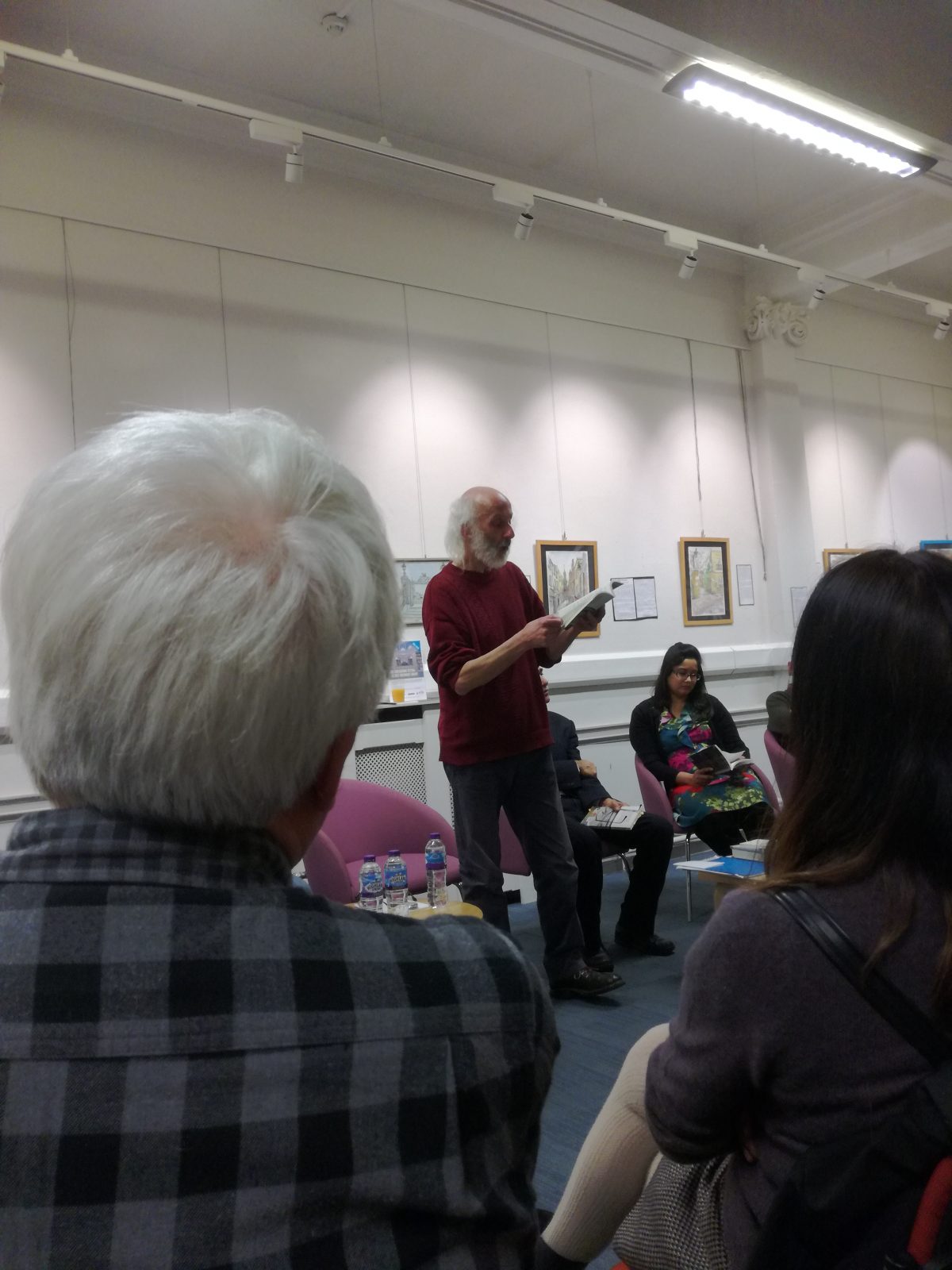
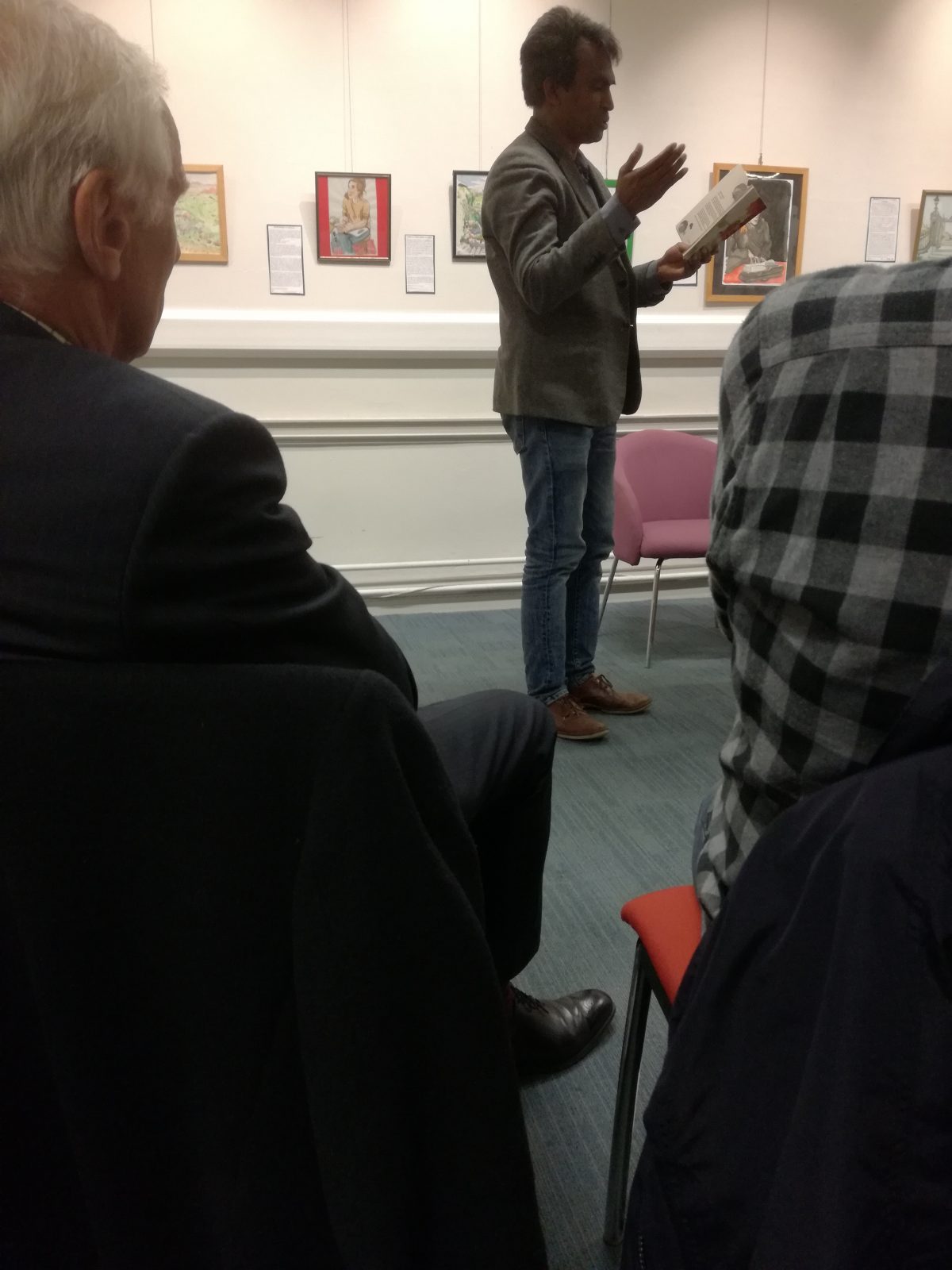
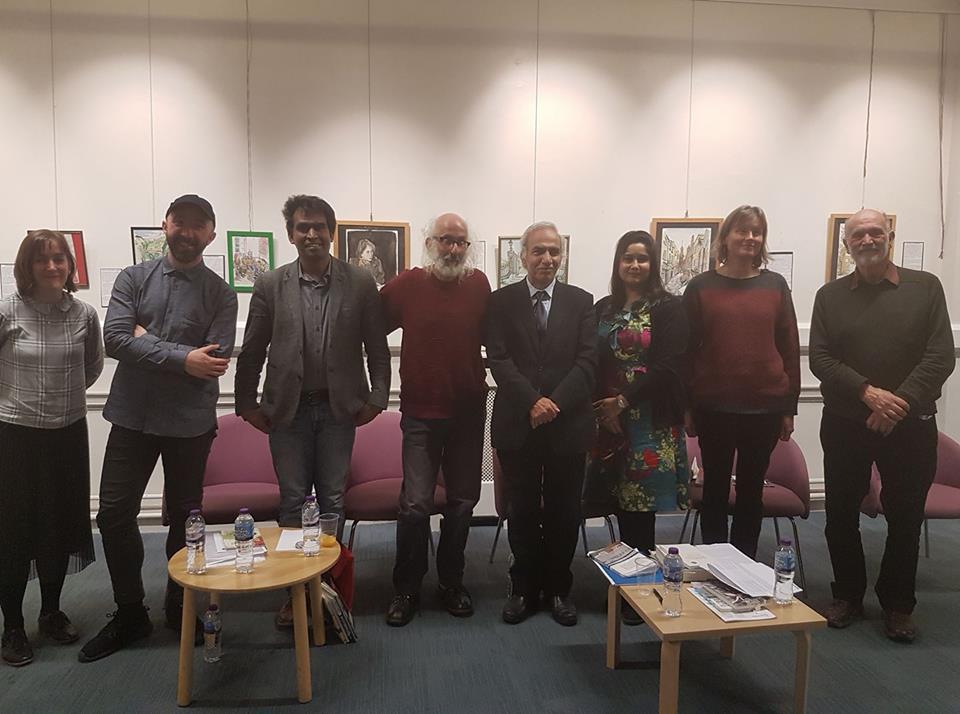
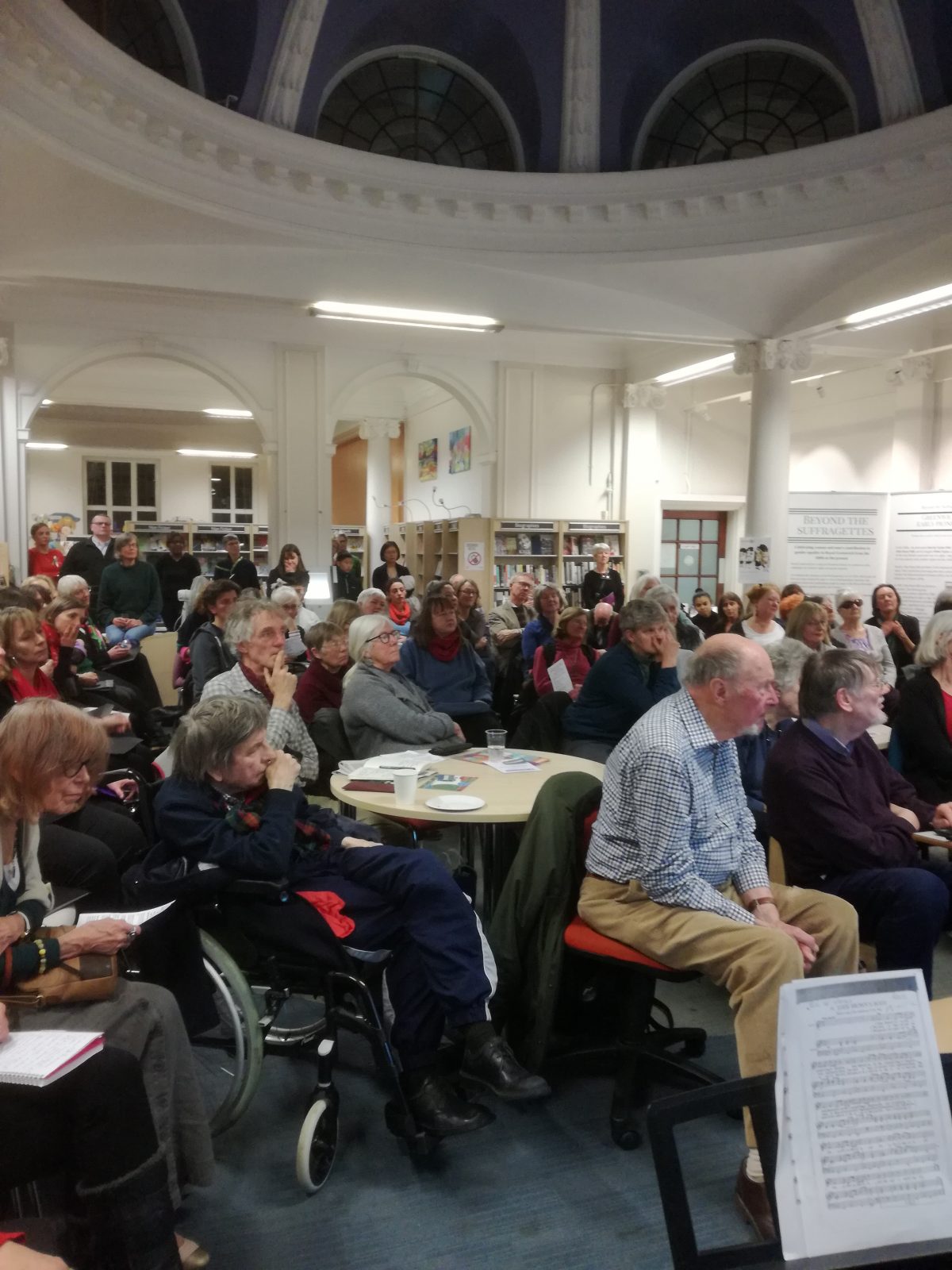
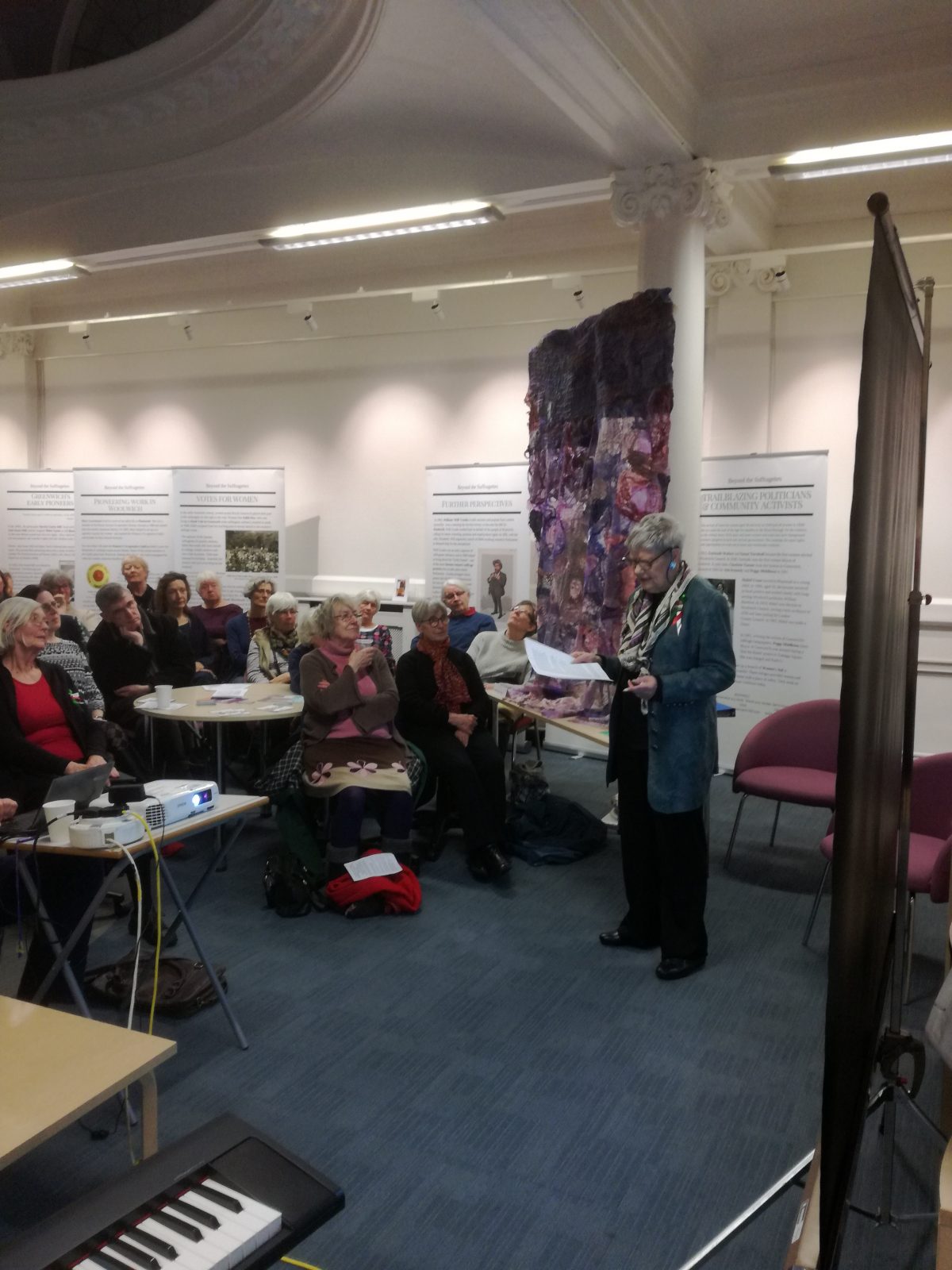
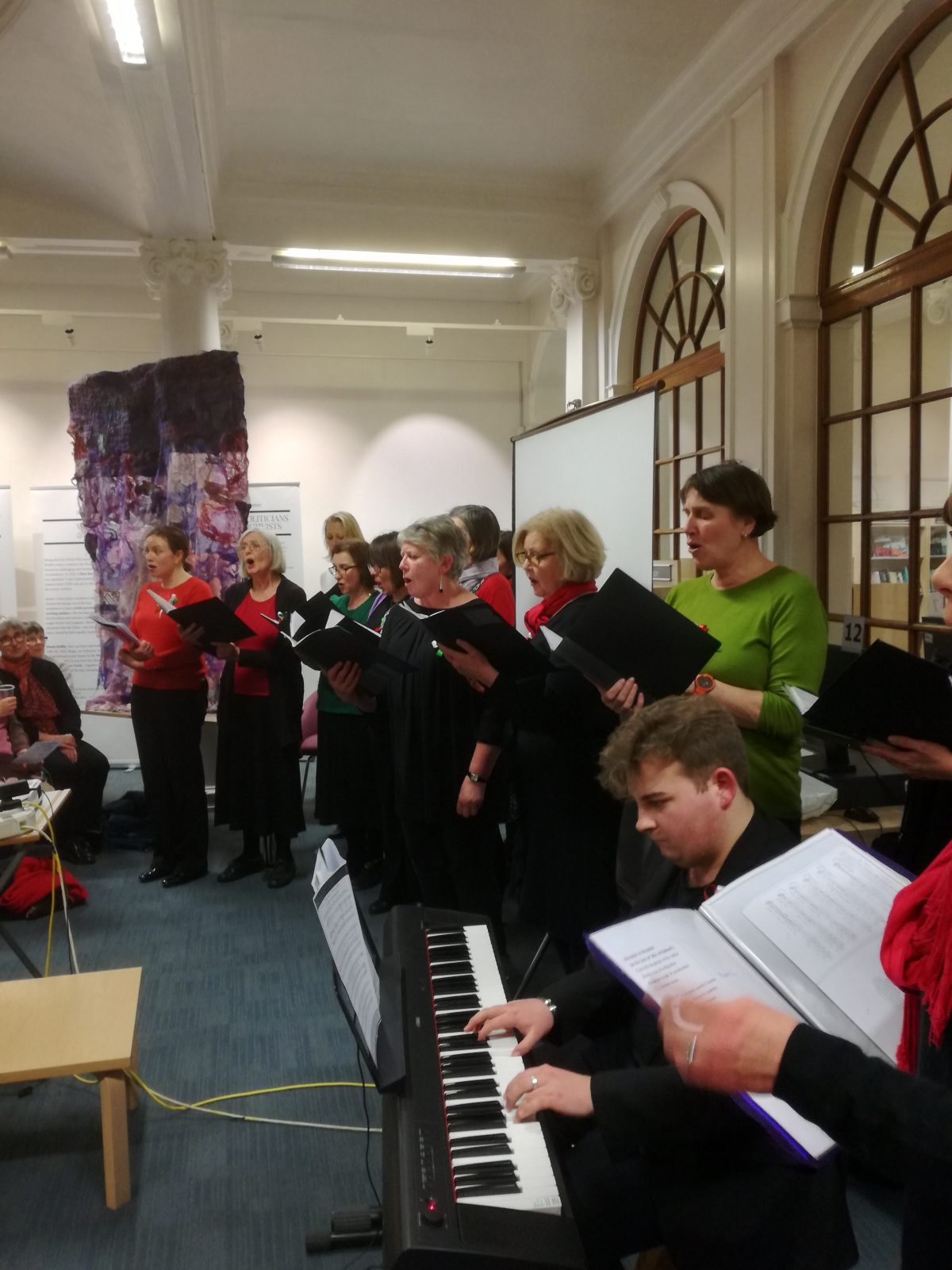
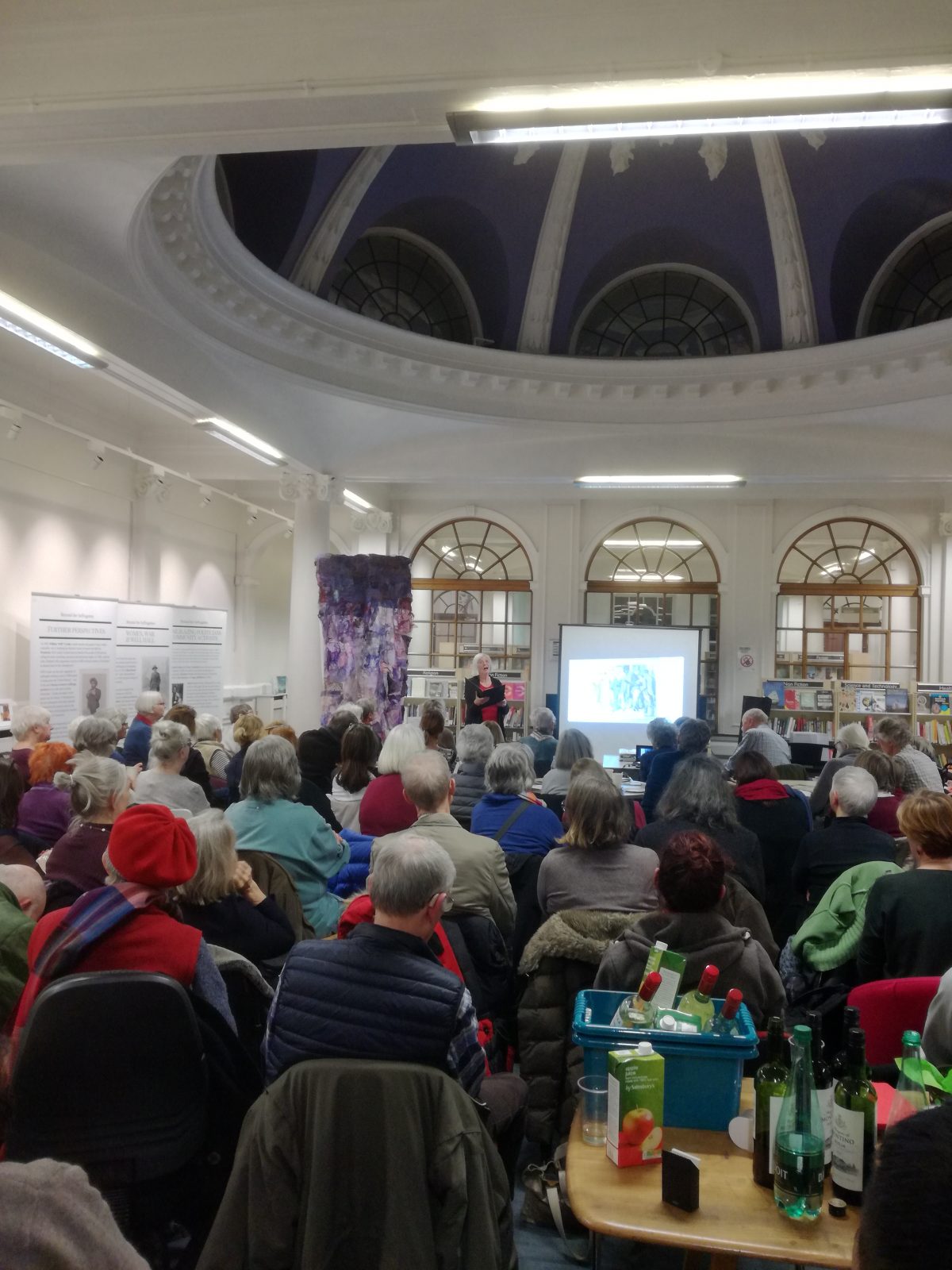
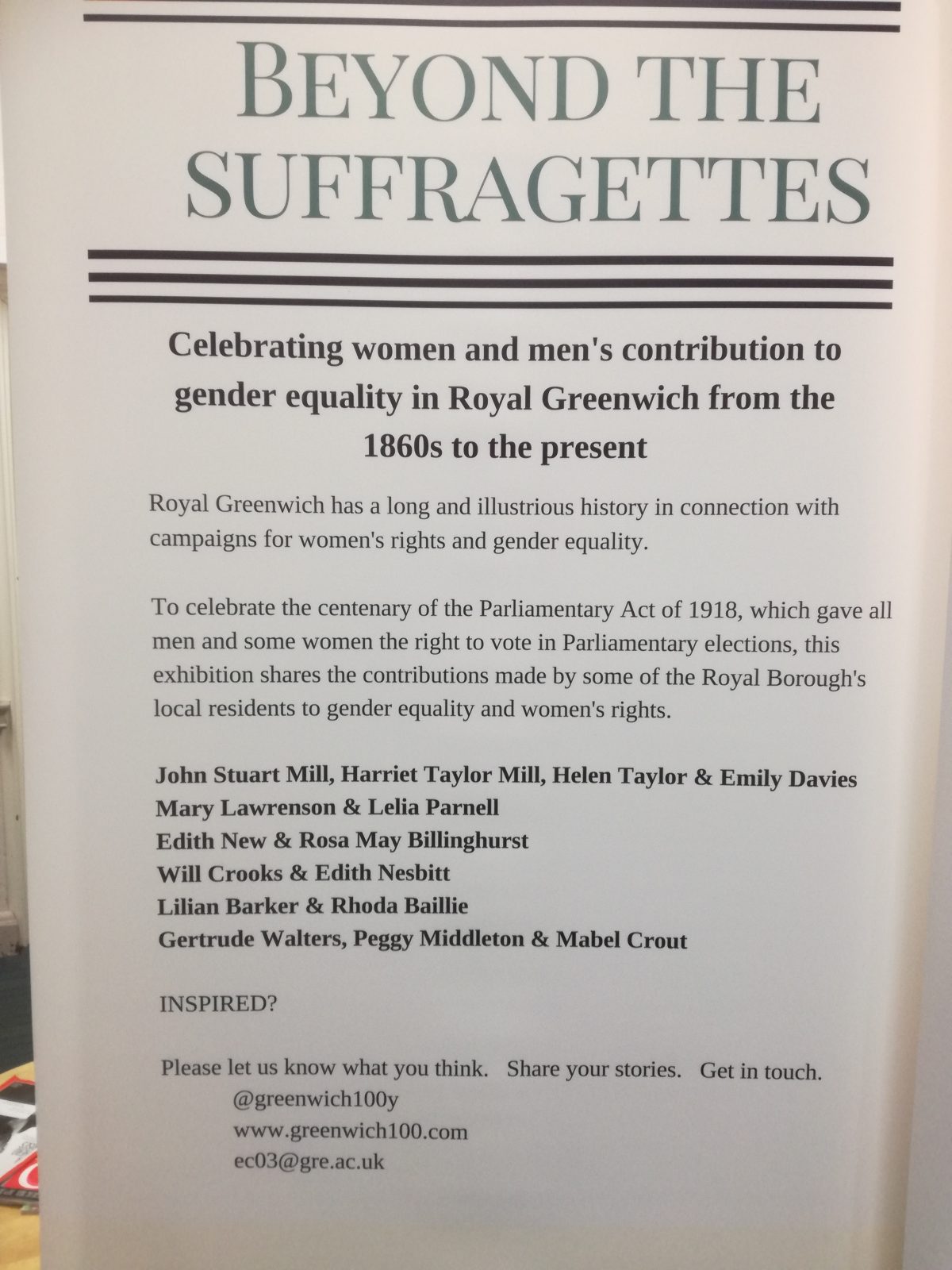


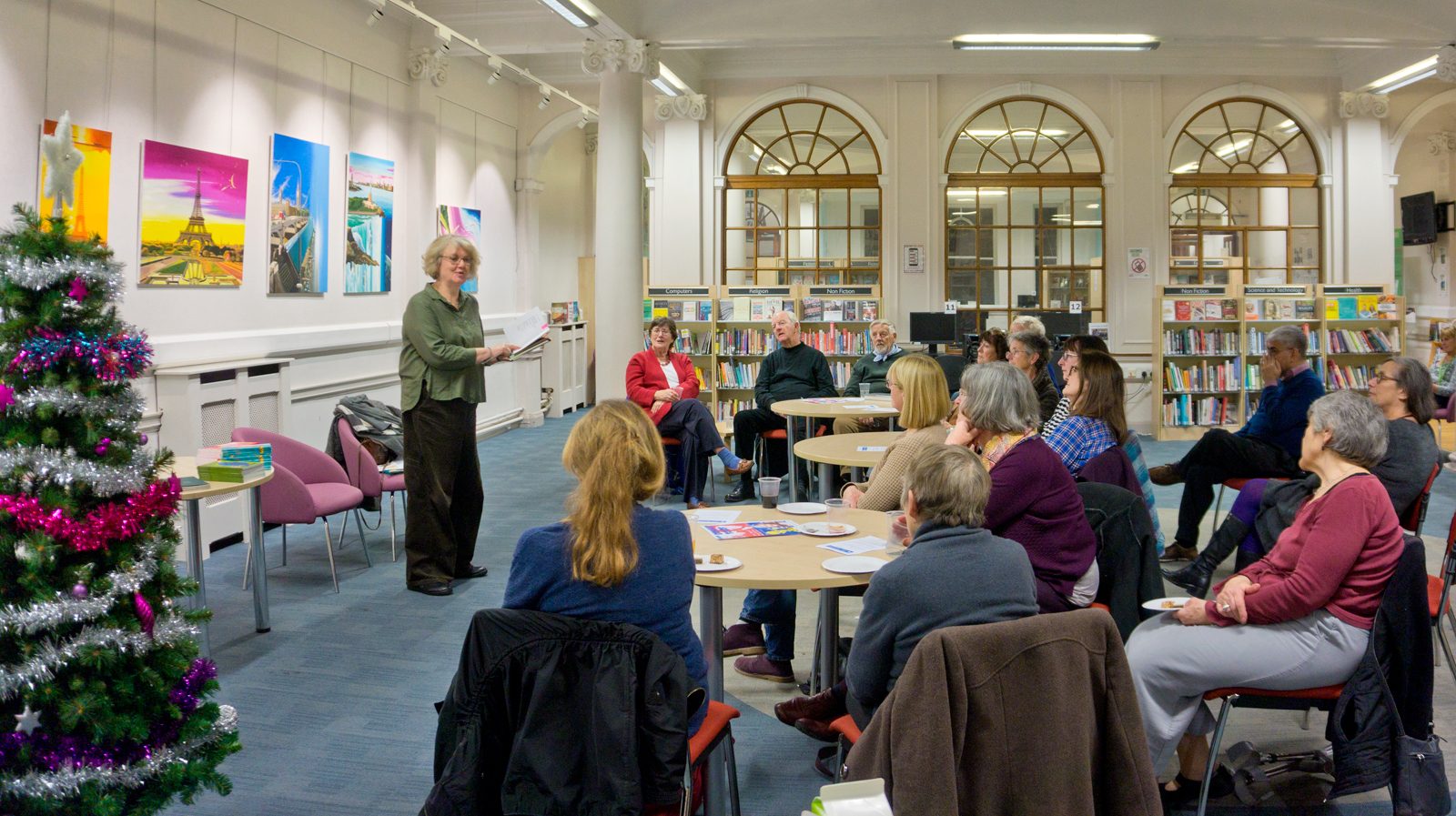
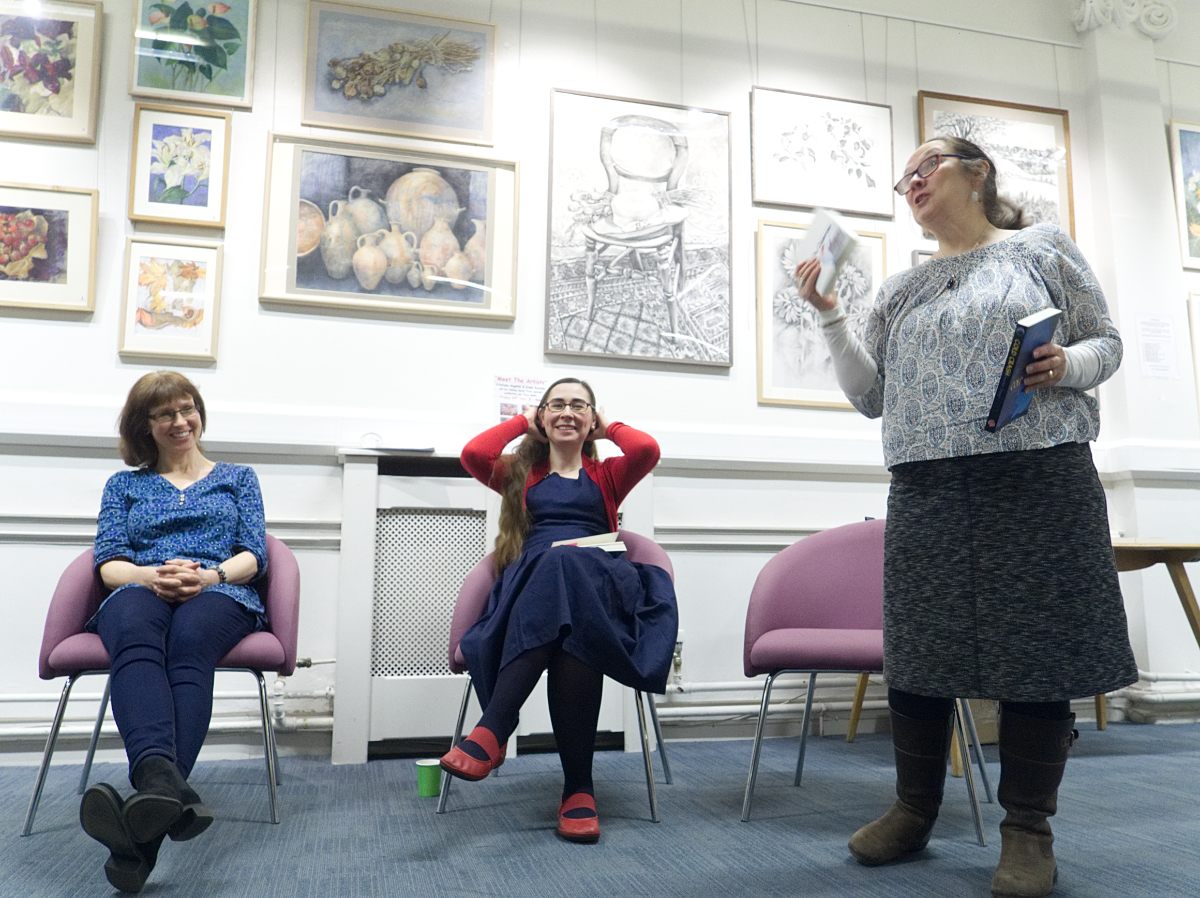
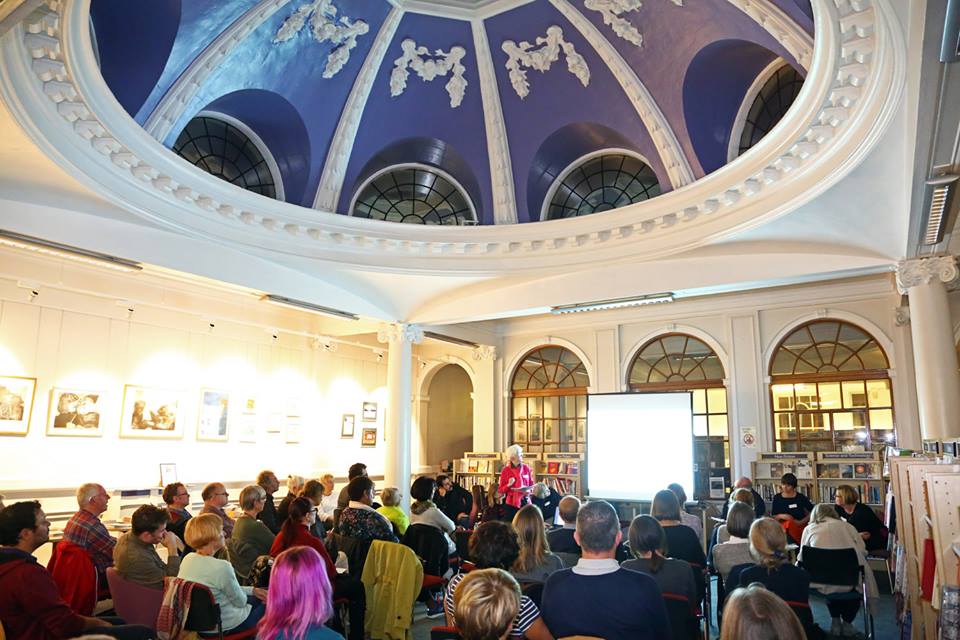
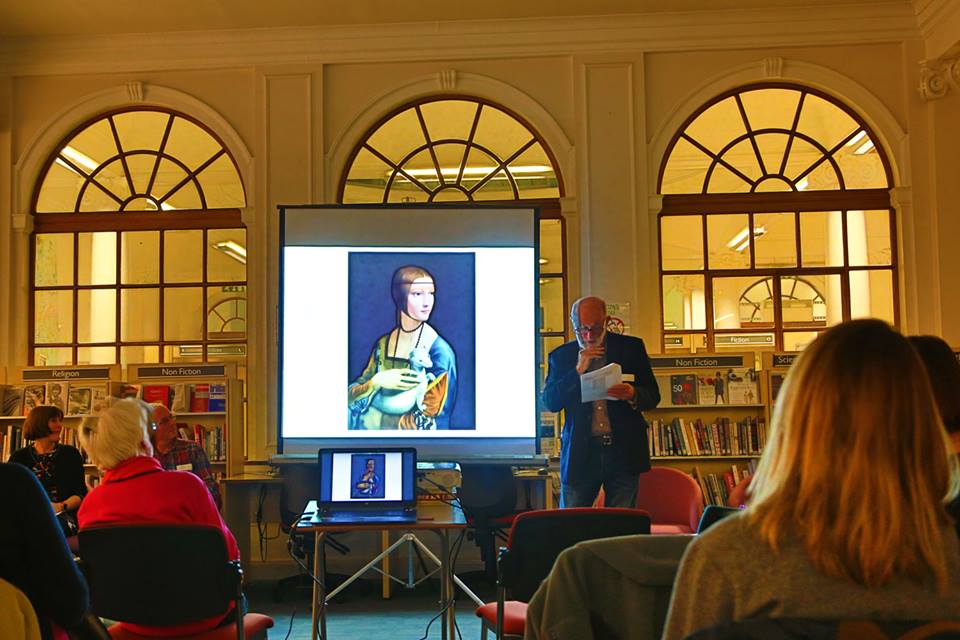
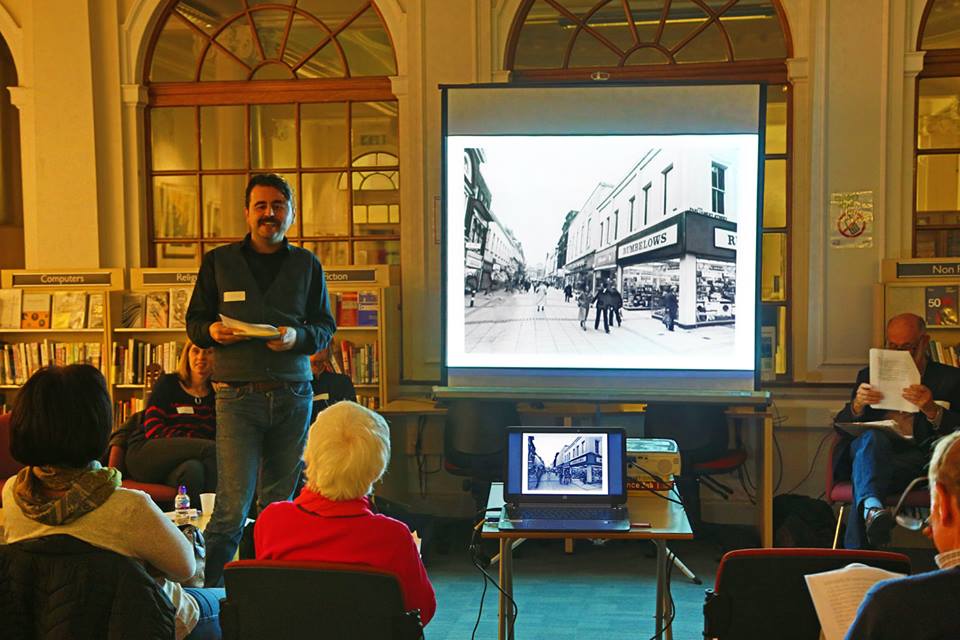
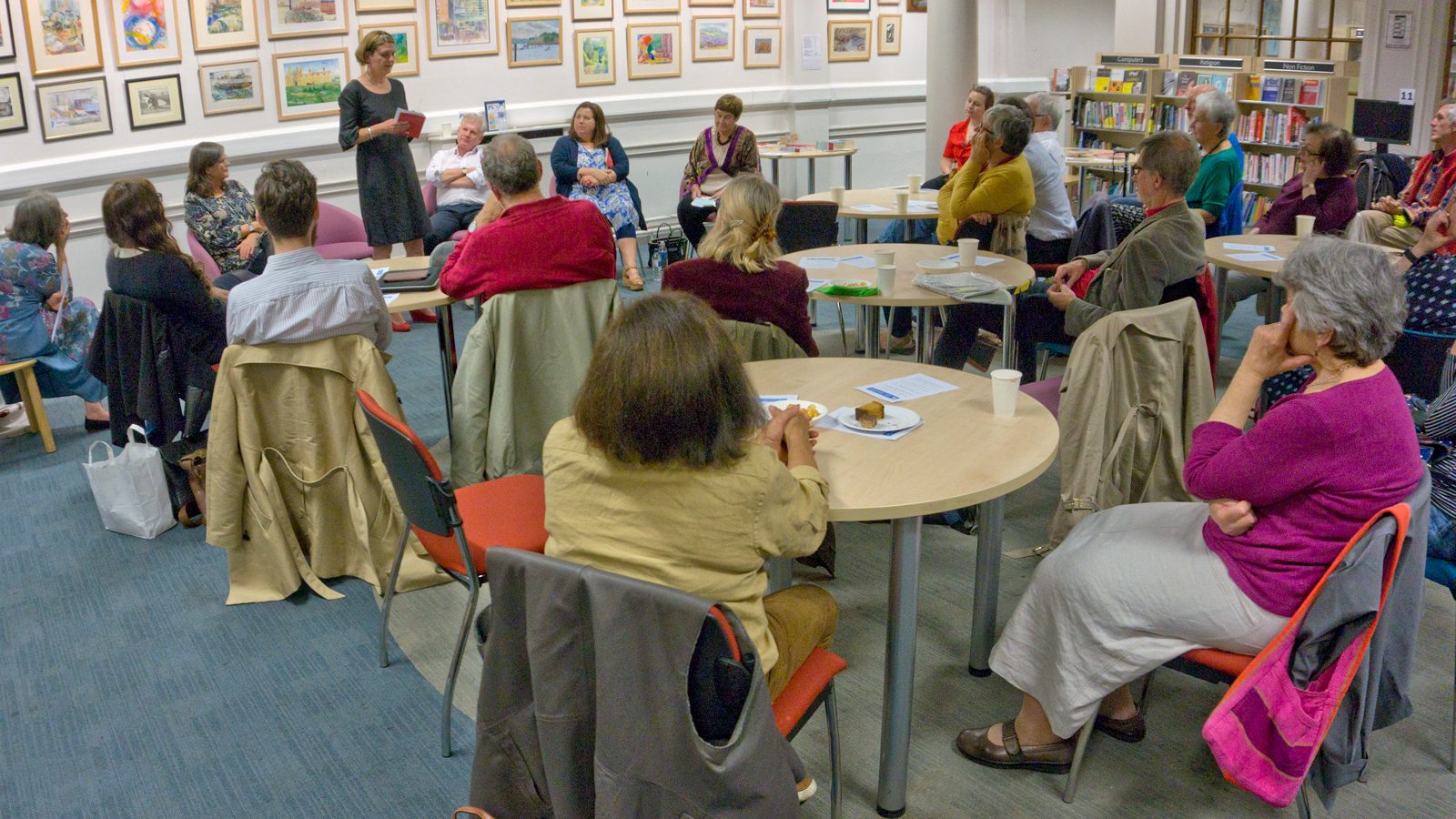
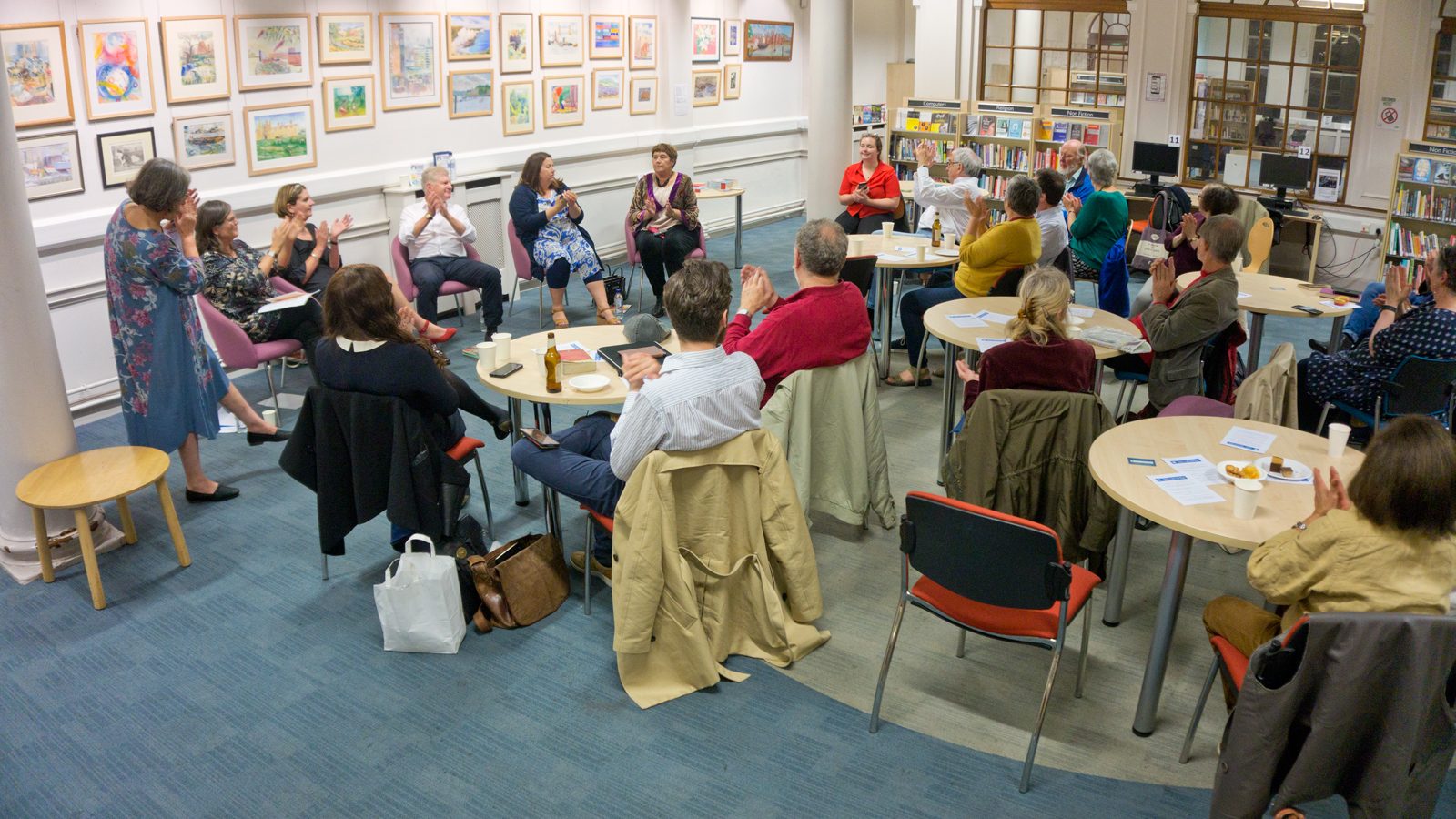
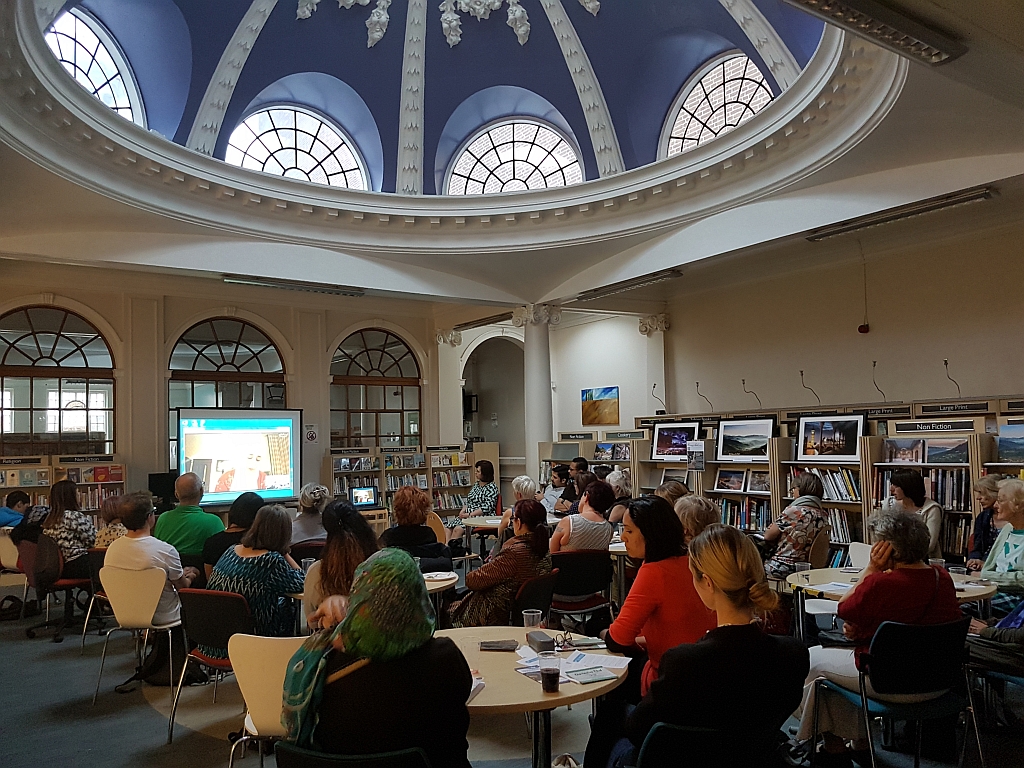
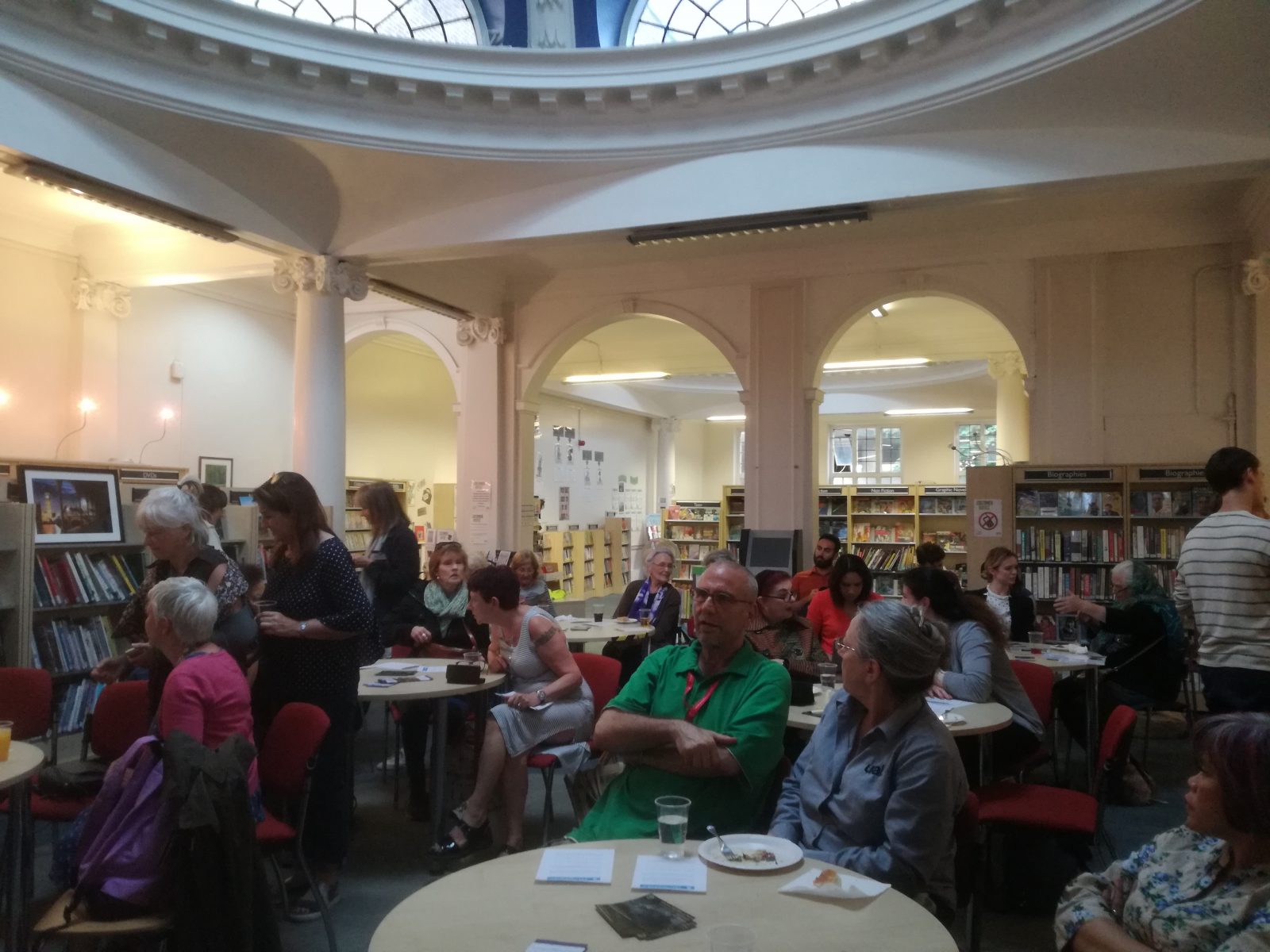
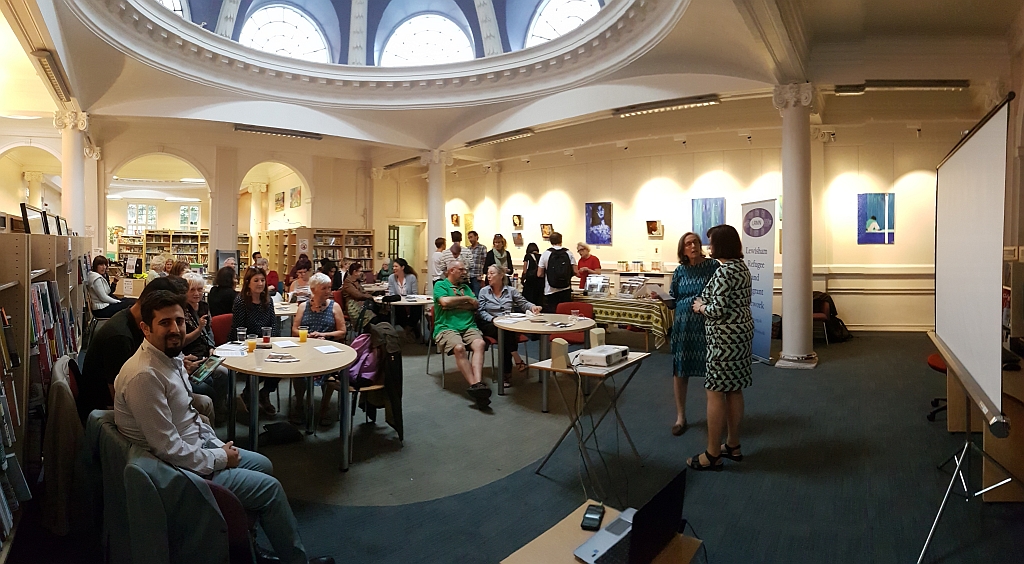 Last night was a first for in-words, the audience and the wonderful West Greenwich Library and its staff: on a clear skype connection, author Rana Abdulfattah read four extracts form her book of memoir and poetry as her London launch. Her publisher, Camilla Reeve from Palewell Press, co-hosted the event in the central rotunda filled to capacity. There was also a small photographic exhibition by Rayan Azhari and a great meze spread by the Damascus Chef, as well as a presentation by the Chief Executive of the Lewisham Refugee and Migrant Network.